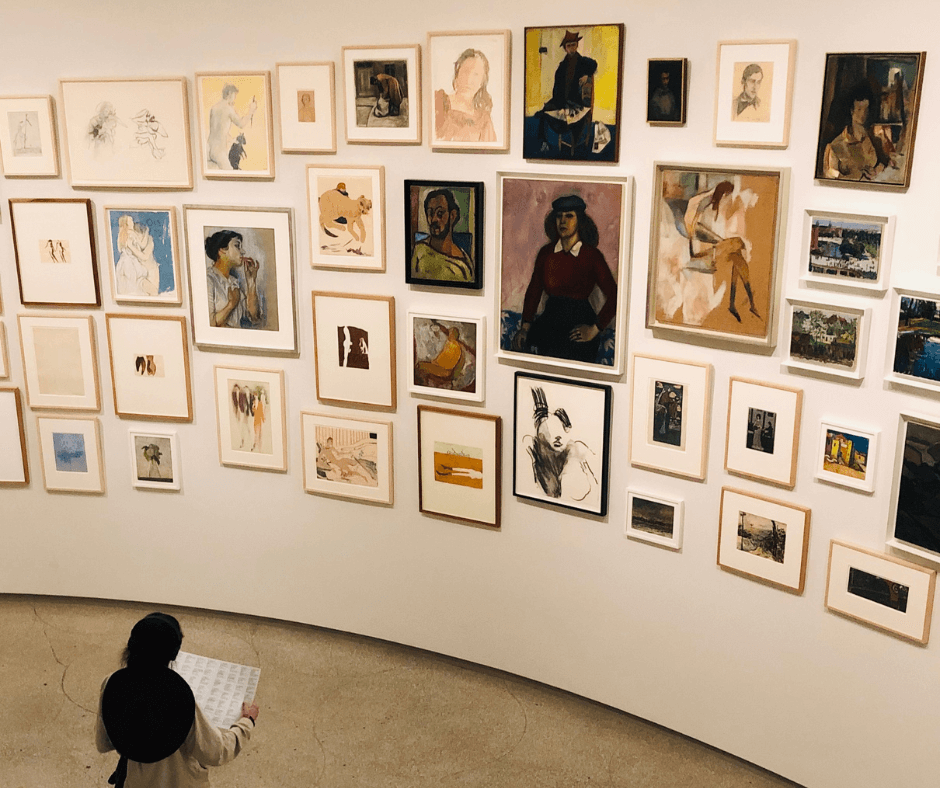
Art framing: How to preserve and enhance your artwork with the right frame?
- Post category:Art Files
- Reading time:13 mins read
Is framing always necessary? What are its objectives? How do you choose it and find economical framing solutions? After acquiring a work of art, questions arise about where to place it in your home, how to display it, and how to preserve it. The question of framing, if not planned in advance, will arise. It allows the collector to showcase, preserve, and personalize the artwork. Artistes Actuels reveals six secrets for preserving and enhancing your artwork without making mistakes or breaking the bank.
Is framing really always necessary for your paintings and photos?
This is the case for canvases on stretcher frames or paintings on wood. Often, the frame dresses and finishes a work to hide the edges, but it is not absolutely necessary. It can certainly enhance the work, but I find that a large canvas is often very beautiful without framing!
Furthermore, when the edges of the work are an integral part of it (handmade paper edges, elements of the work that extend beyond its boundaries, etc.), the edges should not be hidden by a frame.
There are also works for which the artist has designed a frame as part of the work. In this case, you either take the work as it is… or you don’t. Changing the frame would undeniably alter the work. There is also the question of framing works of little economic value. Should you spend more than the value of the work on a frame? In reality, the artistic, sentimental, or emotional value of a work alone justifies framing, and there are also economical solutions that we will discuss.
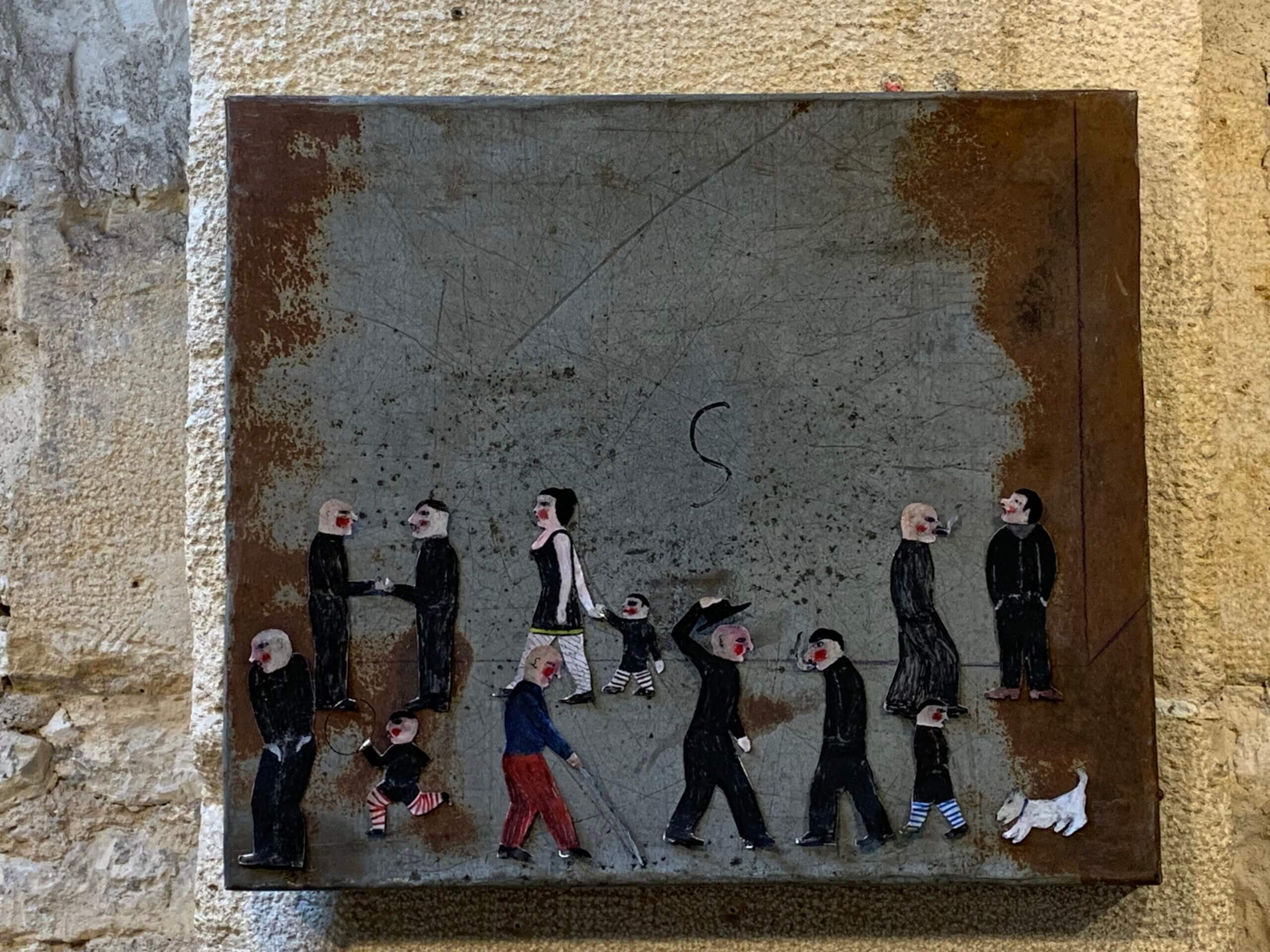
Photo subject 1: painted metal assembly on a zinc beehive lid (work by Alain Signori). A shadow box frame could be used, or the work could be left unframed to appreciate the depth of the medium.
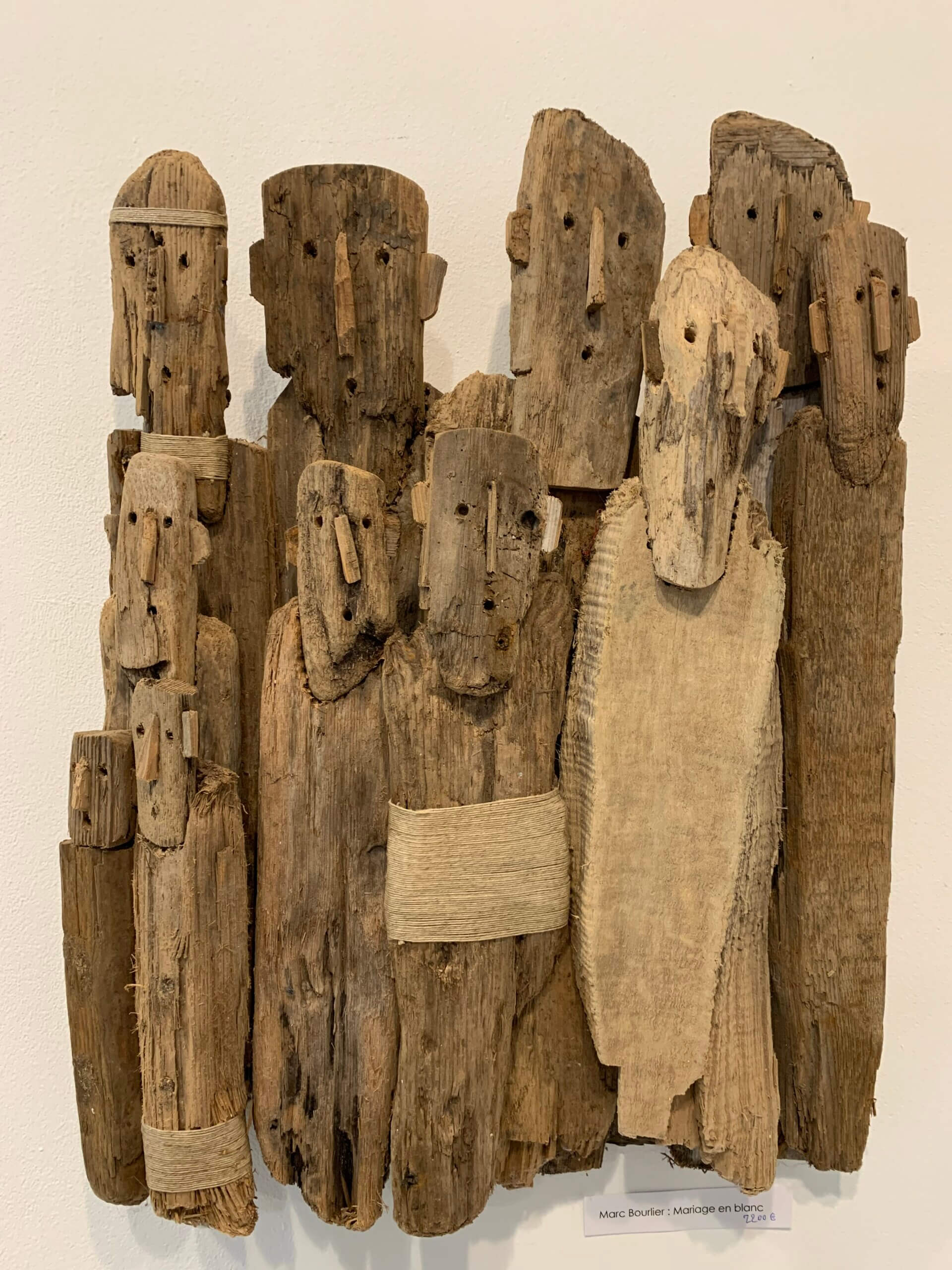
Photo subjects 2 and 3: driftwood assemblage (fossilized by seawater) with either a frame made by the artist or no frame, which reinforces the relevance of the subject (works by Marc Bourlier)
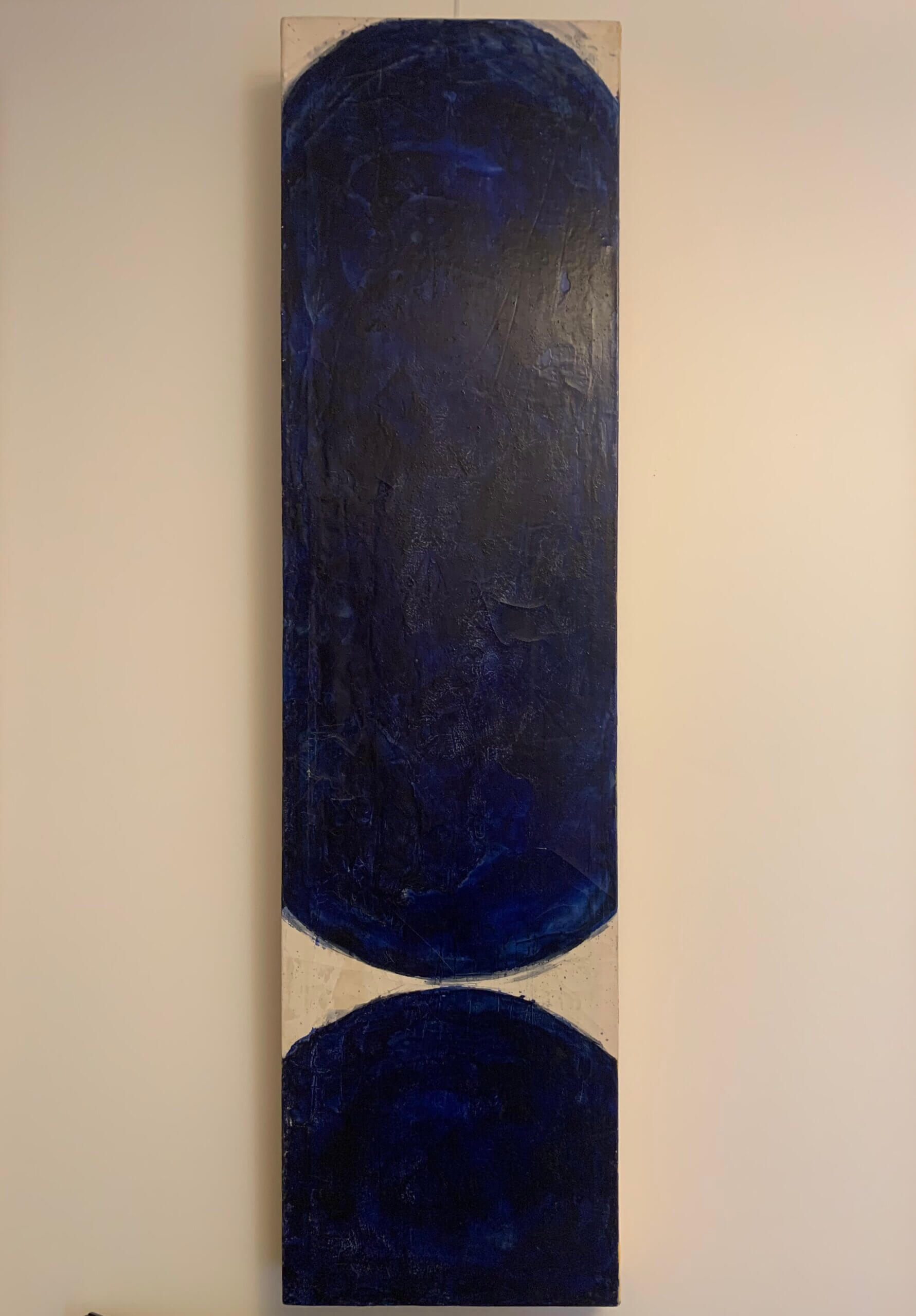
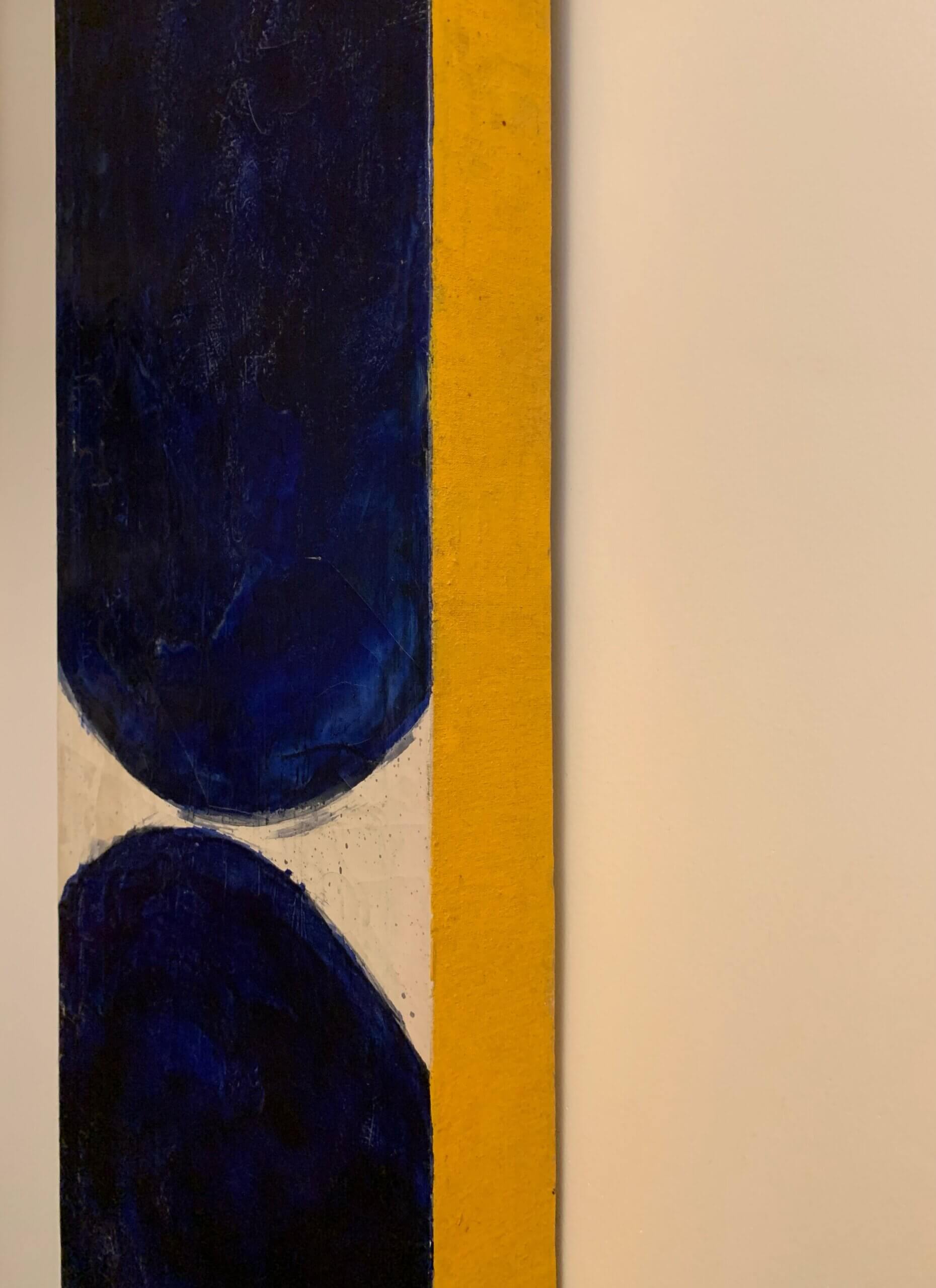
Subjects in photos 4 and 5: Oil painting on canvas on stretcher (work by Paul Laufer). A frame would be superfluous and would risk obscuring the deep yellow edge, which gives the work a particular effect intended by the artist.
What are the objectives of framing?
Art lovers often seek above all to showcase the work, but it is important to remember that the primary purpose of framing is to preserve the work so that it can be enjoyed for years to come and passed on to future generations.
Framing is therefore essential for paper, textile, and unvarnished items in order to protect them from dust, insects, grease, humidity, UV rays, and anything else in the air that could damage them.
Preservation requires:
- PH-neutral (i.e., non-acidic) materials and adhesives
- A hermetically sealed backing board with a good finish on the back
- UV-resistant and anti-reflective glass. It is important to note that good UV protection and anti-reflective glass ensure that the artwork can be viewed properly and block more than 90% of UV rays, which are the enemy of the artwork’s durability. This type of glass has been on the market for 15 years. Older framing does not have these characteristics, and there are still ‘old-fashioned’ framers who do not offer them, which is ultimately a good criterion for choosing your framer!
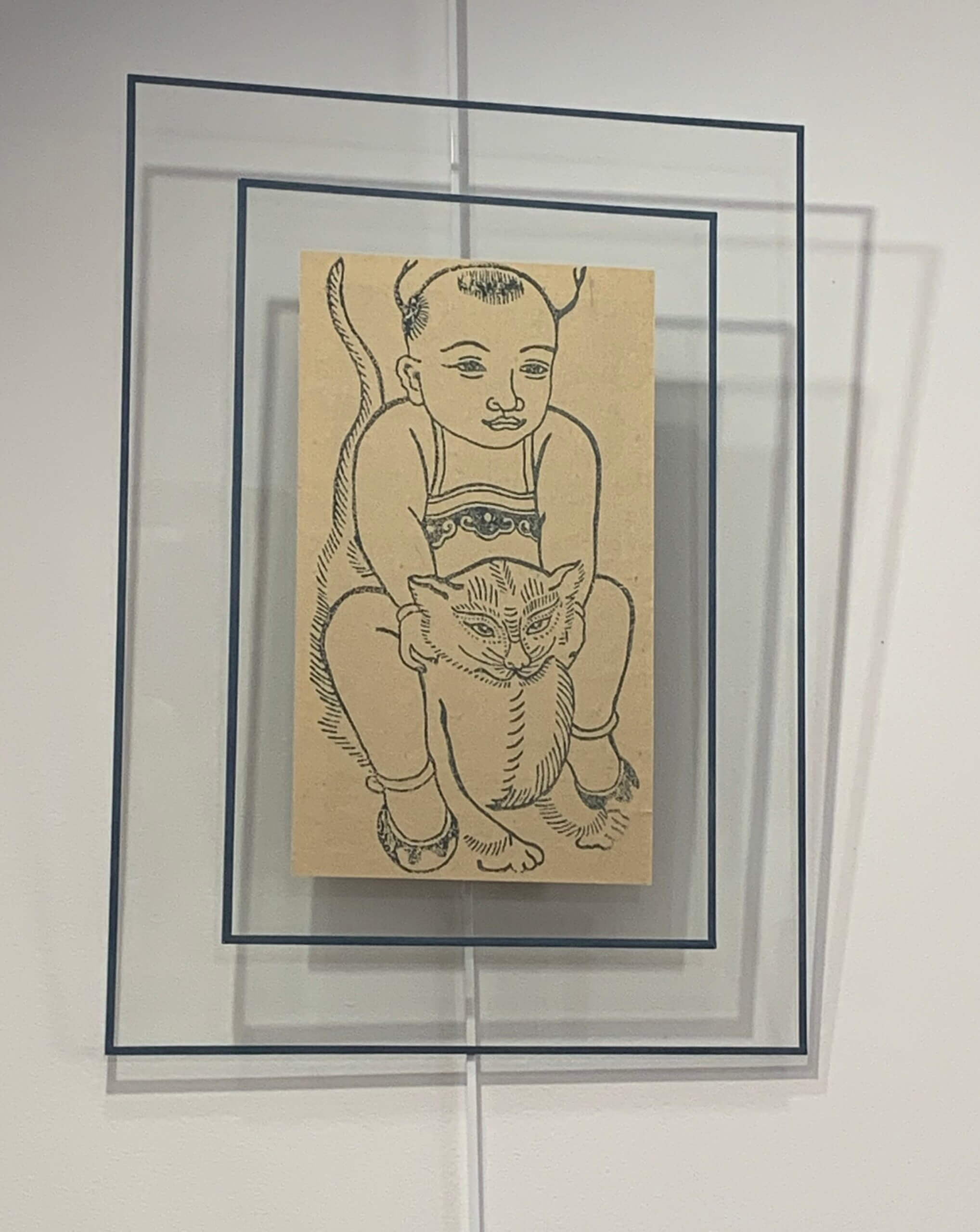
Photo subject 1: Old paper (ink print on wrapping paper), framing with UV-resistant and anti-reflective glass (front glass) with paper edging. The best example of minimal intervention on the subject (Work by the Stéphanie Dumas workshop in Versailles)
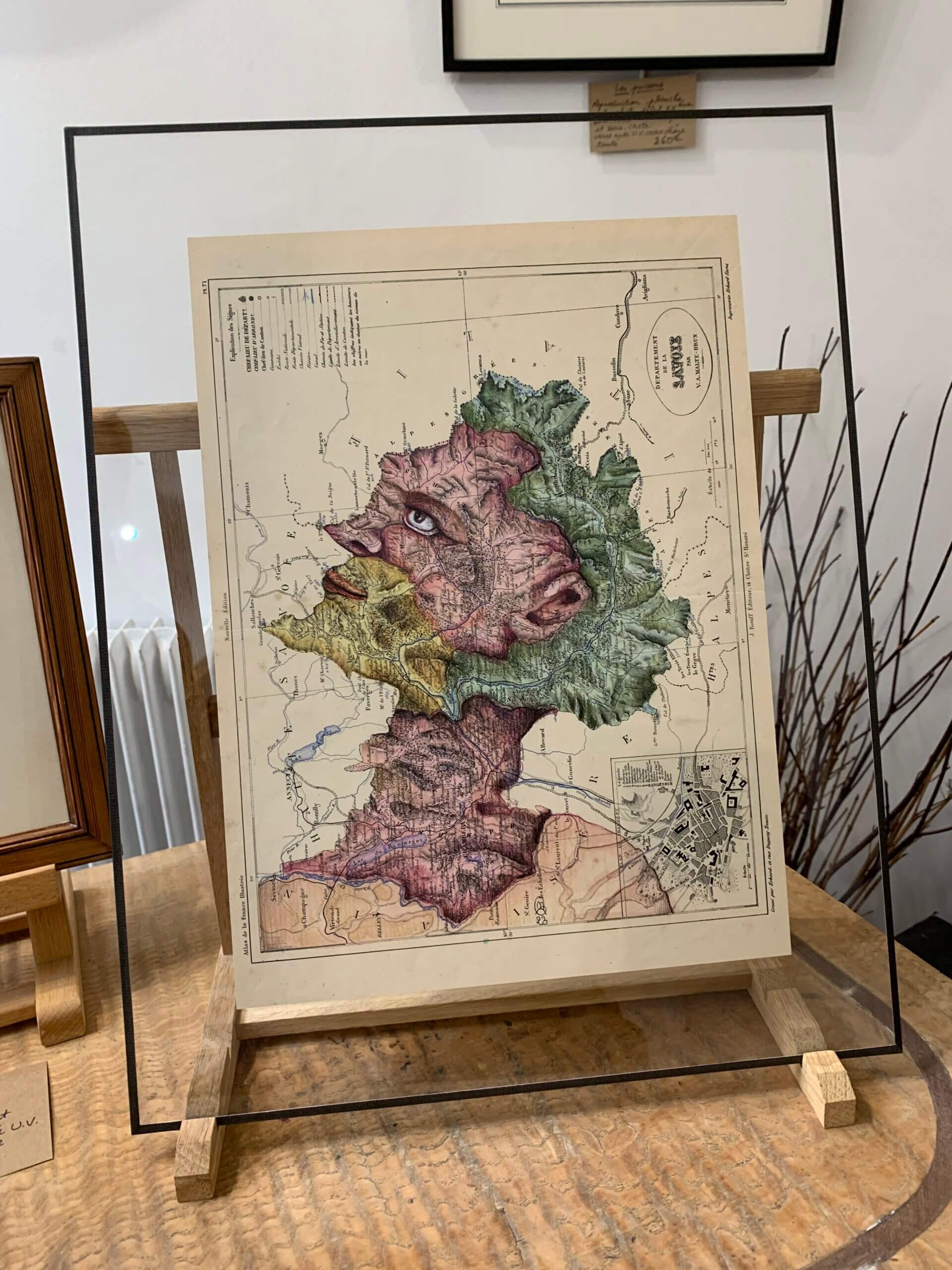
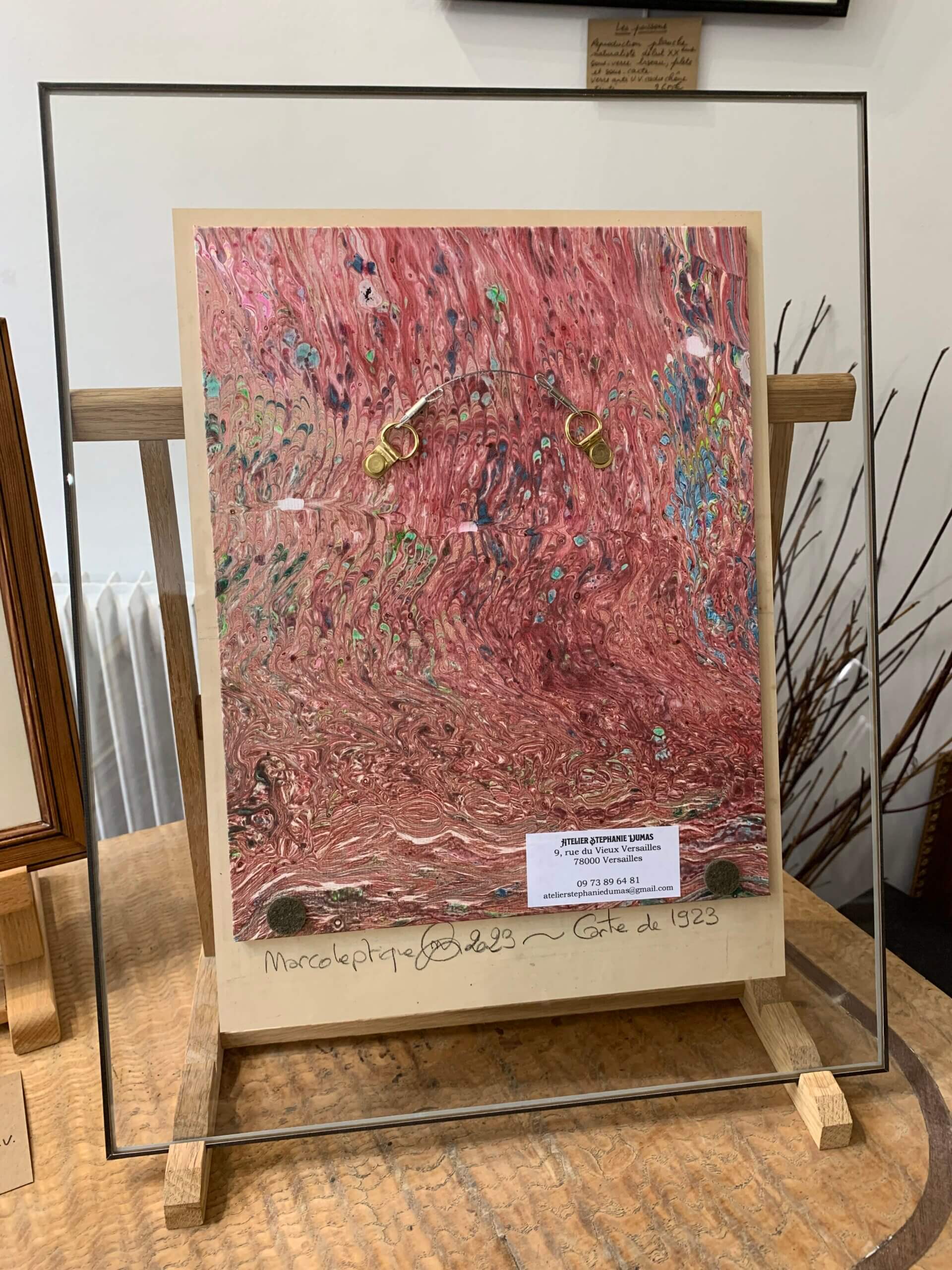
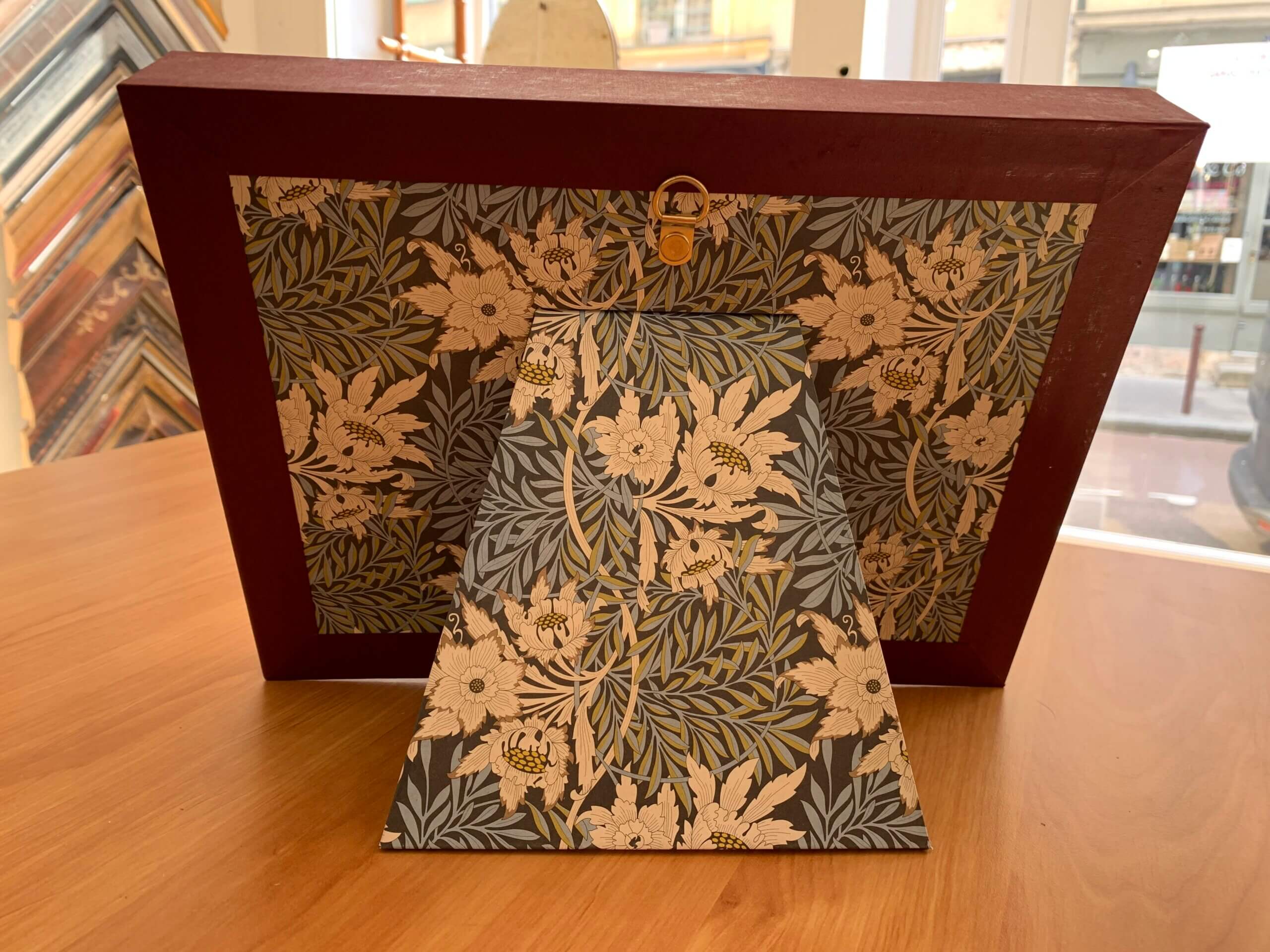
Photo subjects 2 and 3: Contemporary watercolor on a 1923 card, front view, back view with hand-made wallpaper by the artisan framer (Marcoleptique)
How to choose the ideal professional for your framing needs?
To choose a good pastry chef, all you have to do is taste their creations… but how do you evaluate a good framer? Personally, I have five criteria for choosing a good framer.
Criterion 1: Training and background. The CAP framing certificate is a very demanding state diploma. It’s a good sign, even though there are good framers who don’t have a diploma. By talking to a framer, I find out about their background and who they work or have worked for. Individuals, galleries, museums… this helps me determine whether they are reliable.
Are you interested in a career as a framer? Are you looking for a framer?
See the INMA website and its directory:
https://www.institut-metiersdart.org/metiers-art/fiches-metiers/ameublement-et-decoration/encadreur https://www.annuaire-metiersdart.com/
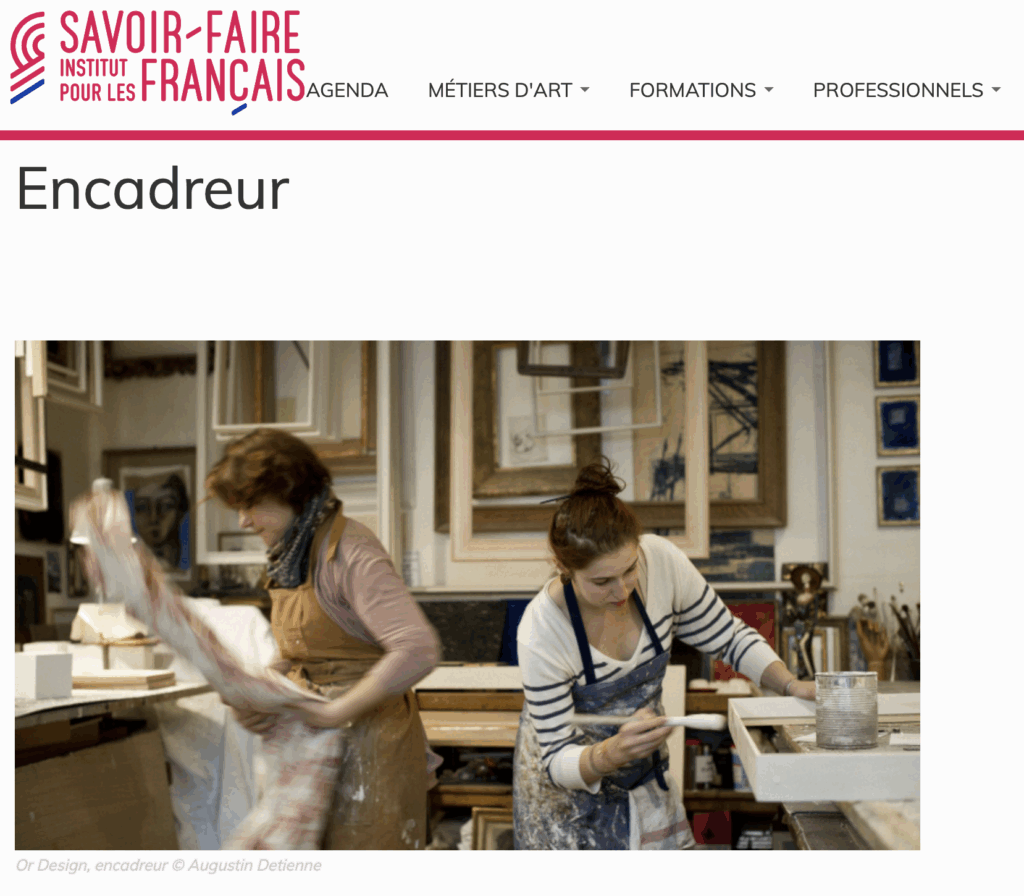
source: capture d’écran du site de l’INMA
Criterion 2: Respect for the artwork.
A good framer interferes as little as possible with the artwork, and any intervention must be 100% reversible and never alter the artwork: using pH-neutral adhesives, stitching to secure certain objects, etc.
The way in which they handle and store the artwork you entrust to them is also important. I attach great importance to this.
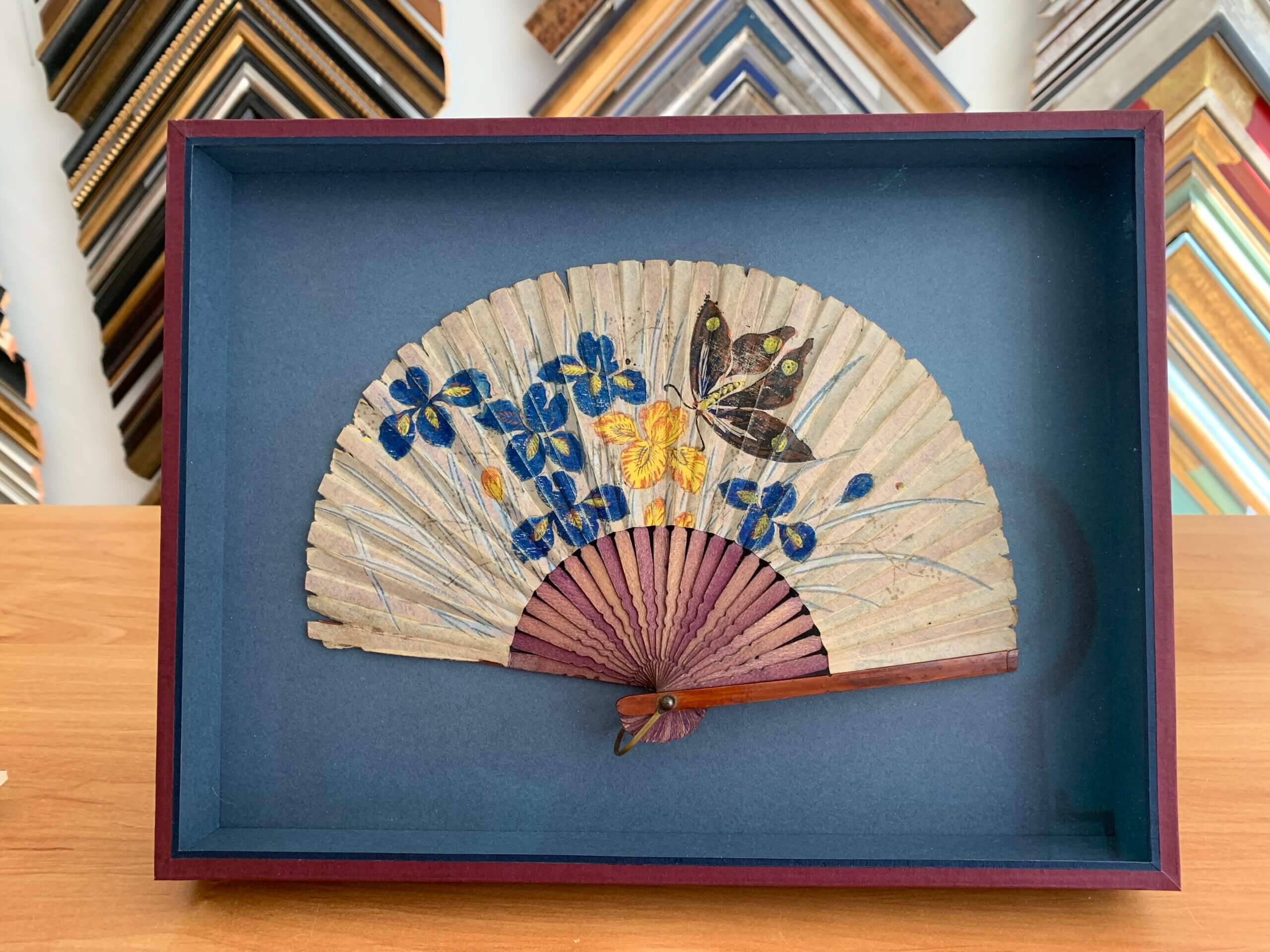
Photo subjects 1 and 2: Cardboard fan box with easel stand, paper edging, UV-resistant glass (late 19th century girl’s fan). The fan is attached with four almost imperceptible nylon stitches. (Work carried out by Atelier Stéphanie Dumas Versailles)
Criterion 3: Knowledge of artistic trends, papers, and techniques (such as whether or not to offer UV-resistant glass).
Their knowledge will determine their ability to listen and advise, their responsiveness and their ability to assess customers’ tastes in order to respond to or anticipate them, as well as their ability to suggest ideas if the customer does not have any. I avoid framers who only work in one style and only offer standardized, conventional solutions.
Criterion 4: Proportion and weight.
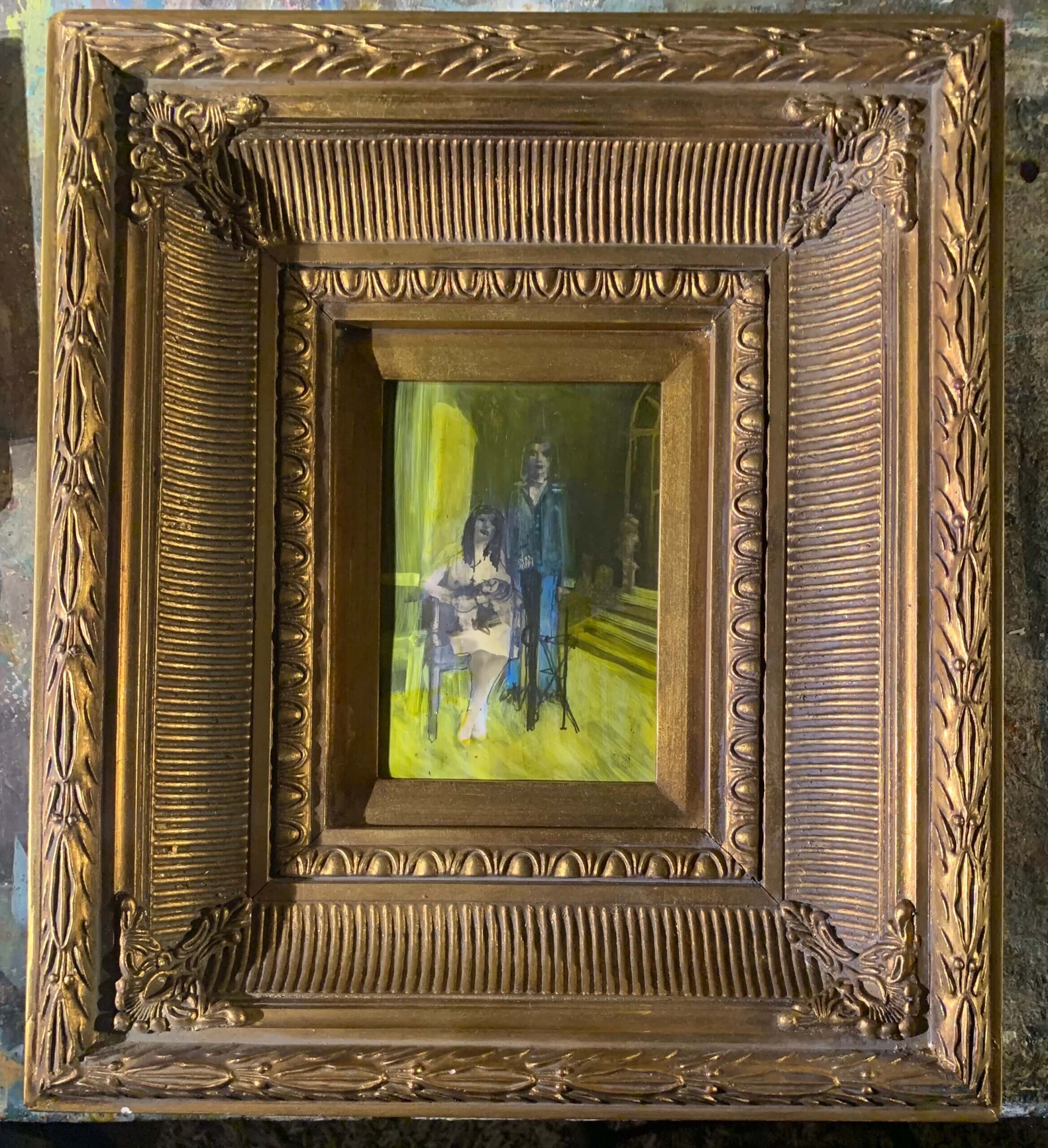
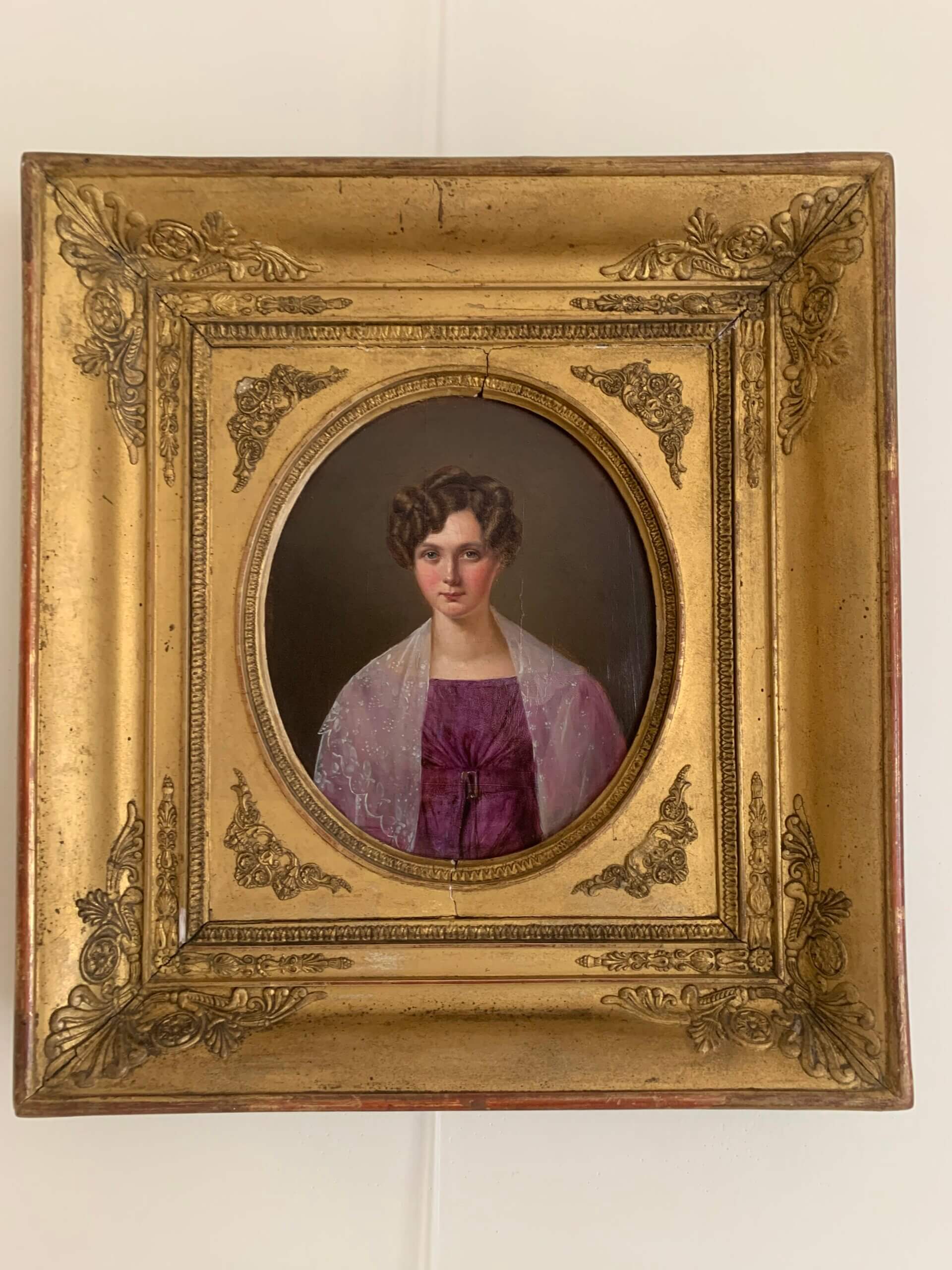
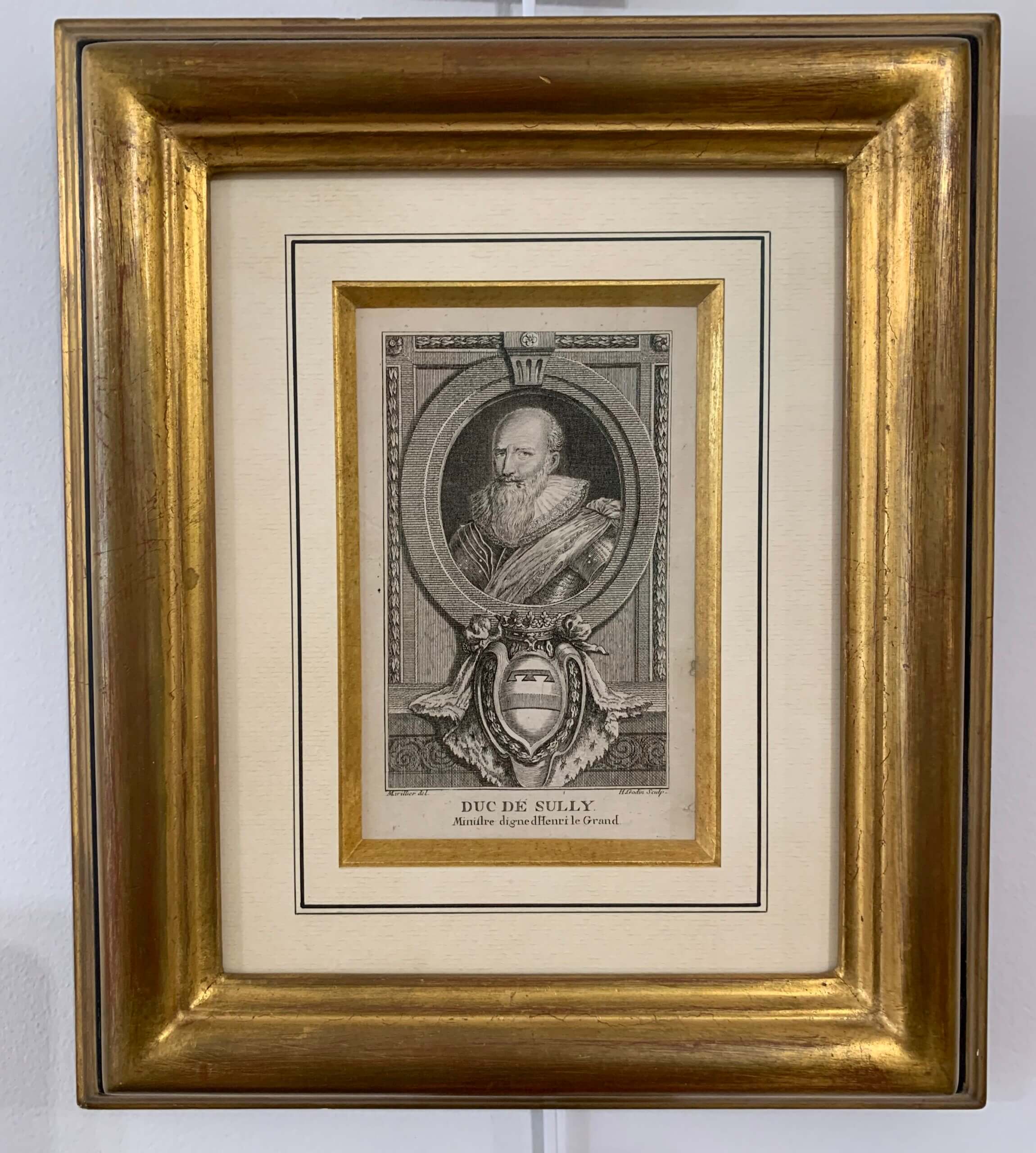
One of the most common mistakes is when the framing overwhelms the artwork with its size, volume, or simply its color. I sincerely believe that a good framing should not think of themselves as an artist and should be humble enough to take a back seat to the artwork. However, it is possible to create a framing that is heavy in relation to the artwork if it enhances the subject (to do this, you really need to have confidence and choose your framing carefully):
Here, the intricate, sweeping frames guide the eye…
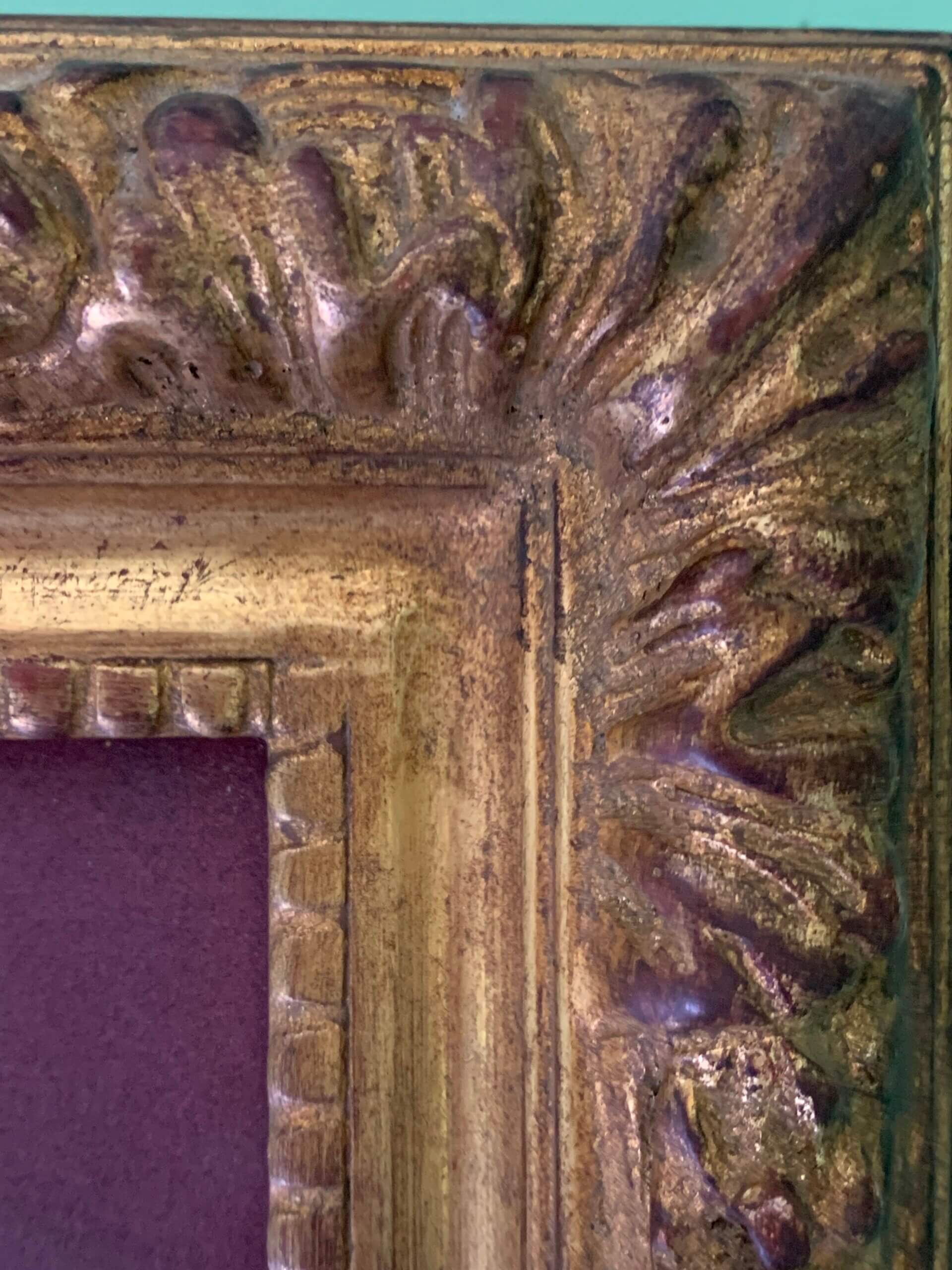
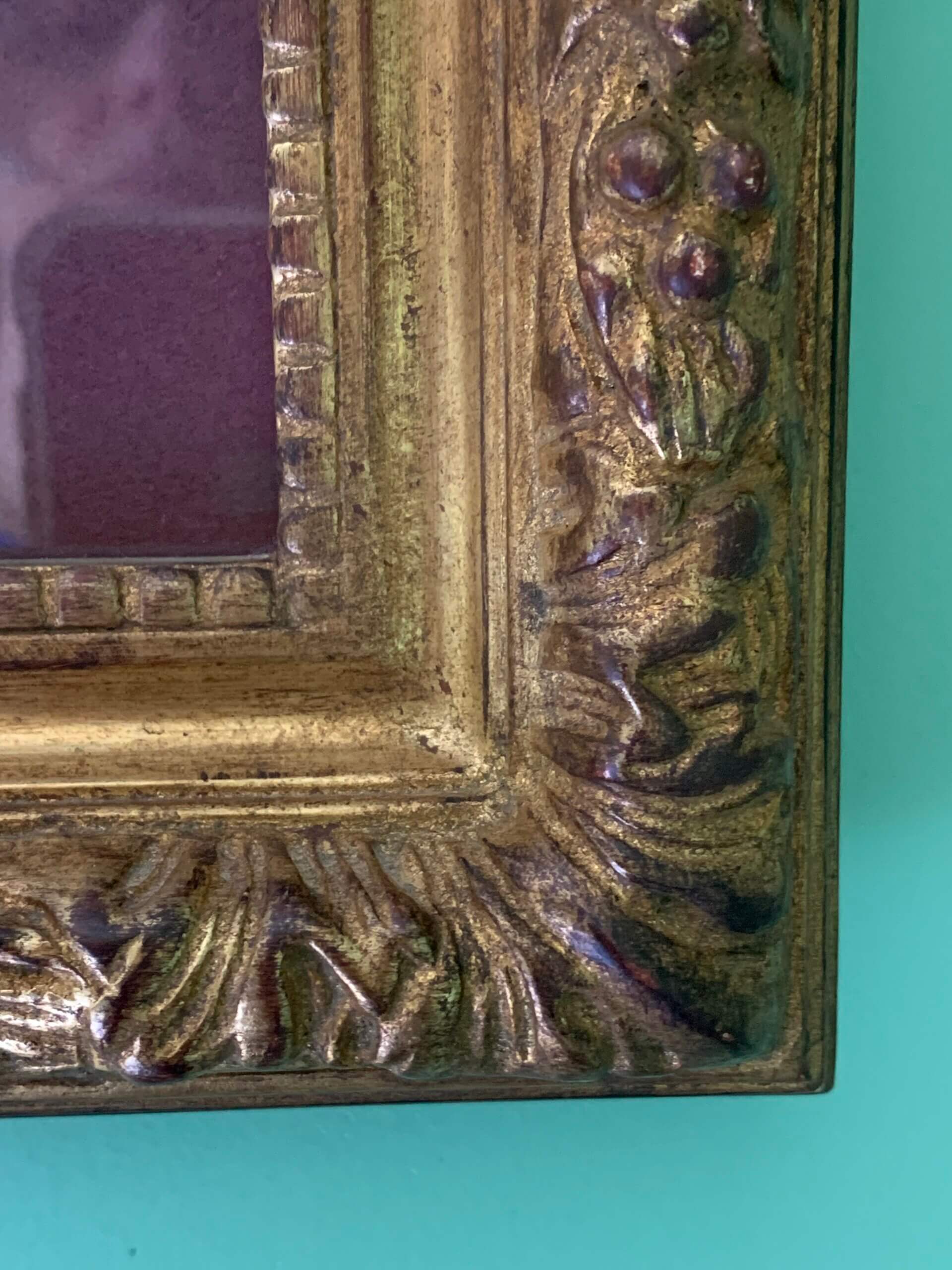
Photo subject 1: acrylic on old photo (Laudac) in a large, ornate antique frame with a deep profile. Four successive frames can be seen.
Photo subject 2: oil painting on wood, 1820 (anonymous), with a gilded wooden frame with pronounced reliefs from the period, giving depth to the subject. The frame is very prominent, accentuating the dive towards the subject’s medallion.
Photo subject 3: 18th-century engraving, double-beveled gold framing with filleted border, UV-protective glass (work by the Stéphanie Dumas workshop)
Criterion 5: What the framer highlights.
In the framer’s shop, the items on display must be well cared for and show constant attention to detail: no marks on the glass, beautifully finished mat edges, etc. However, while the appearance of the shop is important, I know from experience that it is not enough, because I never lose sight of the fact that it is too heavily influenced by the geographical location, the type of clientele, the craftsman’s resources, etc. And I know that it is difficult to have a nice shop and keep it looking fresh while working.
Generally speaking, what I do is look at the framing that the artisan displays or is working on (don’t hesitate to ask to see what they are currently working on).
It’s like looking at pastries and tasting a small one before buying a birthday cake for six people! Birthdays are important!
How to frame a work of art: the essential rules of the art
Respect the work and disregard passing trends
Generally speaking, I am wary of trends in colors and materials: since framing is there to preserve and enhance, it is a long-term investment, so it is best to be sure you can live with it for a long time. Will the framing withstand changing fashions or your moves? So, when it comes to mat colors, in 90% of cases I only opt for white and all its variations (off-white, cream, etc.).
I also believe that a work of art should be framed for what it is, not to match the decor of your interior. It is always best to take advantage of the characteristics of the work. For example, a dented or crooked work deserves a rough and/or simple framing that does not seek to hide these characteristics.
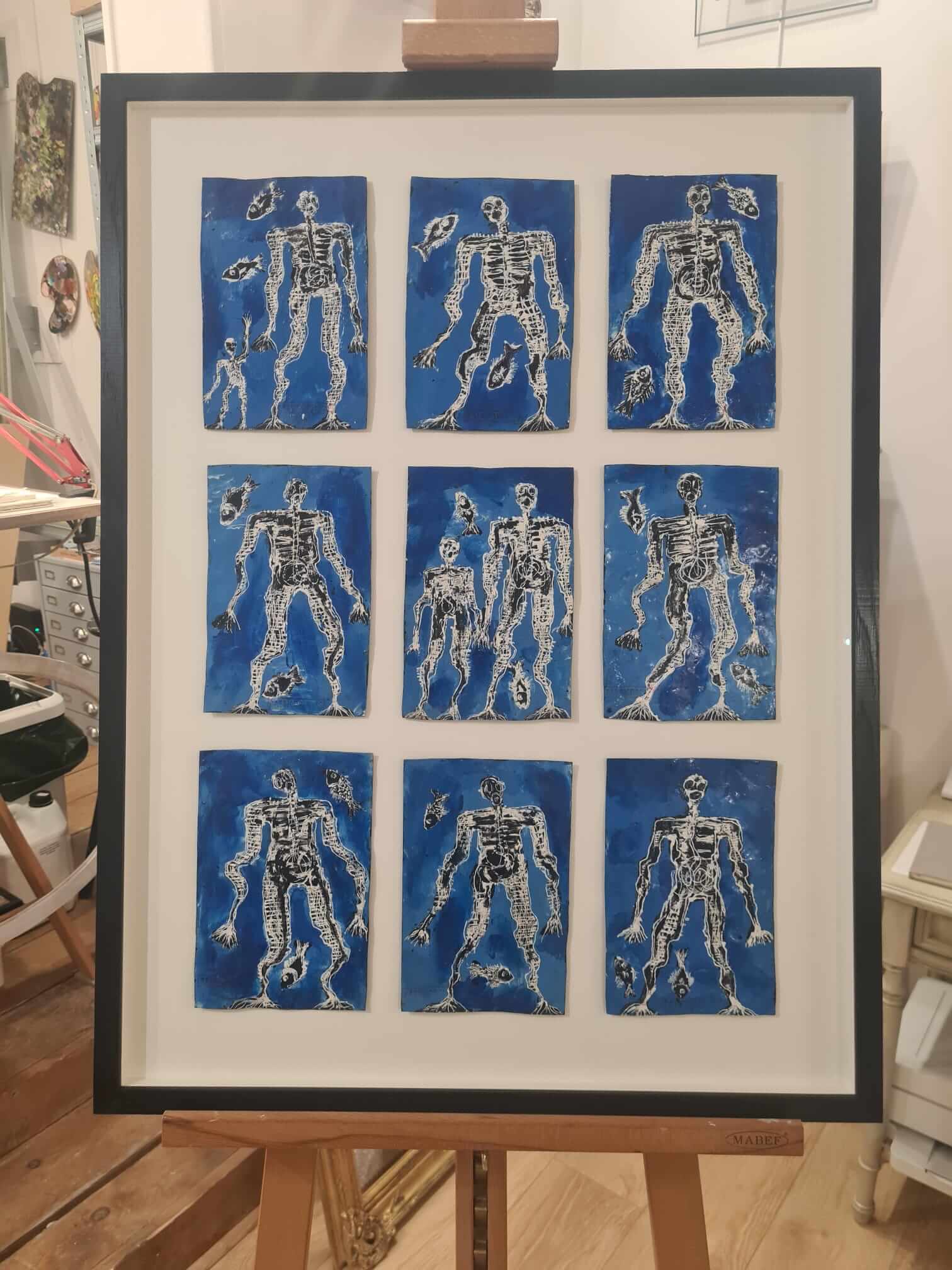
Subjects in photos 1 and 2: acrylic paint on warped metal with irregular edges (works by Patricorel). In photo 1: airtight case with UV-resistant glass, natural wood frame stained with India ink, each of the nine subjects rests on a 0.5 cm cardboard backing to raise it and create a floating effect. (Work by the Stéphanie Dumas workshop)
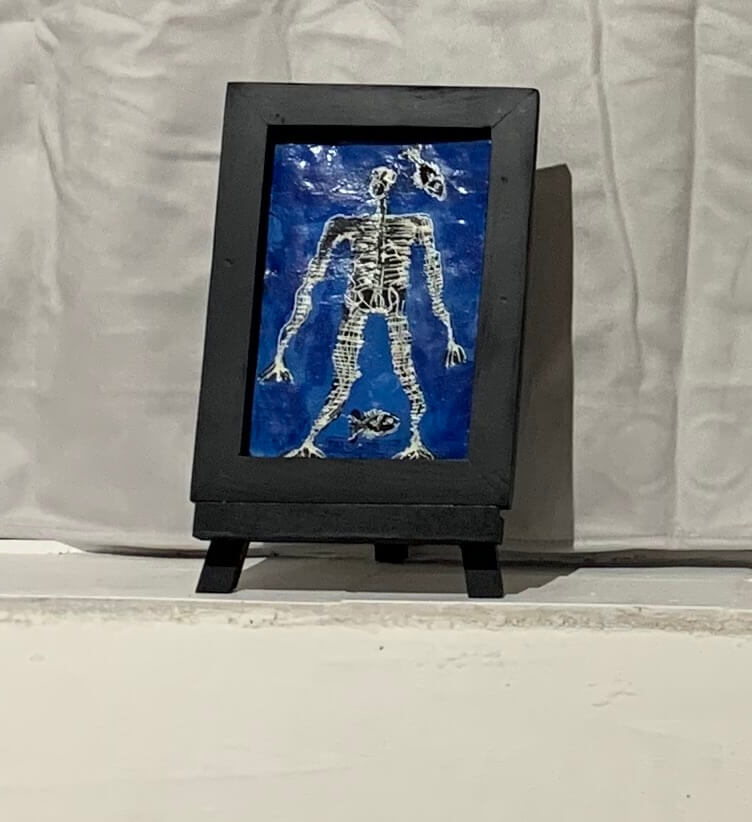
In photo 2, with a case without glass, only the dented effect is retained, but the irregular edges are lost. The subject is enclosed despite the high-quality craftsmanship, which retains a raw appearance.
In general, it is important to avoid overdoing it.The framing should not distract attention from the artwork. The framing should not clash or compete with the artwork; it should be proportionate to the size of the subject.
Similarly, the size of the mat, its thickness (to define or create depth) with a more or less deep bevel, the choice of molding… should draw the eye to the subject. A very good craftsman will play with the nuances of paper and molding colors, with the use of patinas… with discretion and subtlety.
A heavy frame will only be appropriate if the work supports it. And often, it is a large canvas that does not even need framing!
Framing artwork: What about gilding?
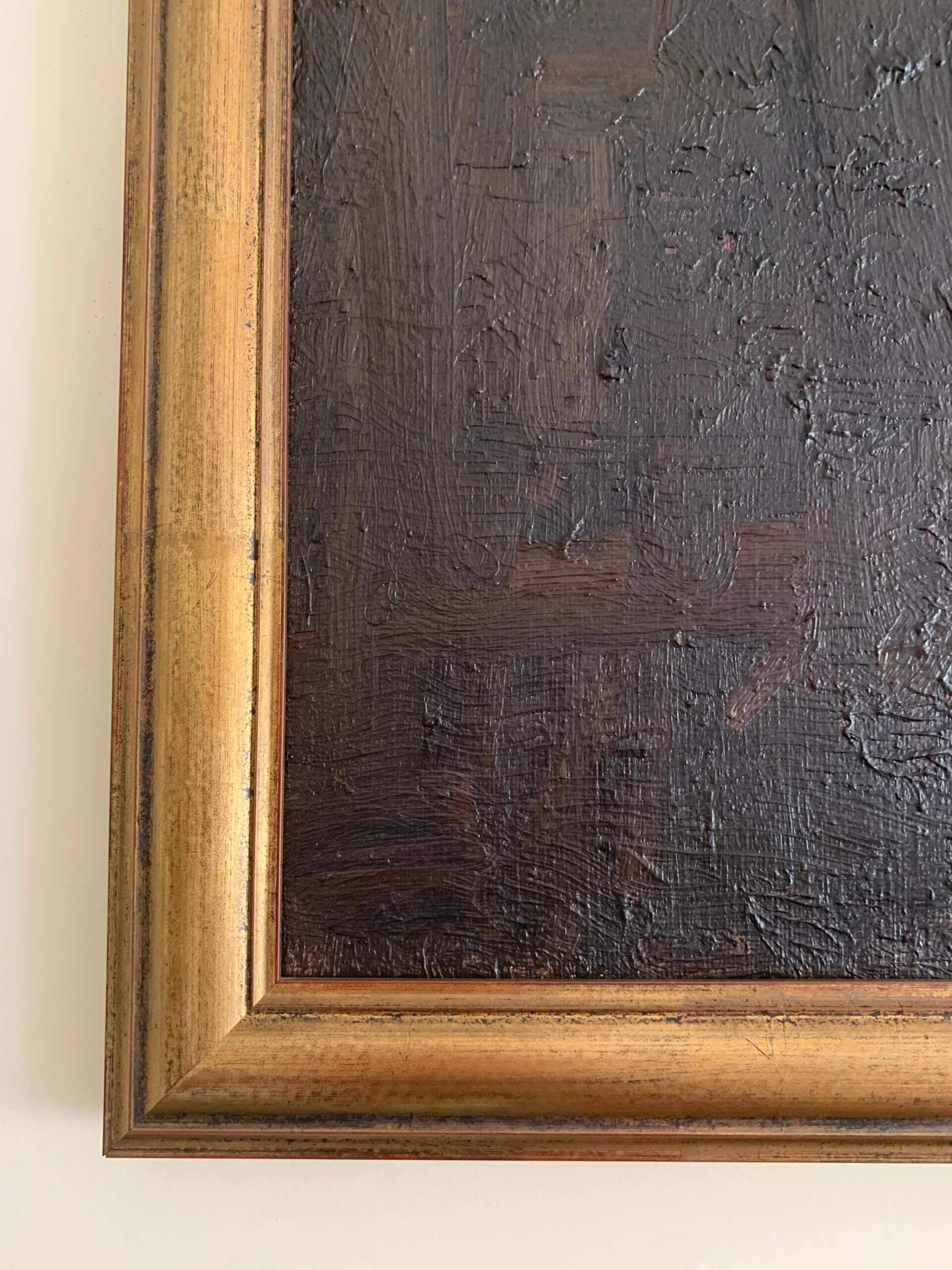
Photo subject 1: oil painting on wood, 1820 (anonymous), with a gilded wooden frame with pronounced reliefs from the period, which give depth to the subject. The frame is very prominent, accentuating the focus on the subject’s medallion.
Photo subject 2: Oil painting on canvas on stretcher, 1930s.
The gilding does not add color but light, a reflection, or something warm and enveloping. As it is important not to add anything to the visual impact created by the artist, it is necessary to remain consistent with the logic of the work. The modern frame is simple and patinated gold in order to highlight the canvas.
If gold is warm, are aluminum and silver cold?
They are above all more modern, even contemporary or industrial (in a non-pejorative sense), but they can perfectly enhance the old with a beautiful patina.
Why frame photographs?
The photo absolutely deserves to be protected from the long-term effects of light. The first rule to follow is that the glass must not touch the photo.
A baguette frame is often a good solution, but paper edging is another option that I like. It is thin and discreet, yet decorative. The paper can be tinted, and there is an infinite range of colors to choose from.
The guidelines are not to frame the photo too tightly and to leave some breathing room (especially for a photo in motion). Paper edging is not stylistically distinctive and allows for multiple possibilities for displaying and hanging photos or papers.
Accurately assess the cost of good framing
Framing should be considered a long-term investment. The price will depend on the format, the type of fixtures, the quality of the glass (preferably choose UV-resistant glass unless the piece will be hung in an area without direct light), the type of moldings, and the assembly (cut and assembled strips or “filled corner frames,” i.e., specially made to measure and then coated). Custom-made frames with filled corners are expensive but exceptionally attractive.
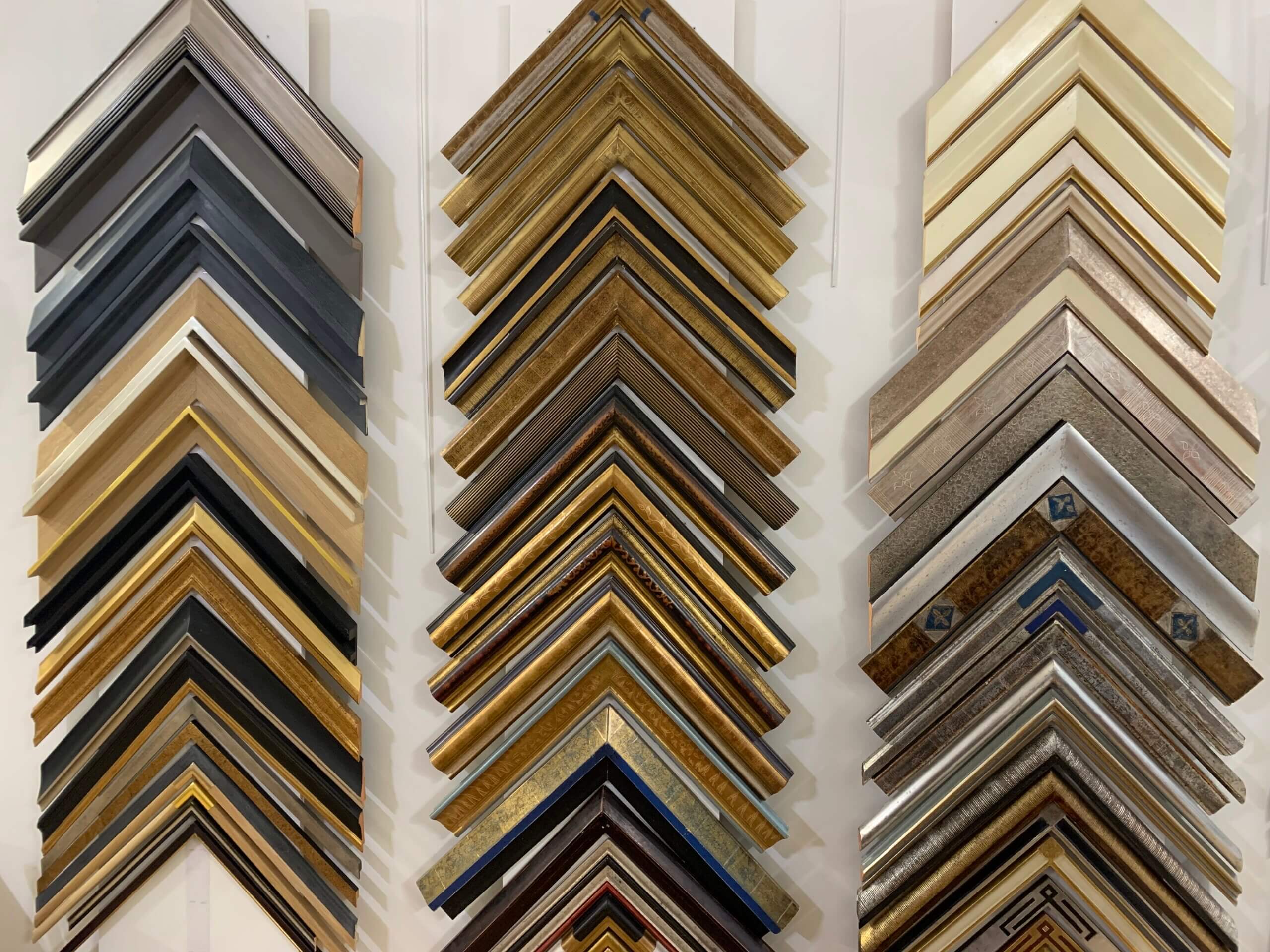
Frames made from cut and assembled strips (from antique to contemporary)
To get a price, it is essential to request a quote that takes into account the time and cost of supplies.
Don’t hesitate to shop around… not only for prices, but also for preservation and enhancement proposals. In the end, savings of 30% or more are often possible.
Finally, be aware that it is impossible for a craftsman to give a price range without seeing the work beforehand (by phone, for example), or else they are lying to you!
How can you find affordable framing solutions?
With second-hand frames
It is indeed possible to create framing from old frames. A good craftsman knows how to reuse old or second-hand frames to create a beautiful, airtight mount. You can, of course, bring in a frame that you may have found at a flea market for a few dollars. Even if the dimensions are not right, the craftsman will cut it to size, unless the frame is too damaged. This is often a more economical option than choosing new framing… if you like antiques, as I do!
The important thing is that the framer makes you an airtight box, then the framing strips are removable, so they can be changed without altering the frame.
What is the difference between standard and custom framing?
When it comes to ready-made frames purchased at supermarkets or DIY stores, they can be a good solution… but only if they are temporary! They are a practical short-term solution while you wait for more professional framing. Why temporary? Because they have several drawbacks:
The foldable staples do not allow the frames to be closed tightly.
The “wood” appearance is not wood but sawdust compressed with glue and covered with plastic or screen-printed film. This means that the materials are acidic.
The hardboard backing is made of compressed sawdust, which is also acidic.
The glass is not always of good quality unless you pay a high price, which is not a good idea when it comes to a non-permanent solution. What’s more, unfortunately, you are contributing to hyper-consumption that produces waste and poor quality.
If you have a work of art that you care about but don’t have the budget to protect it, then frame it with a ready-made framing and ask for a framing made by a craftsman as a birthday or Christmas present!
The editorial team
The thrill of artistic discoveries