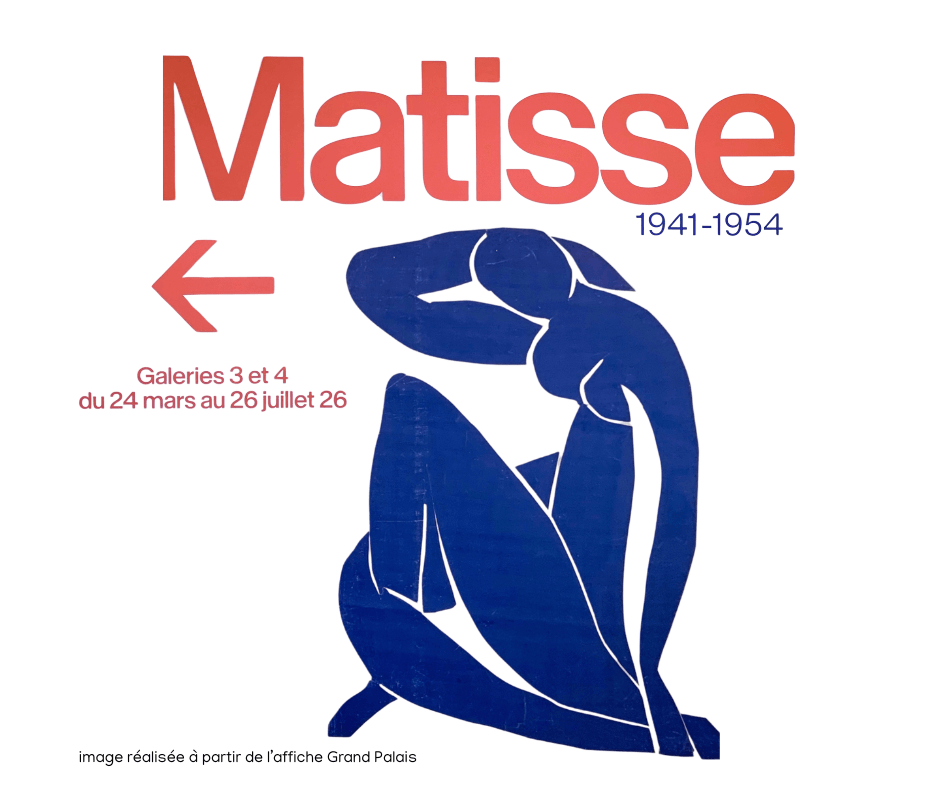
Why is Matisse a major figure in art?
- Post category:Artist Profiles
- Reading time:6 mins read
From the quiet intimacy of his early Neo-Impressionist works to the bold, monumental compositions of his cut-out gouaches, Henri Matisse profoundly shaped the history of modern art in the first half of the 20th century.
Throughout his career, Matisse pursued a singular artistic goal: to express light, harmony, and joy. That lifelong search made him one of the defining artists of modern art.
Two periods of convalescence changed the course of his life. The first, at the age of 20, led him to painting. The second, at 70, opened the door to an extraordinary late phase of invention that would renew his art once again.
From Law Clerk to Leader of Fauvism
Henri Matisse was born in Le Cateau-Cambrésis, in northern France, on December 31, 1869, and died in Nice on November 3, 1954. He was not originally destined for an artistic career. He worked as a law clerk before discovering painting during a recovery from appendicitis at the age of 20, when his mother, an amateur painter, gave him a box of paints.
His family came from a world of textile workers, an environment that may help explain his lifelong attraction to pattern, fabric, ornament, and richly colored surfaces.
In 1892, Matisse failed the entrance exam to the École des Beaux-Arts, but he continued to train himself by copying old masters at the Louvre and at the Fine Arts Museum in Lille.
His early paintings were influenced by Neo-Impressionism, but he soon moved toward the avant-garde. At the 1905 Salon d’Automne, a group of young painters shocked the public with their use of violent, non-naturalistic color. A critic mockingly described them as les fauves — “the wild beasts.” The name remained, and Fauvism was born.
Matisse quickly emerged as the movement’s leading figure, alongside artists such as André Derain and Maurice de Vlaminck. He later traveled to Spain, Morocco, and Tahiti before settling in Nice in 1917, where he would remain for the rest of his life.
Why Does Matisse Still Matter Today?
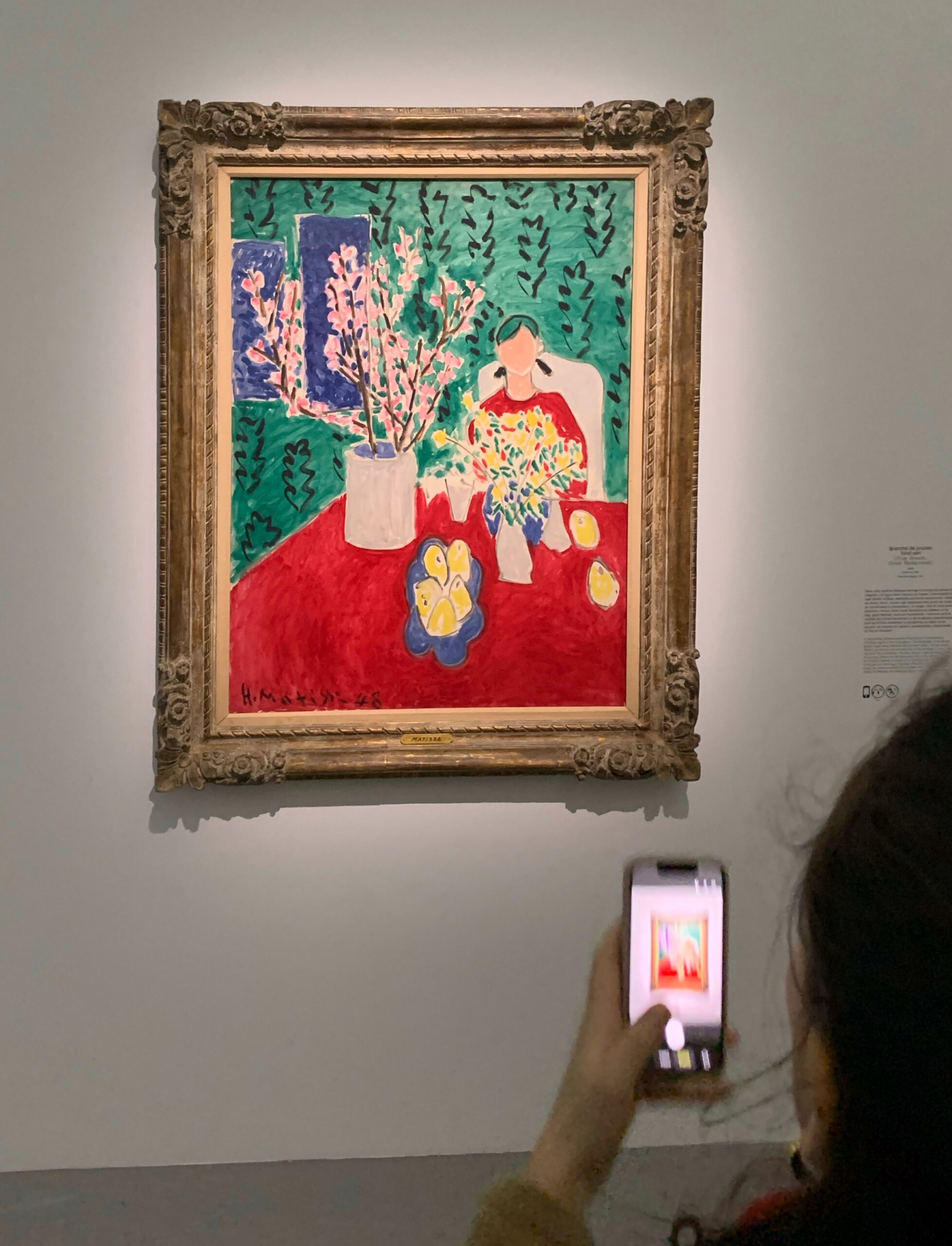
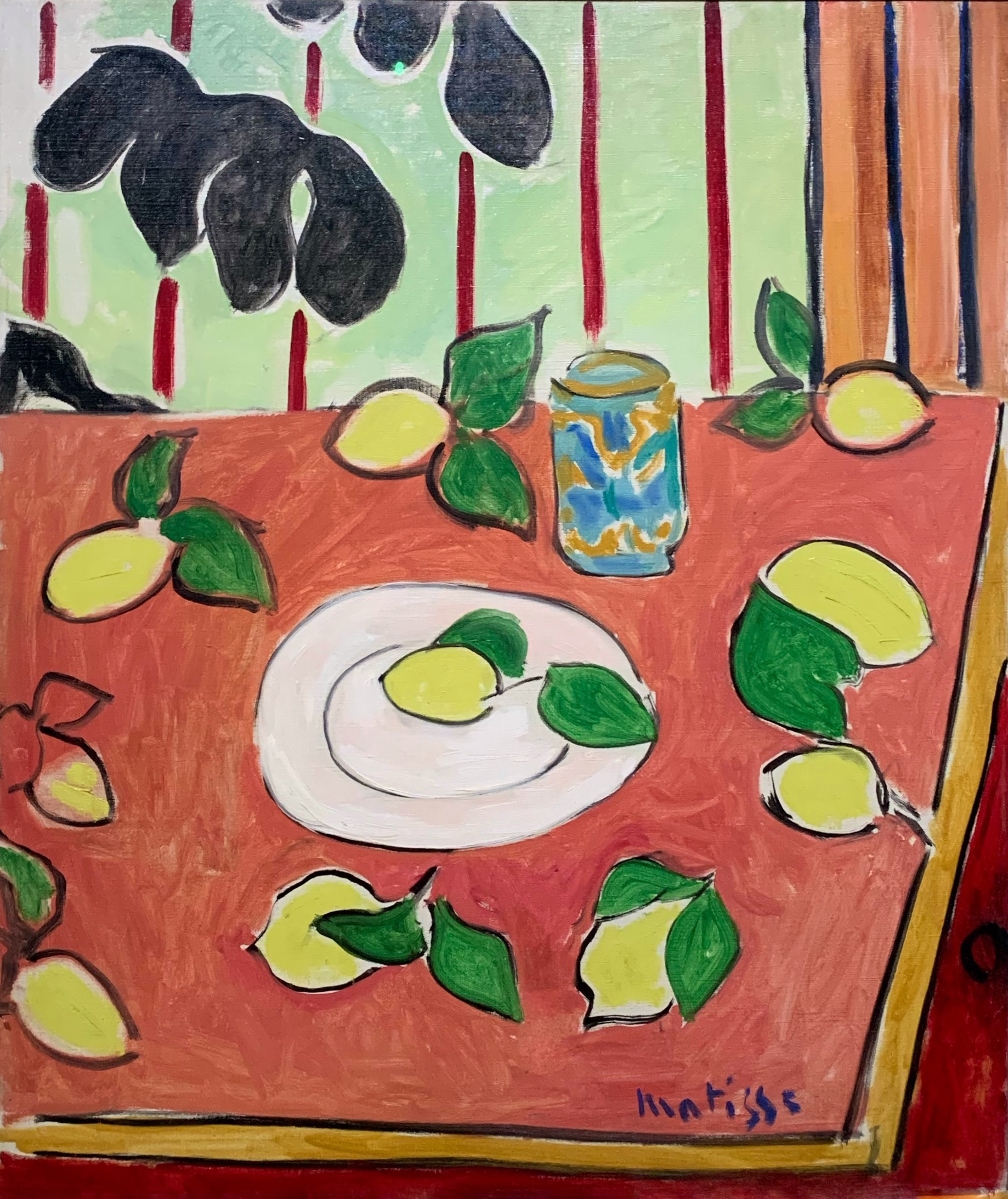
Part of Matisse’s enduring appeal lies in the apparent simplicity of his subjects: a room, a table, a window, a portrait, a nude, a dance. Yet in his hands, these familiar themes become radically new.
Color in Matisse is never merely descriptive. It structures space, creates rhythm, and gives emotional force to the composition. That is why his work remains instantly
Interiors, Windows, and Everyday Life
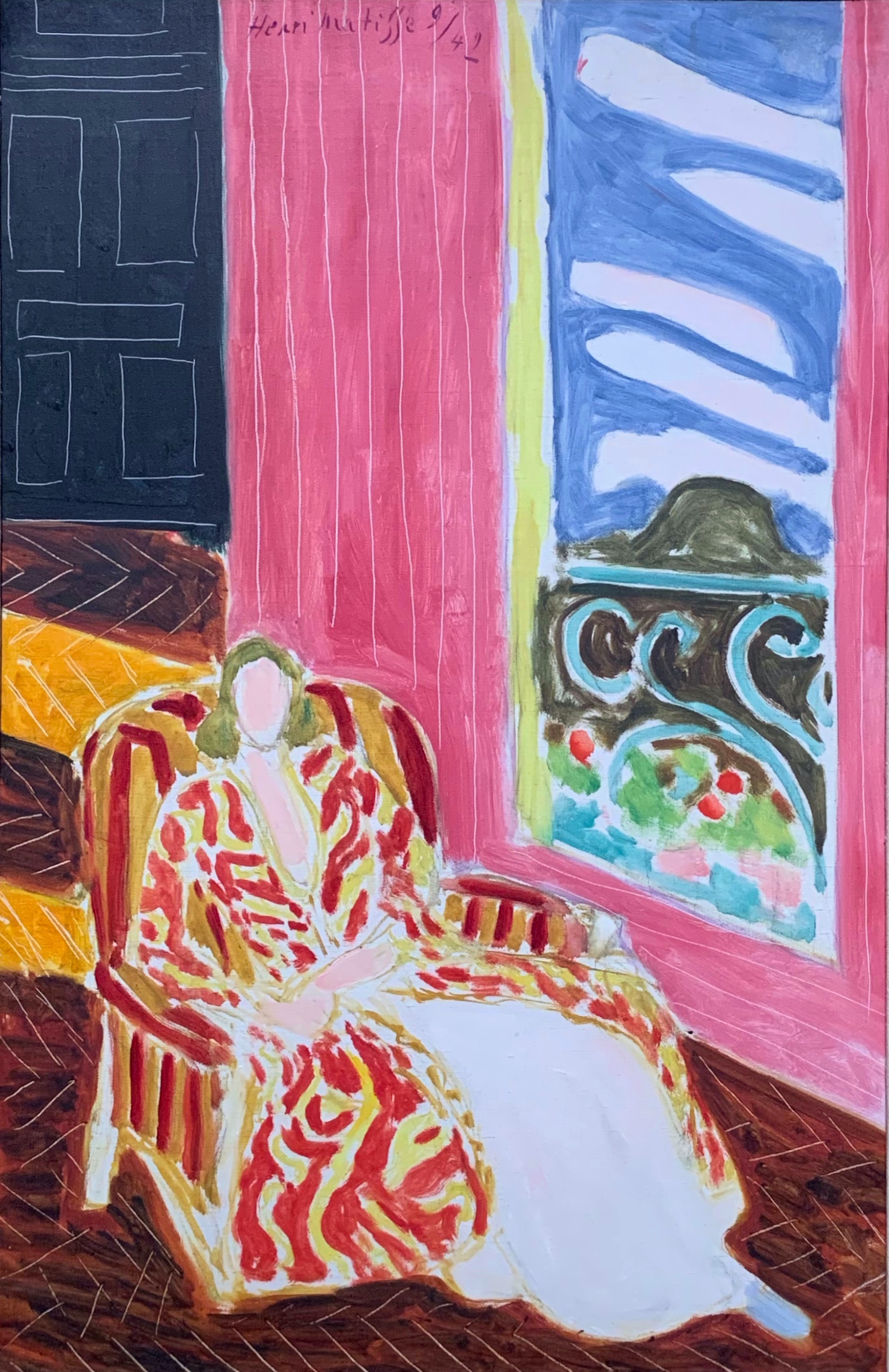
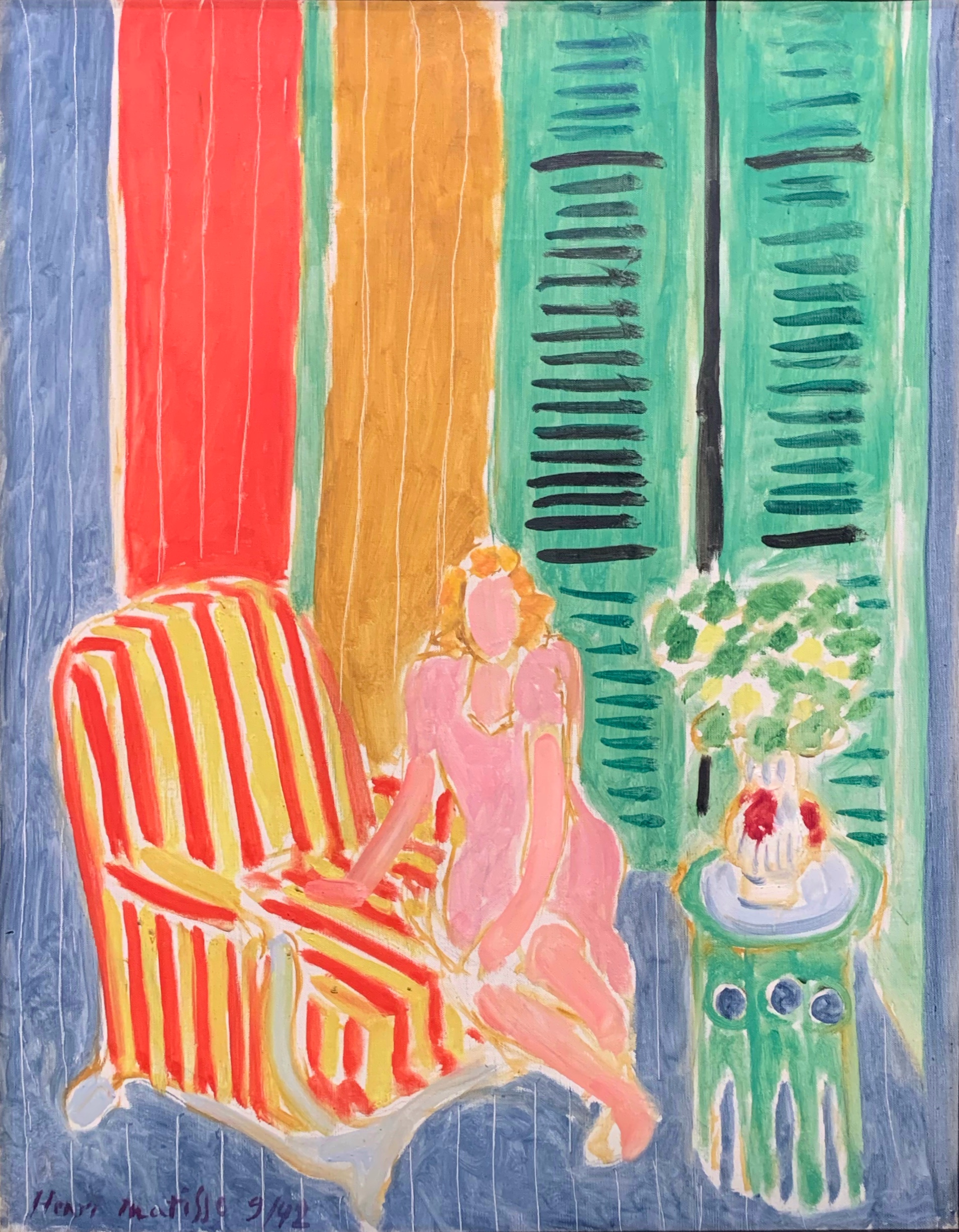
In Matisse’s paintings of southern interiors, the window is far more than an architectural detail. It becomes a threshold between private space and the brightness of the outside world. Shutters, filtered sunlight, sea views, and patterned rooms all play a central role in his visual language.
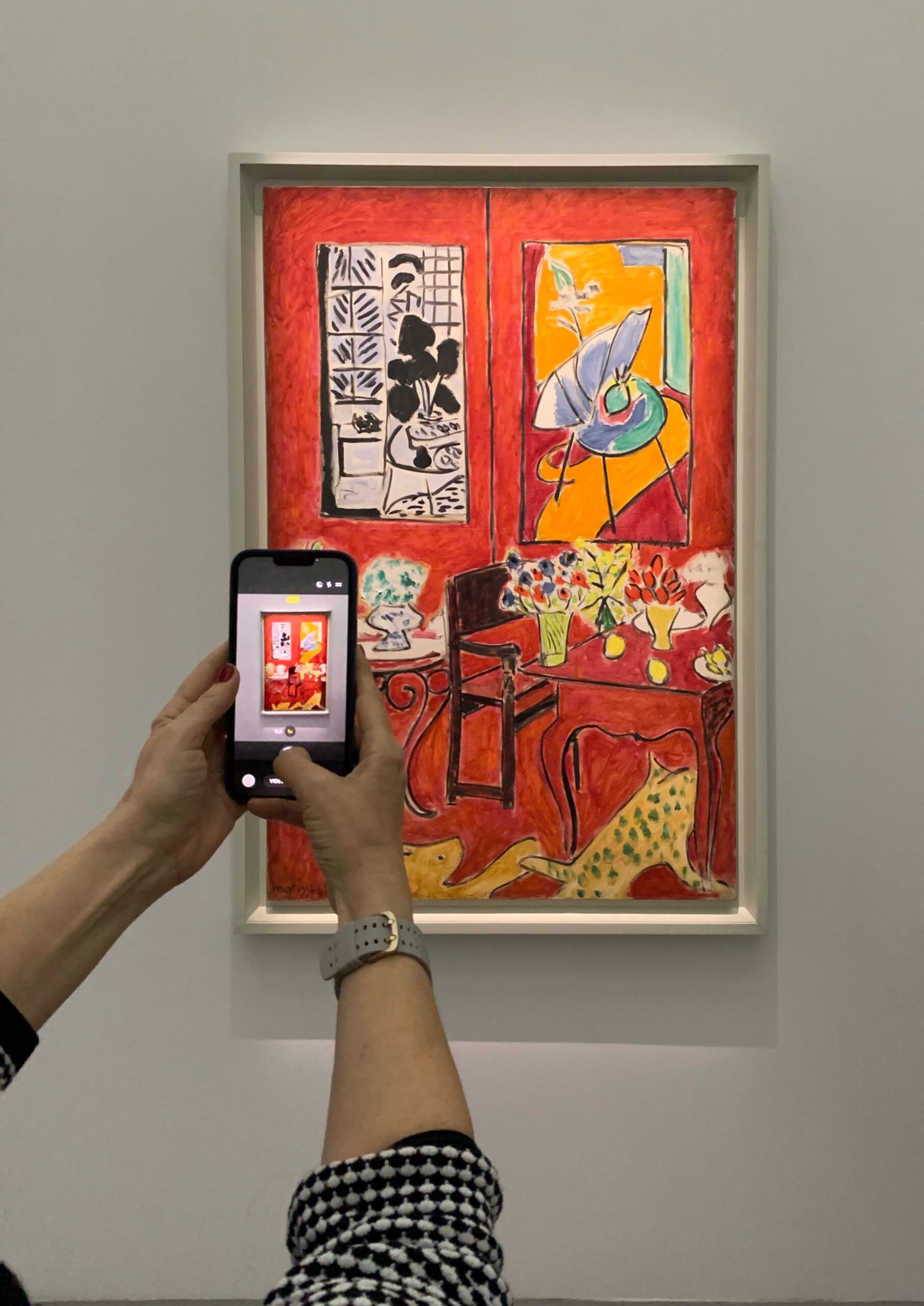
Domestic life also appears again and again in his work: tables, studios, living rooms, still lifes, and quiet moments of daily life. In paintings such as The Red Room (Harmony in Red), decoration and color do not simply embellish the image — they organize it.
Portraits, Bodies
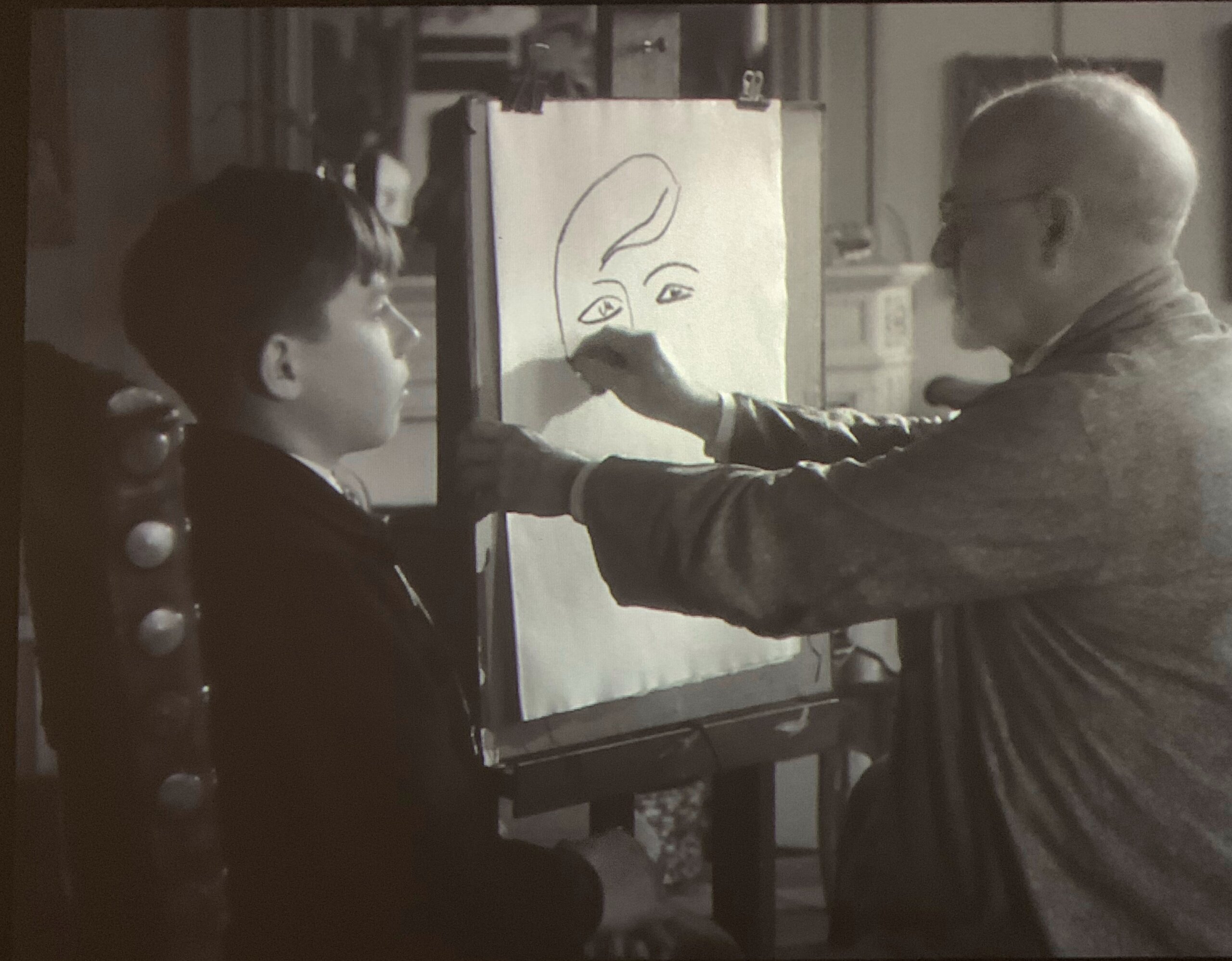
Portraits and the human figure remained central to Matisse throughout his career. His wife and daughter, Marguerite, often served as models, especially in scenes drawn from everyday life.
Dance and Music
Dance and music also became essential themes in his work, giving it a spirit of movement, pleasure, and celebration. With La Danse and La Musique, commissioned by the Russian collector Sergei Shchukin, Matisse created two of the landmark images of modern art.
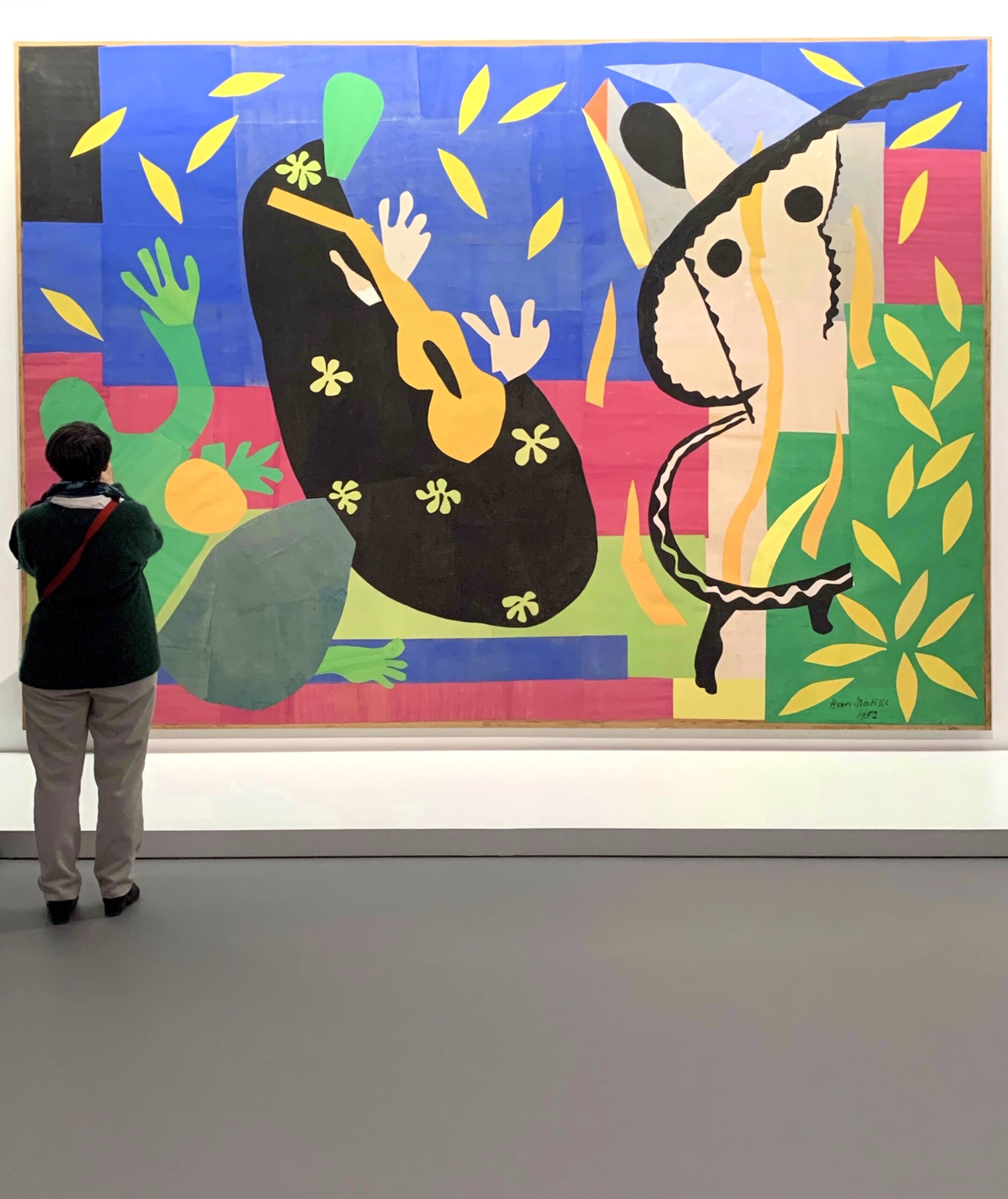
La Danse in particular has become one of the great icons of 20th-century painting. That same sense of freedom and vitality continued into his later years, notably in works such as Jazz, The Creole Dancer, and The Sorrow of the King.
A Second Artistic Life: 1941–1954
In 1941, Matisse survived a major operation. Physically weakened, he adapted rather than stopped. This period marked the beginning of an astonishing late chapter in his career.
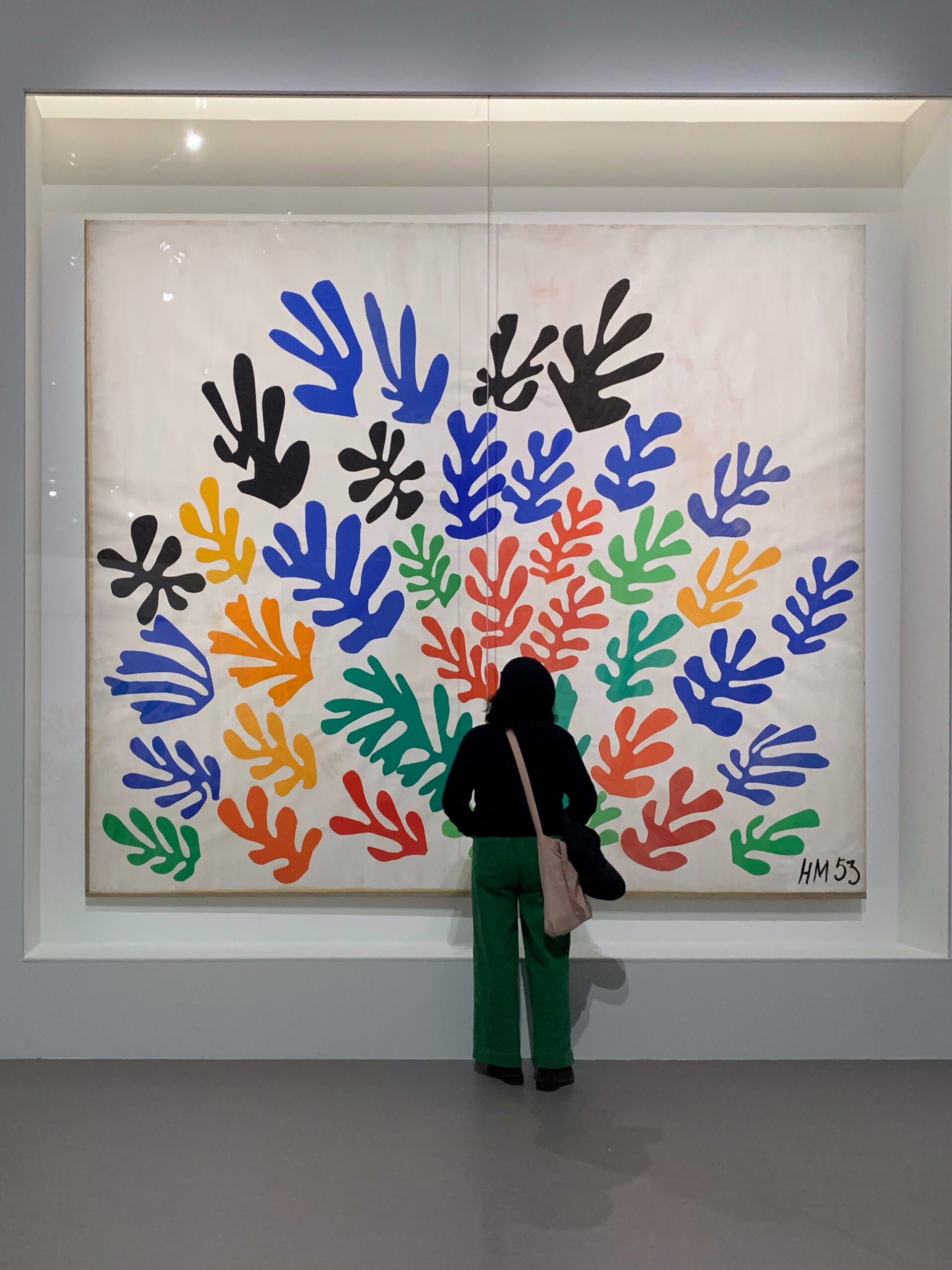
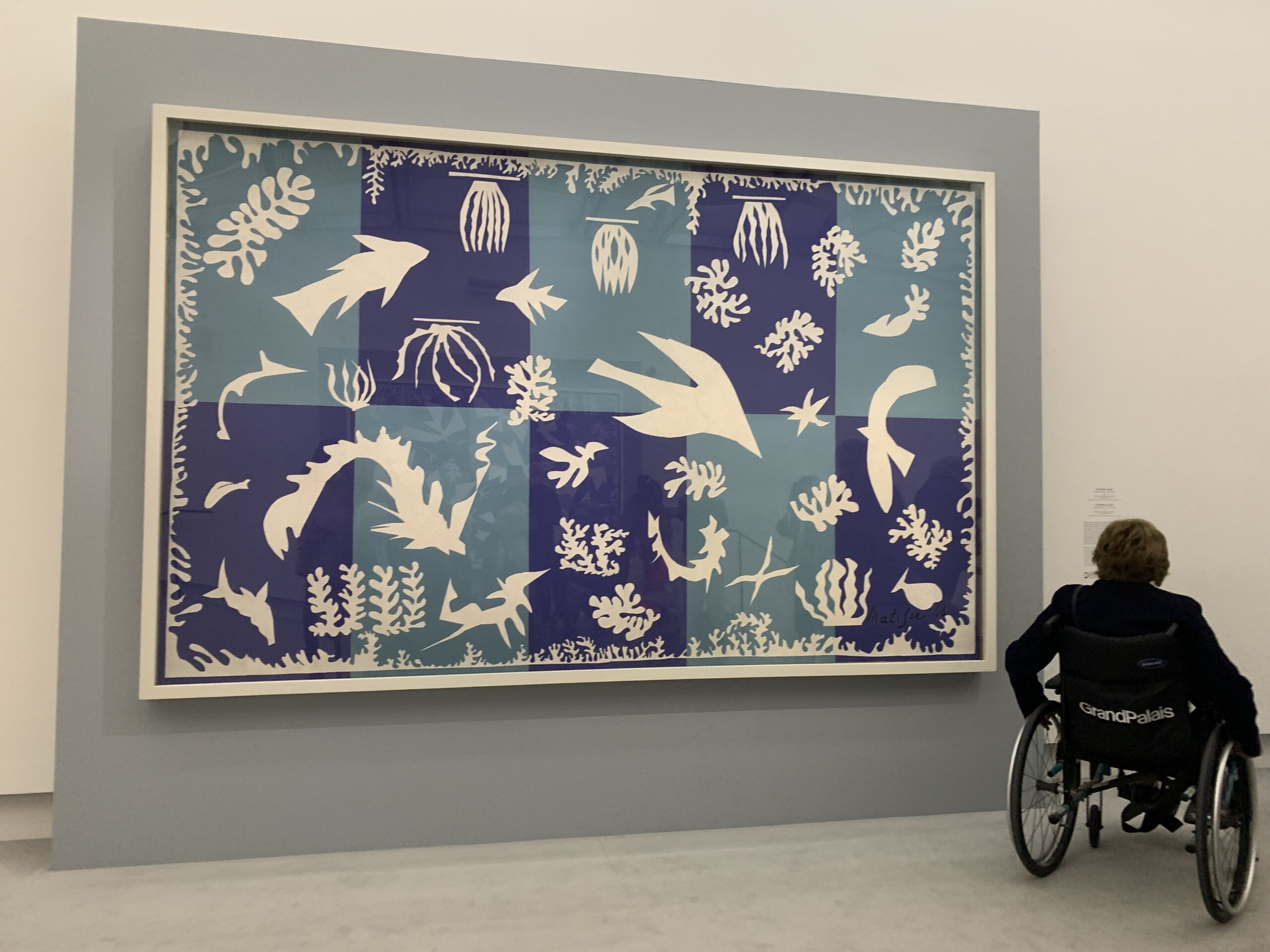
Unable to work in the same way as before, he turned increasingly to paper cut-outs: shapes cut from sheets painted with gouache, then arranged into vivid compositions. These works are among the most innovative of his entire career.
Far from being simple or decorative, the cut-outs were the culmination of decades of reflection on line, color, and form. Their apparent lightness is grounded in absolute mastery.
During these final years, Matisse’s output remained remarkably rich. He created paintings, drawings, illustrated books, stained-glass windows, textile designs, and one of his greatest achievements: the Rosary Chapel in Vence, often known as the Matisse Chapel. There, he brought together architecture, line, light, color, and spirituality in a total work of art.
Matisse during the War and after
After the war, his stature only grew. In 1945, he was celebrated at the Salon d’Automne. The French state acquired several of his paintings for the reopening of the National Museum of Modern Art, and the Maeght Gallery dedicated a major exhibition to him. By then, Matisse had become not only a master of modern art, but also a figure associated with peace, balance, and renewal.
Where to See Matisse’s Work
Anyone wishing to discover Matisse should begin with four major places.
The Musée départemental Henri Matisse in Le Cateau-Cambrésis, founded with the artist’s support in his hometown, offers an exceptional overview of his career.
The Musée Matisse in Nice houses one of the world’s most important collections of his work.
In Paris, the Musée d’Art Moderne de Paris allows visitors to encounter a major group of works connected to La Danse.
And in Vence, the Rosary Chapel reveals the spiritual and architectural dimension of Matisse’s art in one of its most complete forms.
TO GO FURTHER — Recommended reading : Matisse, by Volkmar Essers, published byTaschen
In Summary: Why Is Henri Matisse Famous?
- His avant-garde role in Fauvism
- His search for simplification and his bold combinations of intense color, visible in his so-called “barbaric harmonies”
- The joy and sense of happiness that radiate from his work
- The richness of his expression across drawing, painting, cut-out gouaches, and stained glass
- Both intimate works and monumental masterpieces displayed in major museums around the world
© artistesactuels.fr – the thrill of artistic discoveries