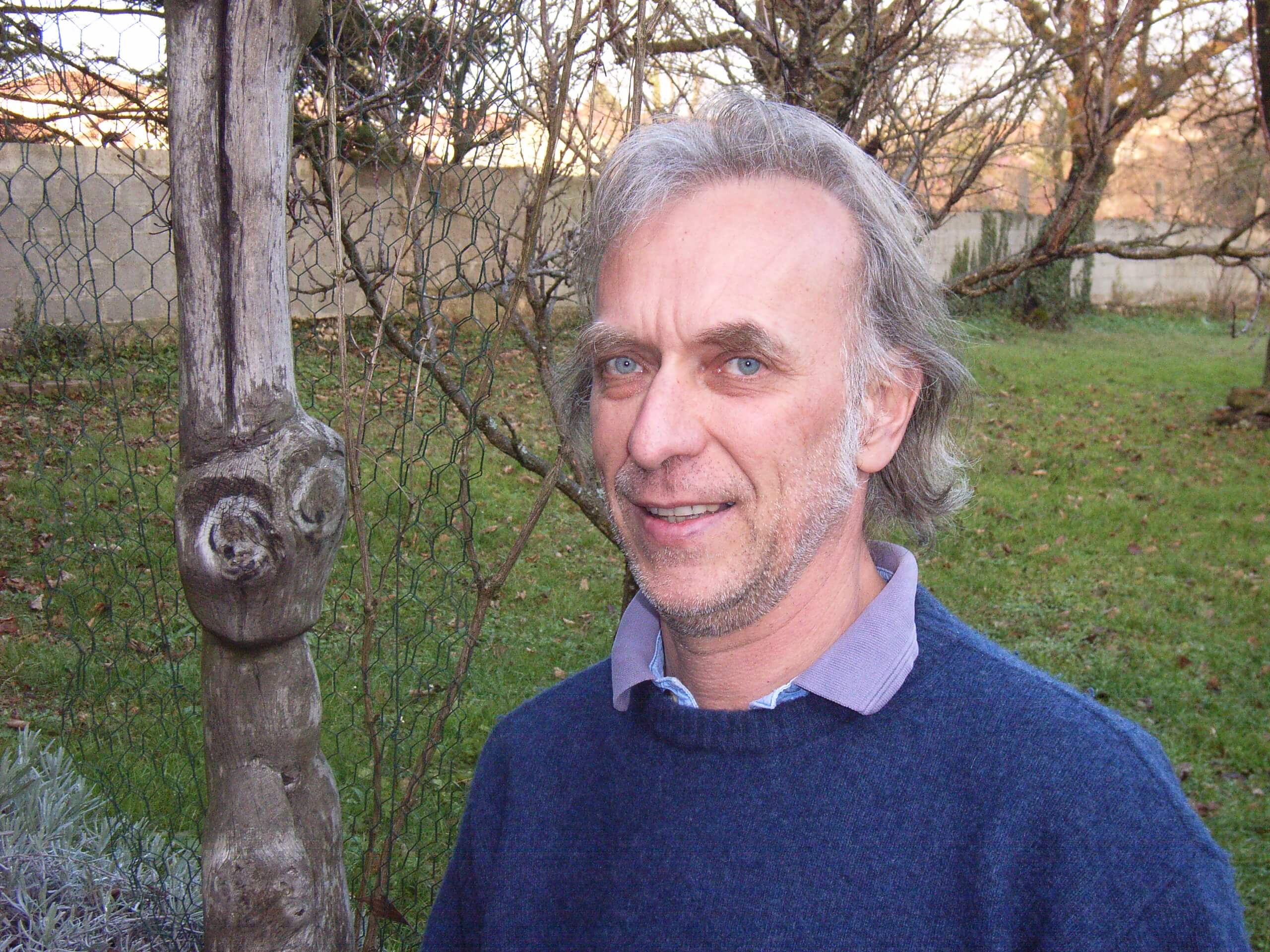
Jean-François Bottollier, a painter on the edge of text
- Post category:Meet the artists / Painting
- Post comments:0 Comments
- Reading time:4 mins read
An author and a visual artist, Jean-François Bottollier unfolds his artistic territory from his inner tremors, his memories, his readings, and music. For him, painting, writing, exhibiting, publishing, and sharing all belong to a single creative gesture. Frictions and emotions merge in his work.
An unrealistic artistic ambition that became reality
Jean-François Bottollier has been drawing and painting since childhood. He dreamed of becoming an artist the way others dream of becoming a firefighter or a hero. At the beginning of middle school, his momentum stalled, but in the ninth grade an art teacher helped him overcome this block, and from then on nothing would hold him back.
He was tempted by the Fine Arts schools, but family pragmatism steered him toward university studies in visual arts. He left after six months, having no taste for theoretical courses. He then threw himself into the world, worked, and devoted his free time to drawing and painting.
At the age of 20, he sold his first “major” work to the principal of his former middle school: a 120 x 180 cm canvas hung in the teachers’ lounge, for 150 francs, which he delivered himself on foot. His first exhibitions came later, through personal connections, at university and in community cultural centers. His first small sales encouraged him.
For several decades now, painting, sculpting, and writing have been a vital impulse for giving form to his deepest emotions.
A remarkably coherent artistic Journey
Jean-François Bottollier has charted his path between painting and writing. He builds his body of work in series, in order to dig deeper, insist, and push an emotion until it reaches its truest form, as in: the Justice series; the Pictures at an Exhibition series; the One Thousand and One Nights series; theFertile Mule series
His creative gesture is always searching for meaning in relation to the great subjects of our humanity and its cruel contemporary reality.
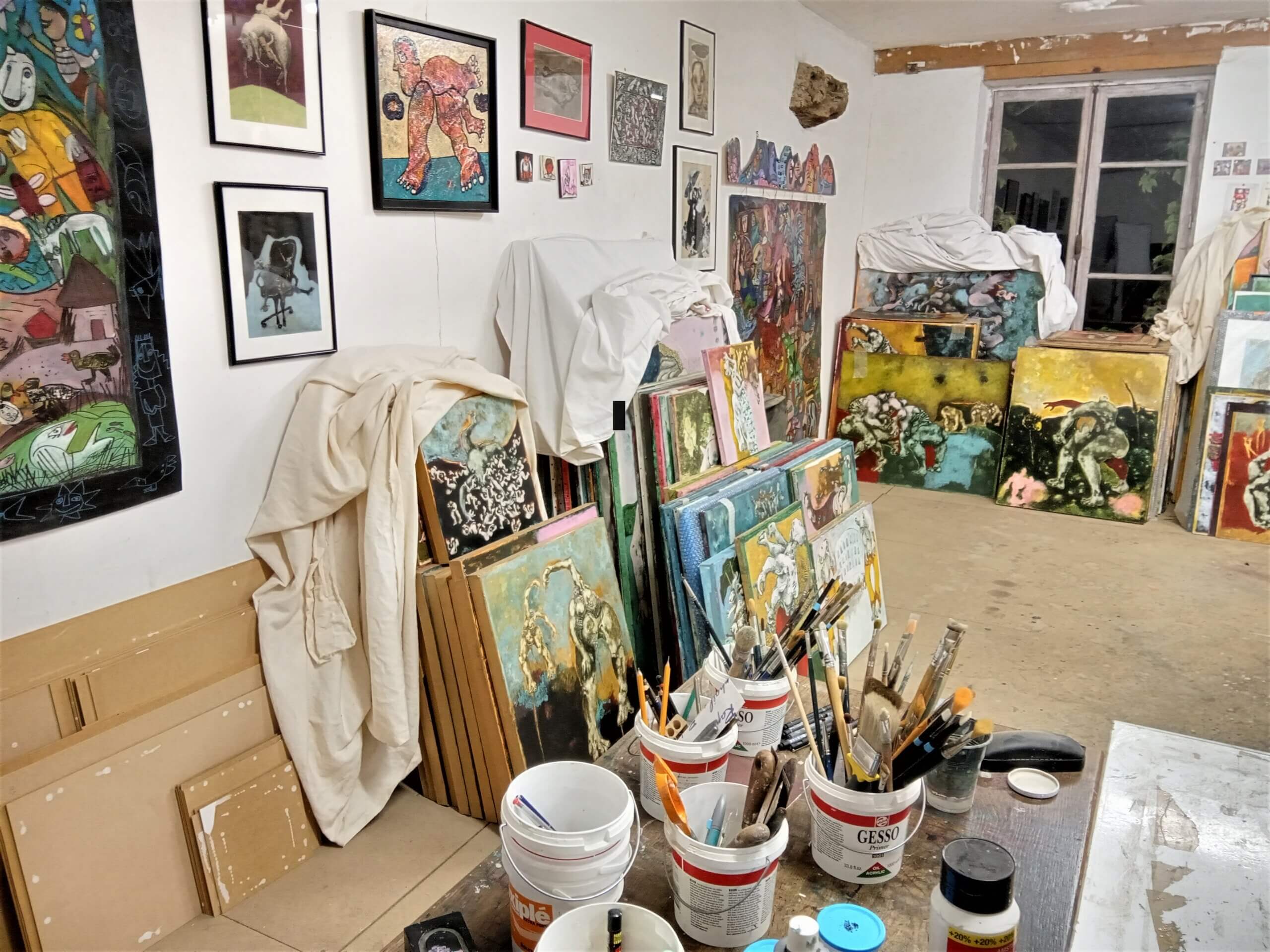
He enjoys placing his paintings in dialogue with his texts. His universe is dense and vibrant. He cannot be satisfied with simply seeing his works hanging on walls. His work is never decorative, but rather a tool in a search for meaning. This is why he seeks to collaborate with choreographers, actors, slam poets, and scientists, in order to make visual art alive and infused with emotion.
A dramaturgy of the body between outsider art and expressionism
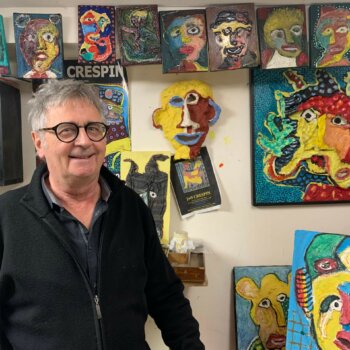
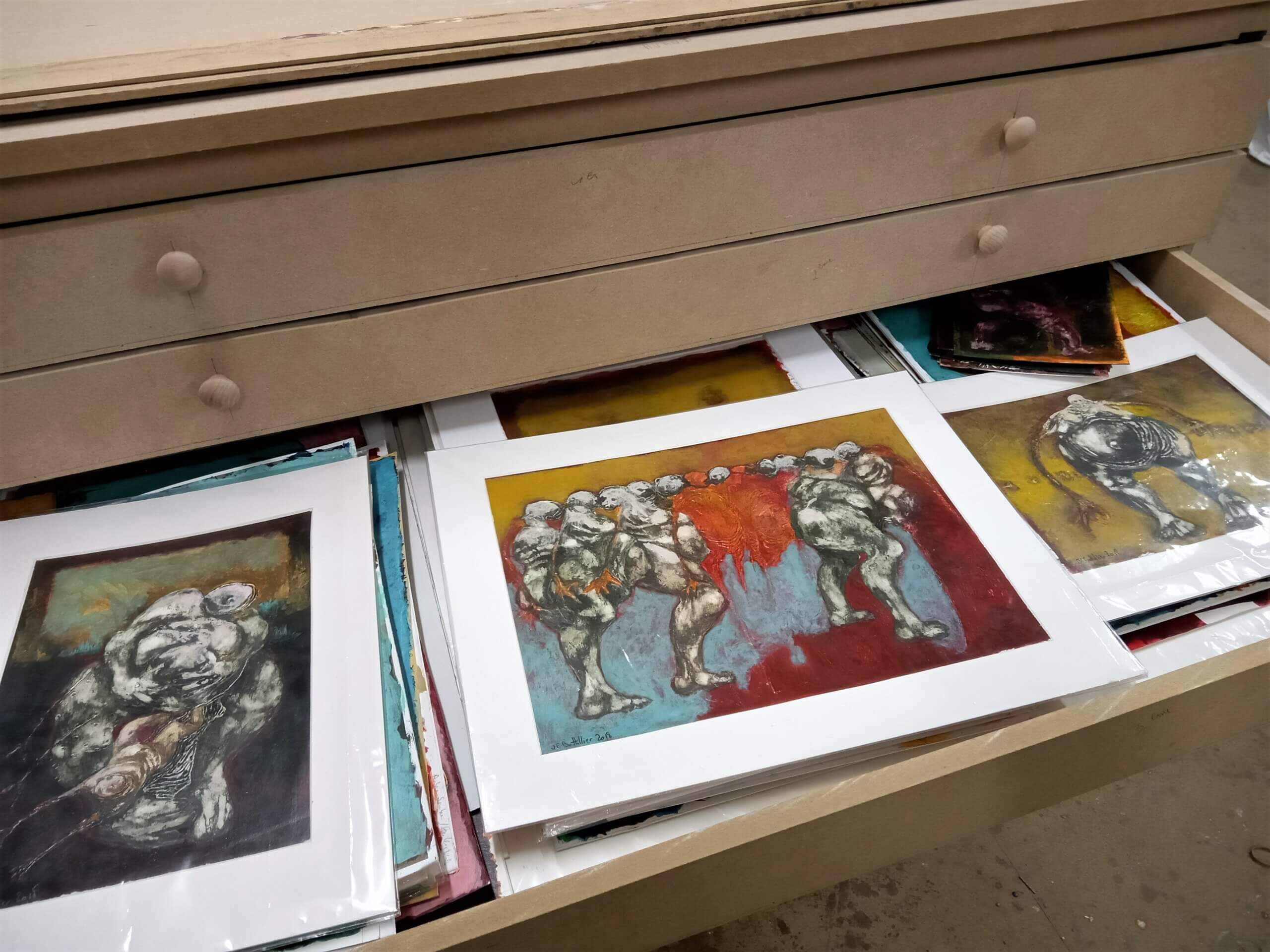
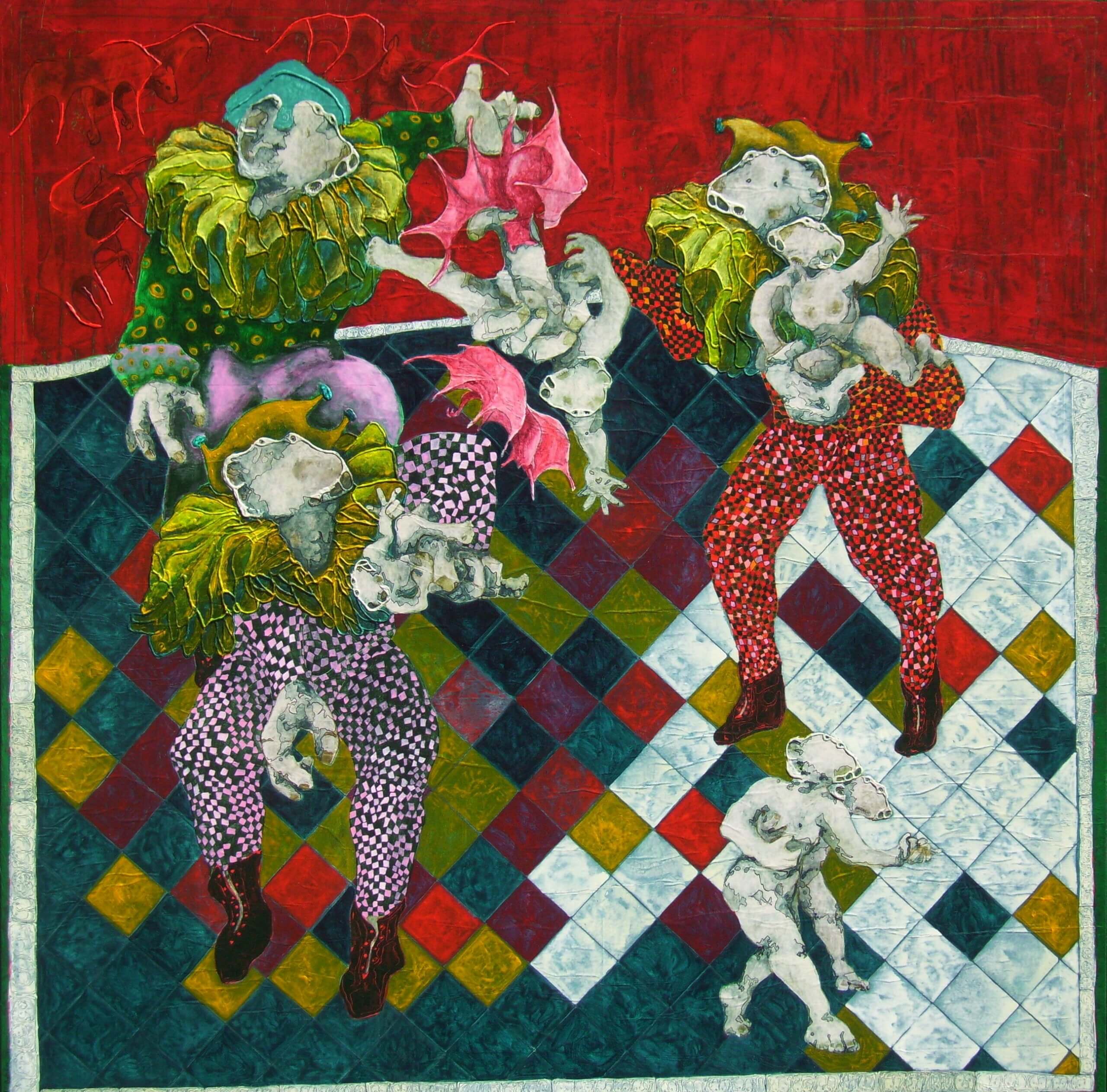
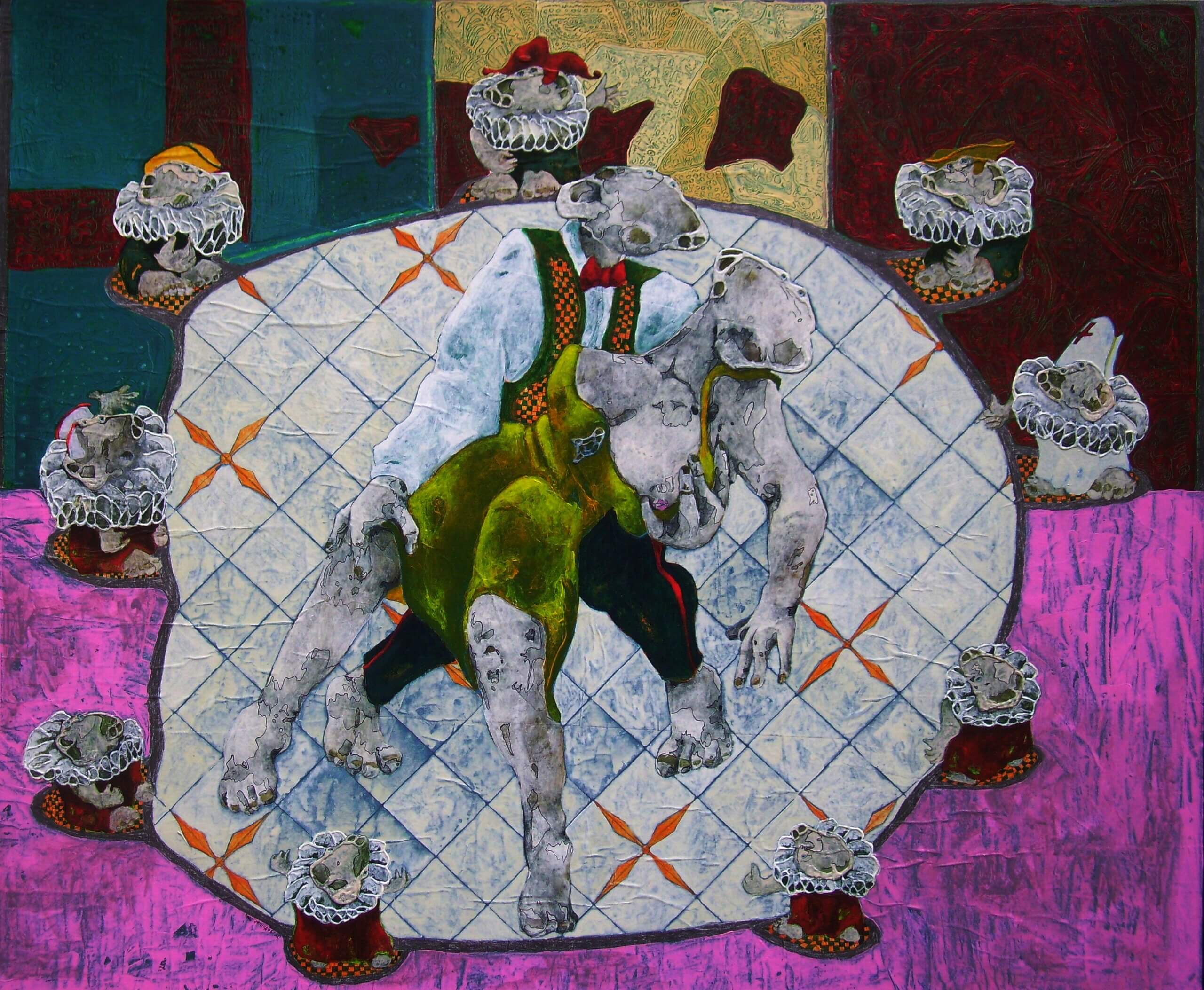
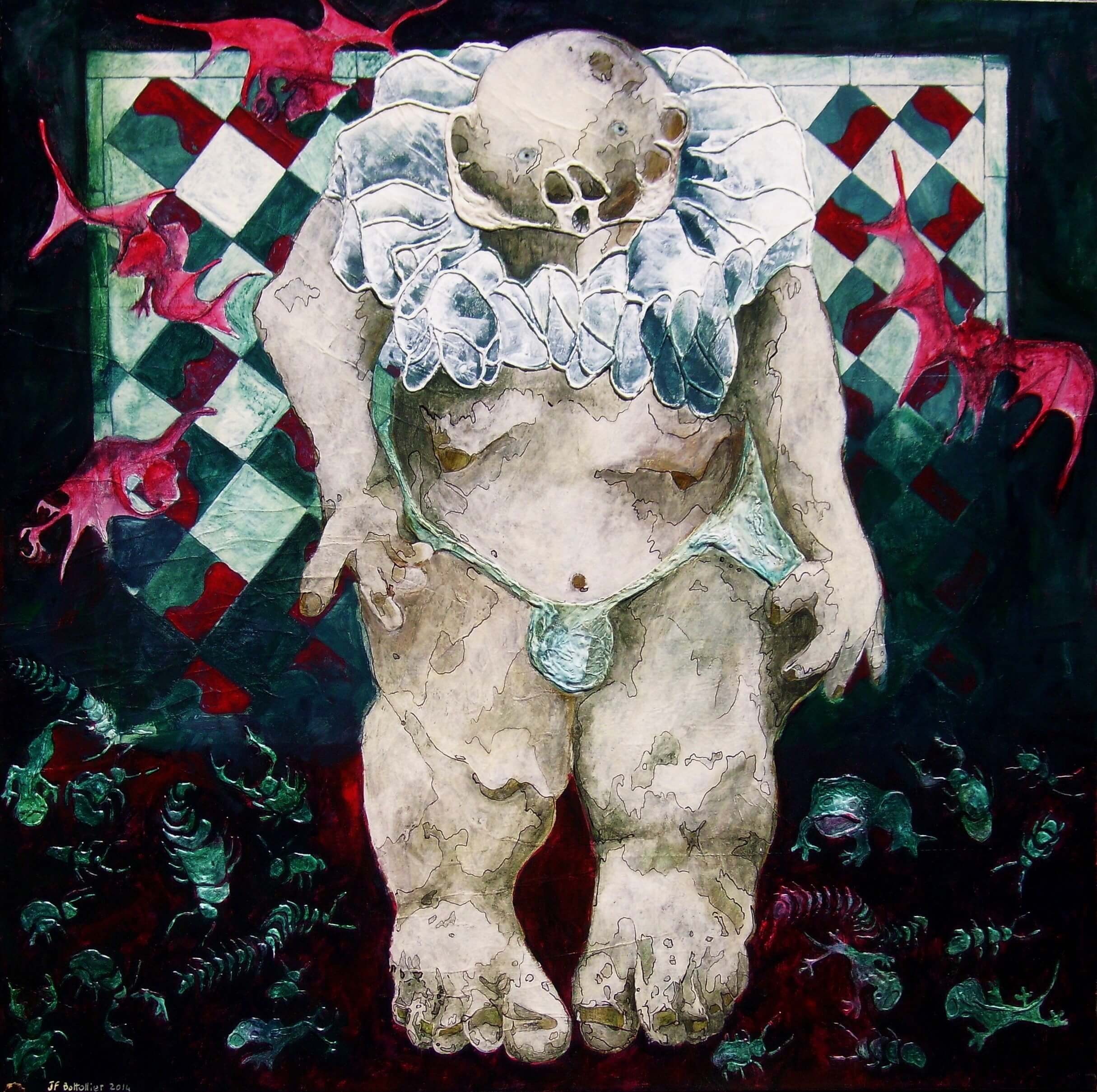
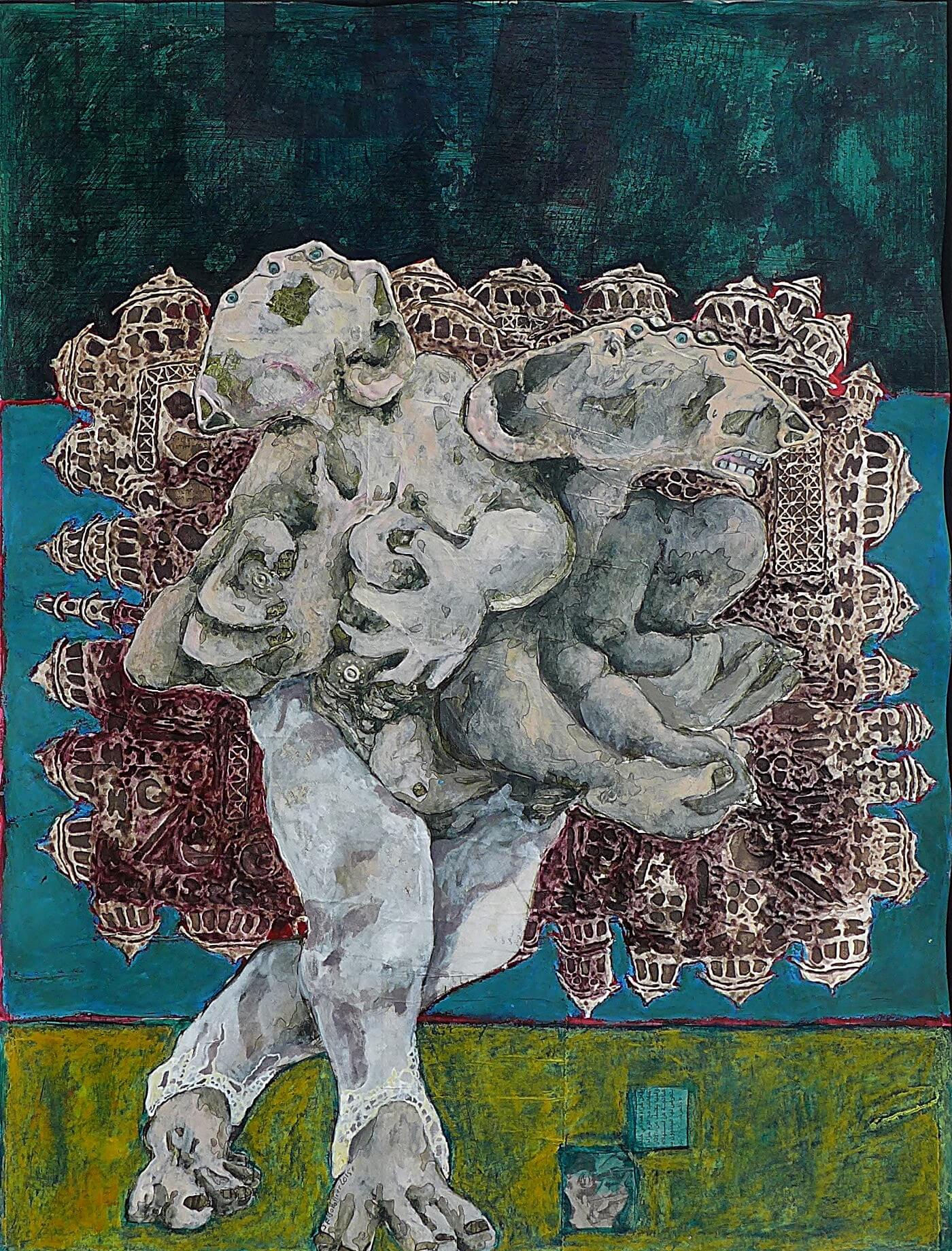
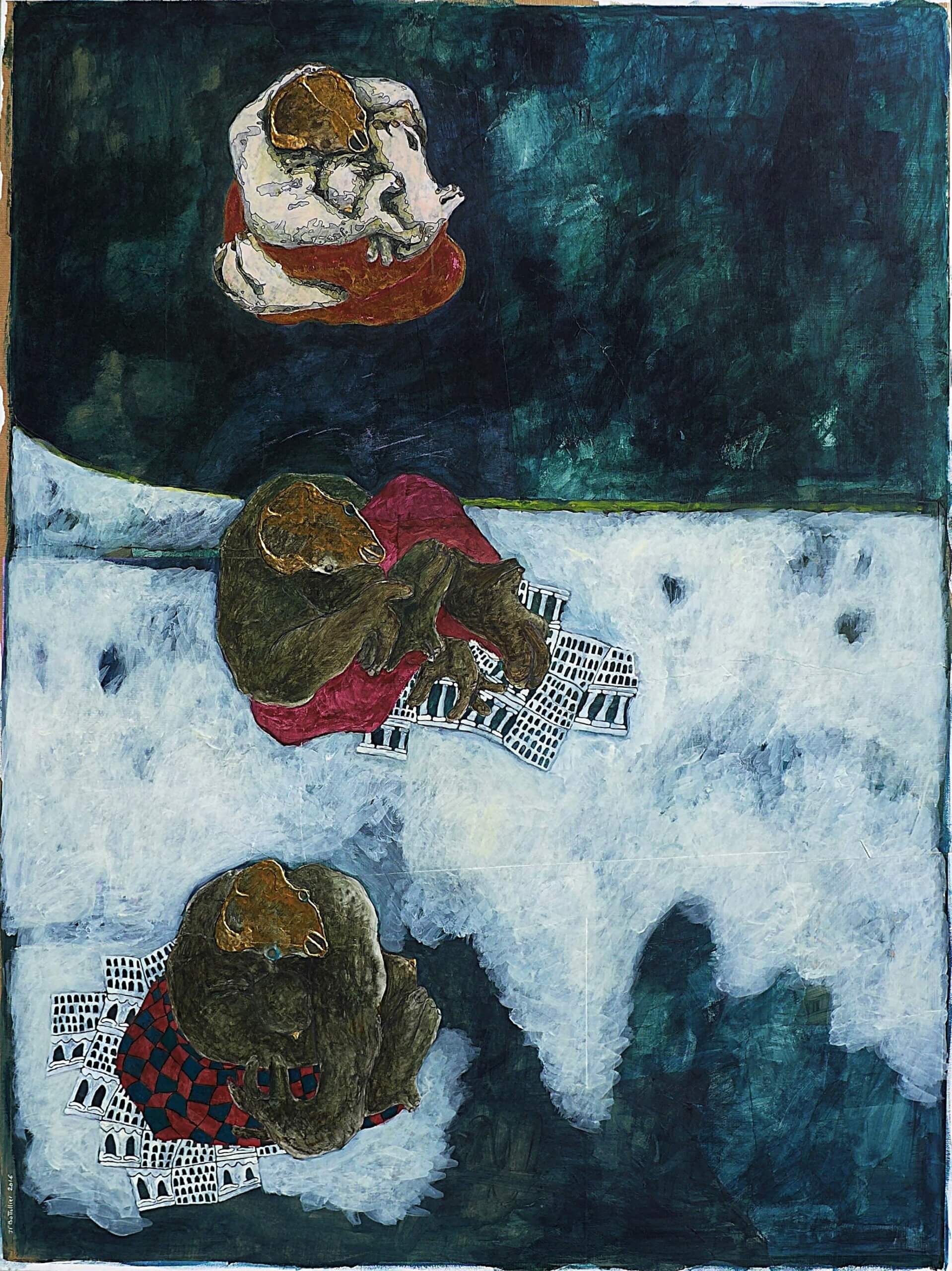
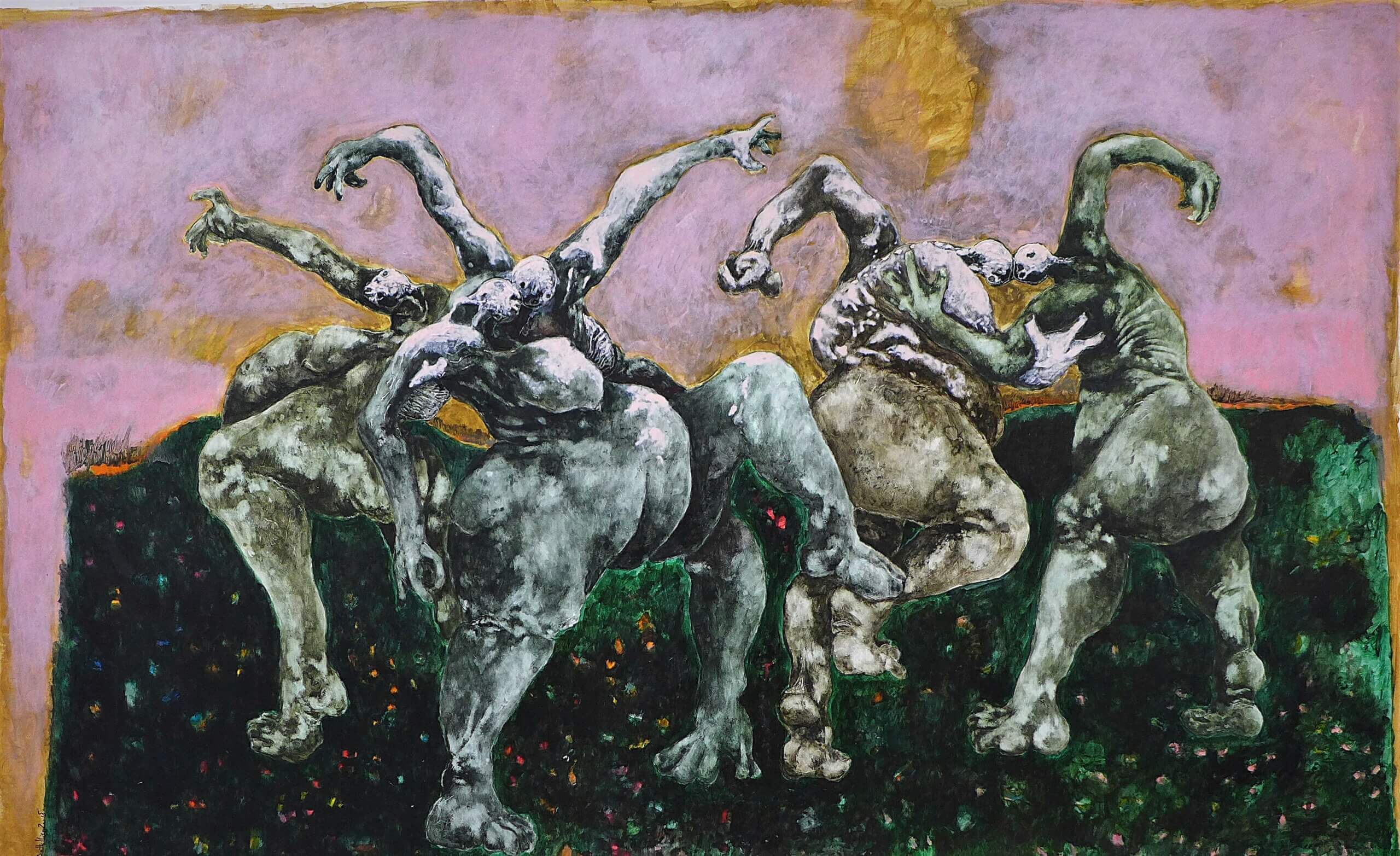
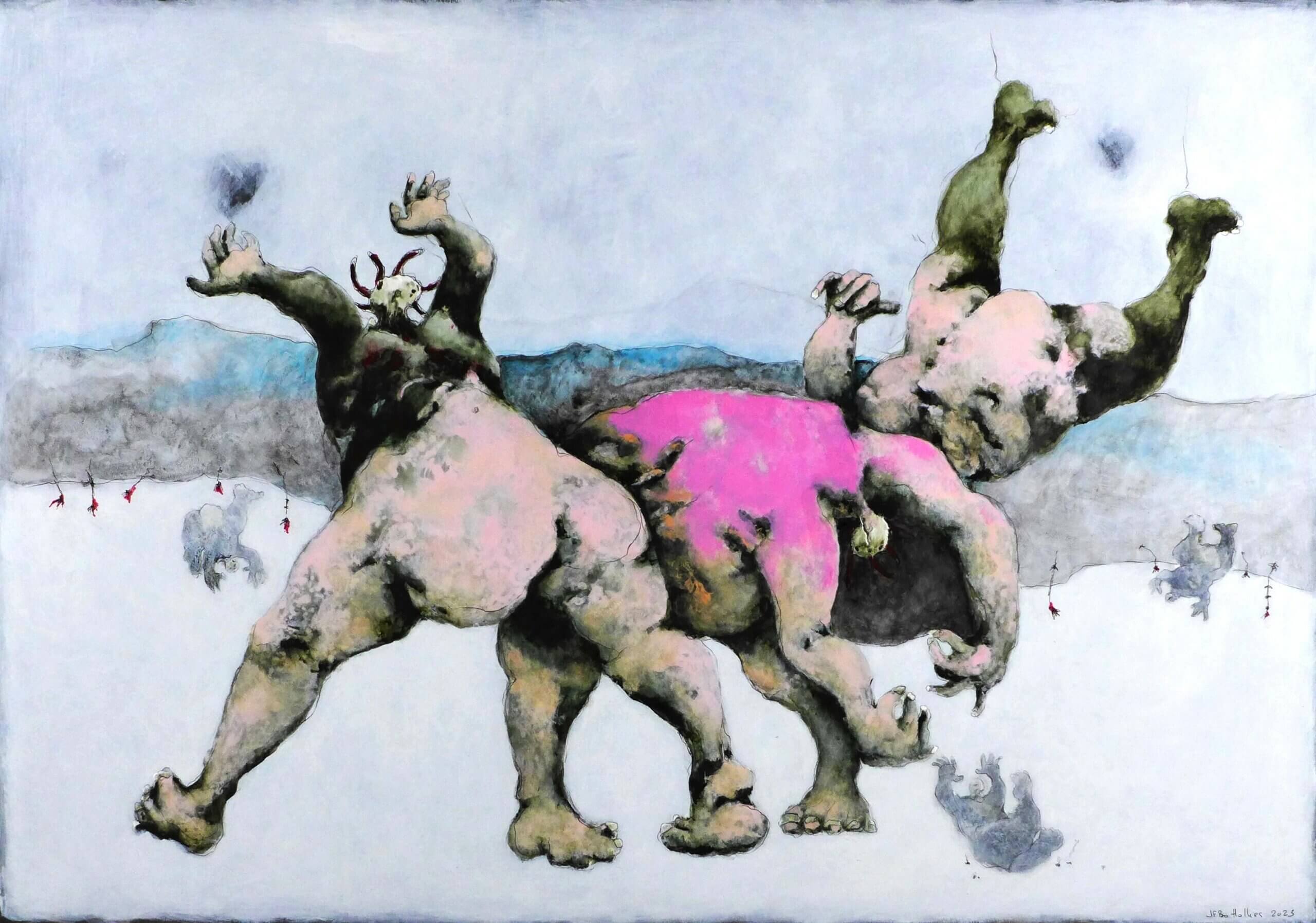
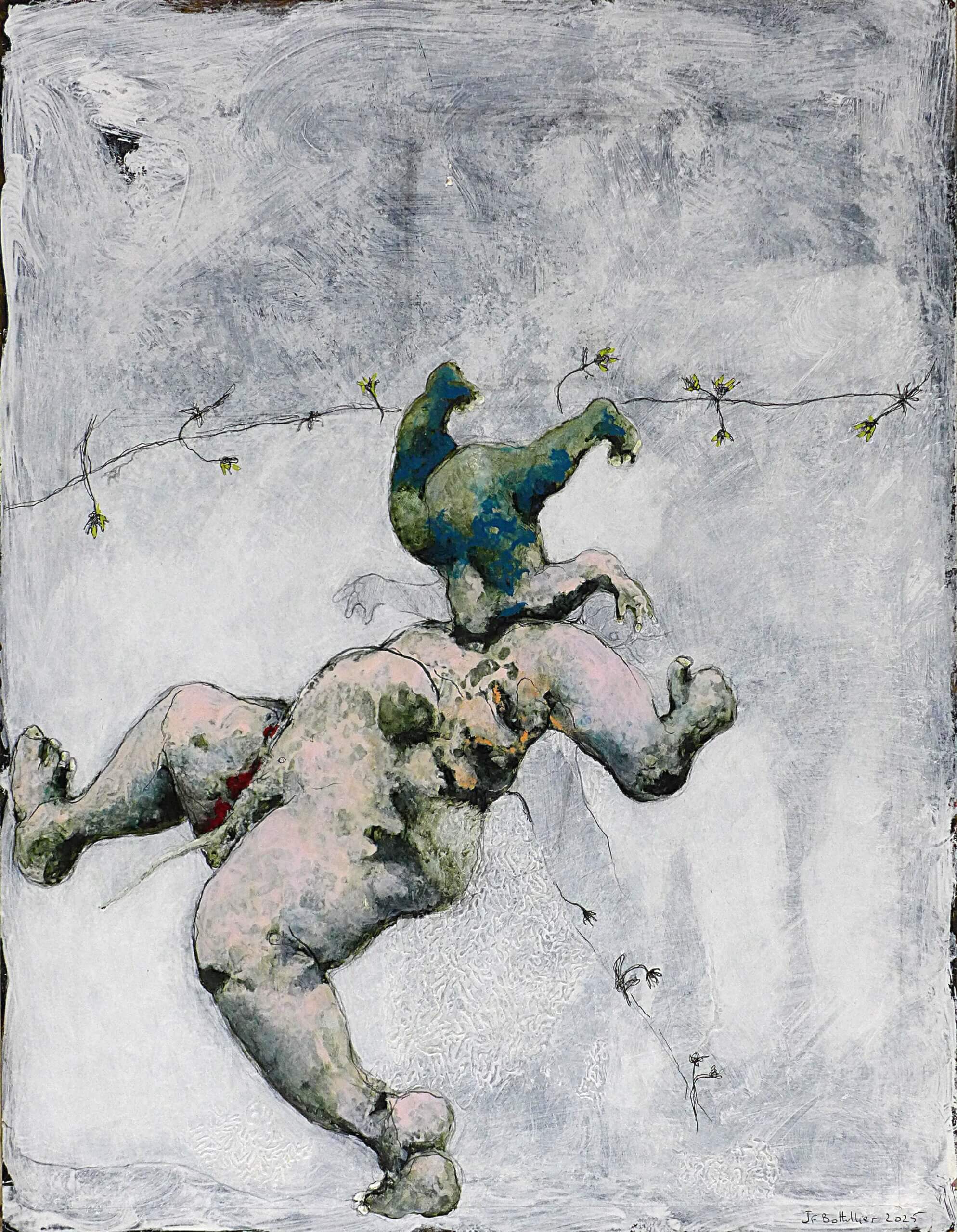
Bottollier does not depict anatomy; he puts it into crisis. His figures are massive, distorted, often hybrid: between human and animal, between dance and collapse, between vital impulse and exhaustion. On his canvases, he seeks the point of balance, or the zone of tension, between animality and grace, between monstrosity and beauty.
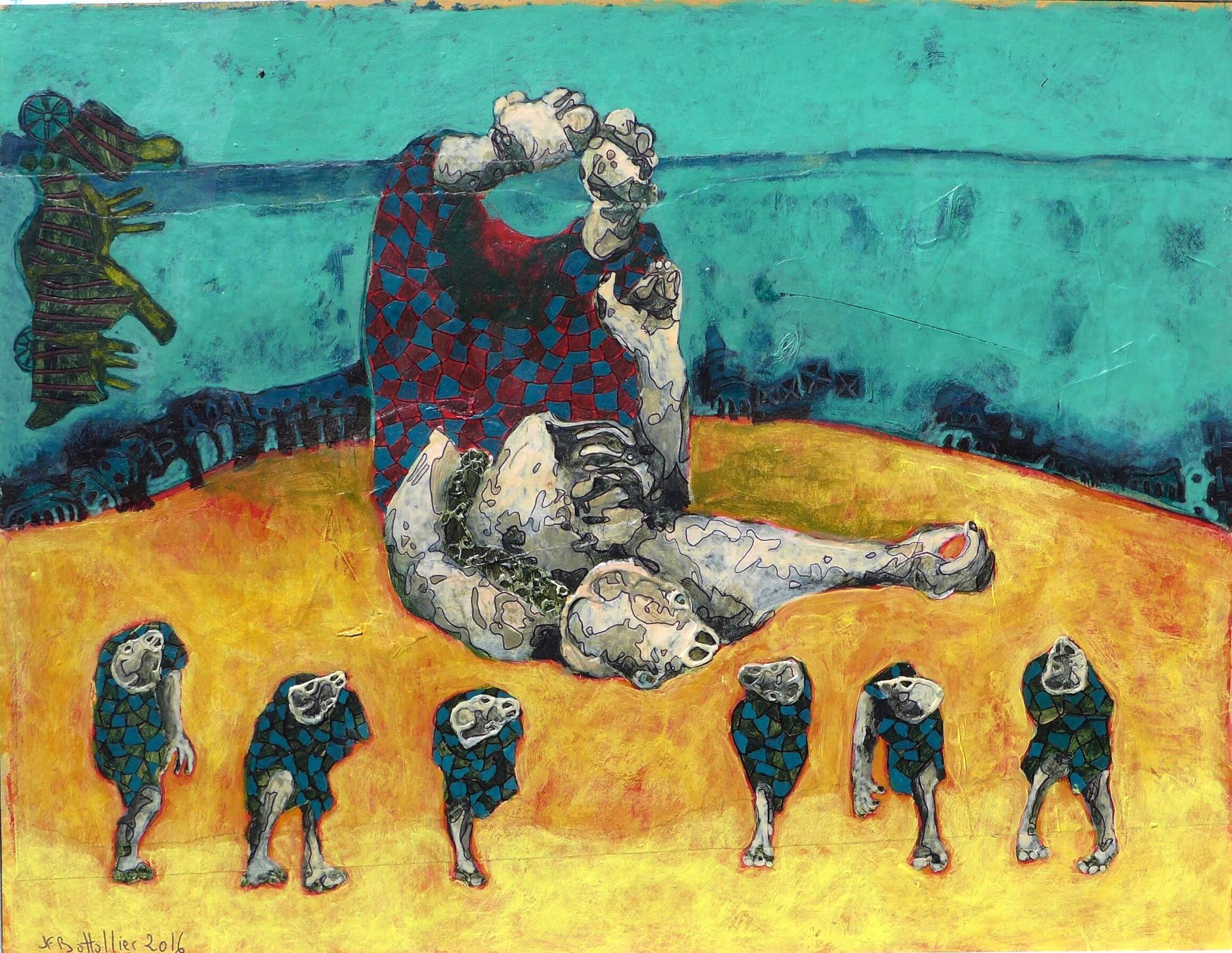
In front of his works, one sometimes thinks of a heavy primitive round dance, or a ritual struggle in which bodies are weighty and battered, as though torn by contradictions.
The disproportions, the small heads, the protrusions, the exaggerated limbs all construct an aesthetics of irregularity that evokes both the medieval grotesque and certain modern visions of the dislocated body.
A painting of confronting masses in archaic dances and convulsive circles
His monumental figures enter into relationships of confrontation or collision. The mixture of large and small characters creates a fascinating effect of scale and an almost cosmic dimension. His great bodily masses become grotesque quasi-divinities or psychic forces in the process of materializing.
His color palette gives the figures a strange materiality, as if they were at once living, mineral, and ghostlike.
Bottollier’s great achievement is to show us a dreamlike world in which violence is either fully present or remains suggestive. The artist succeeds in sustaining several registers without dissolving them: the grotesque and the grave, brutality and tenderness, flesh and symbol, burlesque and tragedy.
His canvases impose an immediately identifiable universe and hold the viewer’s gaze with their archaic choreographies. They are included in several collections, notably at the Fondation Renaud in Lyon, at La Praye in Fareins, and in the collection of the Museum of Art Brut in Lanxi, China. Bottollier has taken part in public presentations such as Biennale 109 in Paris and Lyon Art Paper.
An artist oriented toward the collective
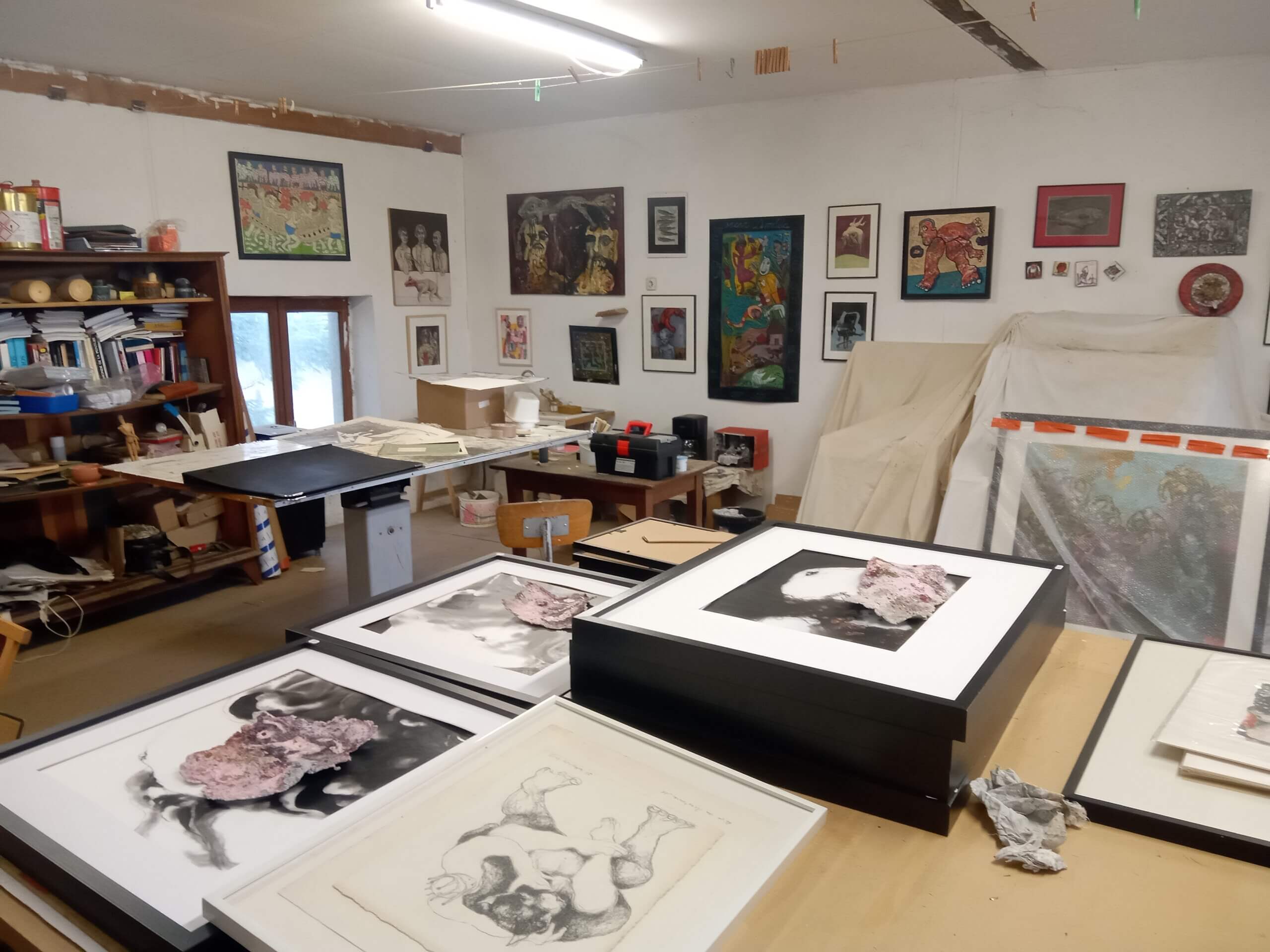
Alongside his search for new artistic collaborations, Bottollier places essential importance on the network of artists, on “his gang” of friends and their work: works that he collects in his studio, and texts that he writes about them in the journal Trakt and in the book Battle, Artistic Jousting, published in 2025 by L’œil de la femme à barbe.
© artistesactuels.fr – The thrill of artistic discoveries