
Marie-Laure Dougnac illustrates the adventures of Cervantes’ Don Quixote
- Post category:Drawing & Collage / Meet the artists
- Reading time:5 mins read
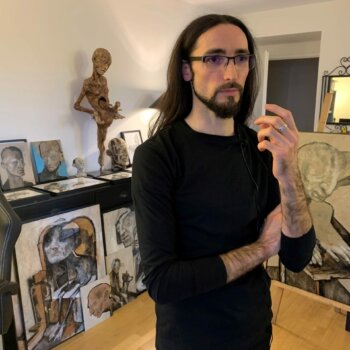
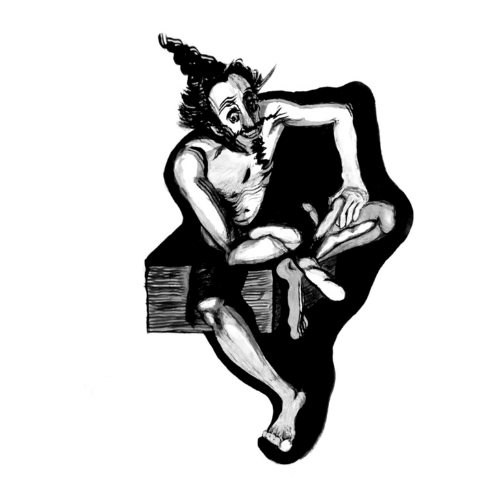
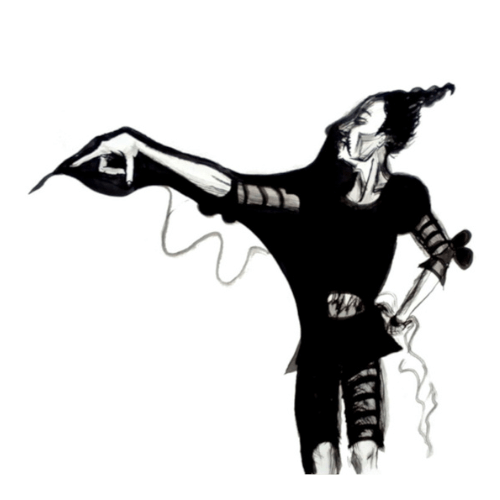
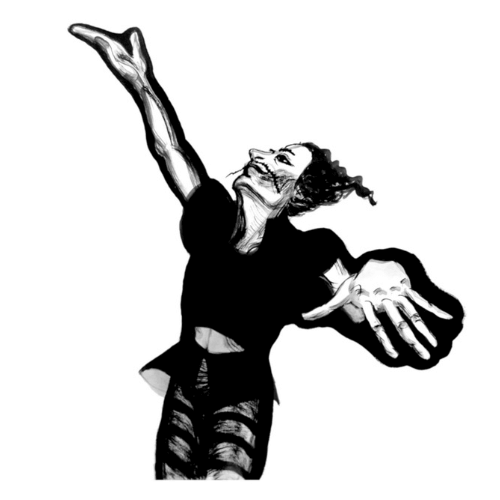
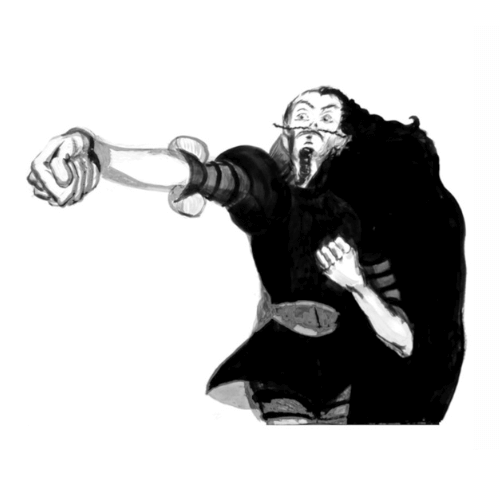
With “Don Quixote in All His Glories”, actress Marie-Laure Dougnac [Julie Clapet in the film Delicatessen, French voice of Arwen in The Lord of the Rings, and the aunt in Grave of the Fireflies] immerses us in the exciting and touching world of Don Quixote through her drawings. The eccentric, likeable and pathetic hero of Miguel de Cervantes [1547-1616] remains very relevant today and resonates with us.
Don Quixote, rebel hero and joker of Spain's Golden Age
In 1605, Miguel de Cervantes published Book 1 of The Ingenious Gentleman Don Quixote of La Mancha, abbreviated to Don Quixote. Book 2 followed in 1615 in response to the international success that spawned a “plagiarism”: an unknown writer, Alonso Fernández de Avellaneda, published a continuation of the knight-errant’s adventures. Cervantes responded with an official suite! His hero dies at the end to avoid any literary resurrection.
The first modern European novel emblematic of the Spanish Golden Age, Book 1 tells the story of Don Quixote’s adventures following a regular pattern: Don Quixote sets off, embarks on challenges or battles condemned to failure, but he gets back up and sets off again.
Book 2 has a more philosophical dimension: Cervantes gives voice to the society of his time and takes a detached view of his era as Spain undergoes a spiritual and religious crisis in the wake of the Council of Trent. He portrays a society dislocated by costly wars.
When it was first published, it was considered a comic novel. The modern era has made it popular thanks to its profound ethics, which demonstrate that the individual alone can be right against an entire society. Today, it is classified as a literary classic and considered a pioneering masterpiece.
Why illustrate Don Quixote, a Spanish literature classic?
Marie-Laure Dougnac loves to travel and immerse herself in the literature of the countries she visits. During a stay in Madrid, she decided to embark on a journey with Don Quixote.
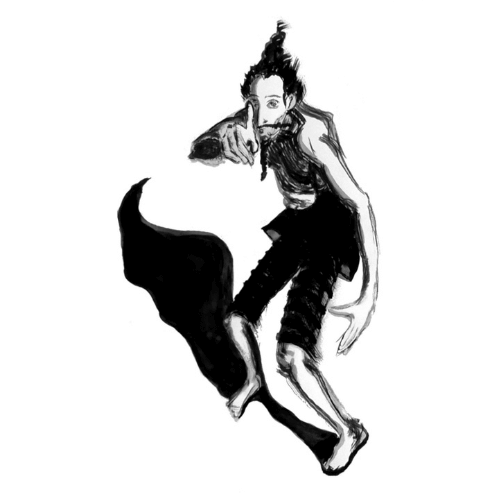
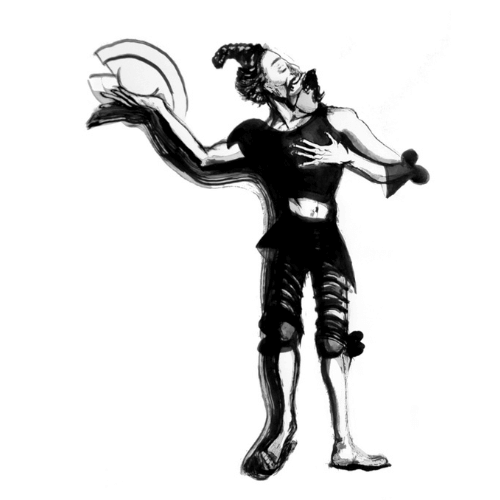
Reading Cervantes’ novel captivated Marie-Laure Dougnac, who stepped into the shoes of the character Don Quixote. She projects herself into him, feeling him through her paintbrush. Through illustration, she stages him, choreographs him, and produces work that is halfway between comedy and drawing.
Four centuries after its publication, Don Quixote continues to resonate in a contemporary way: a narcissistic anti-hero, a charmer, a flamboyant loser, the idealistic hidalgo touches and moves us. His flaws and failures make the reader-viewer comfortable with their own shortcomings.
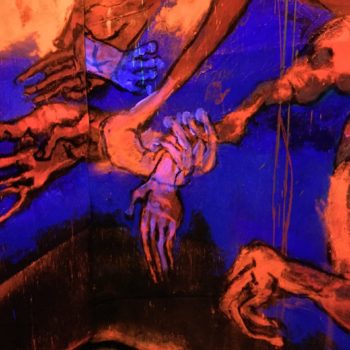
Her selection of extracts from the book produced forty drawings created directly in Indian ink in a neo-expressionist style. The works were exhibited from September 2024 to September 2025 at the Théâtre Lepic in Paris. Marie-Laure Dougnac’s black and white drawings found their perfect setting in this creative space with black walls. In addition to the black lines that bring Don Quixote’s postures to life, Marie-Laure Dougnac plays with the hero’s shadow, which is often a character in its own way.
Don Quixote has become an artistic character as much as a political and social one.
Don Quixote in painting and visual arts: a timeless myth
A character from the collective mind, Don Quixote has been portrayed by painters, musicians, and filmmakers, each seeing him as a reflection of the human struggle with dreams.
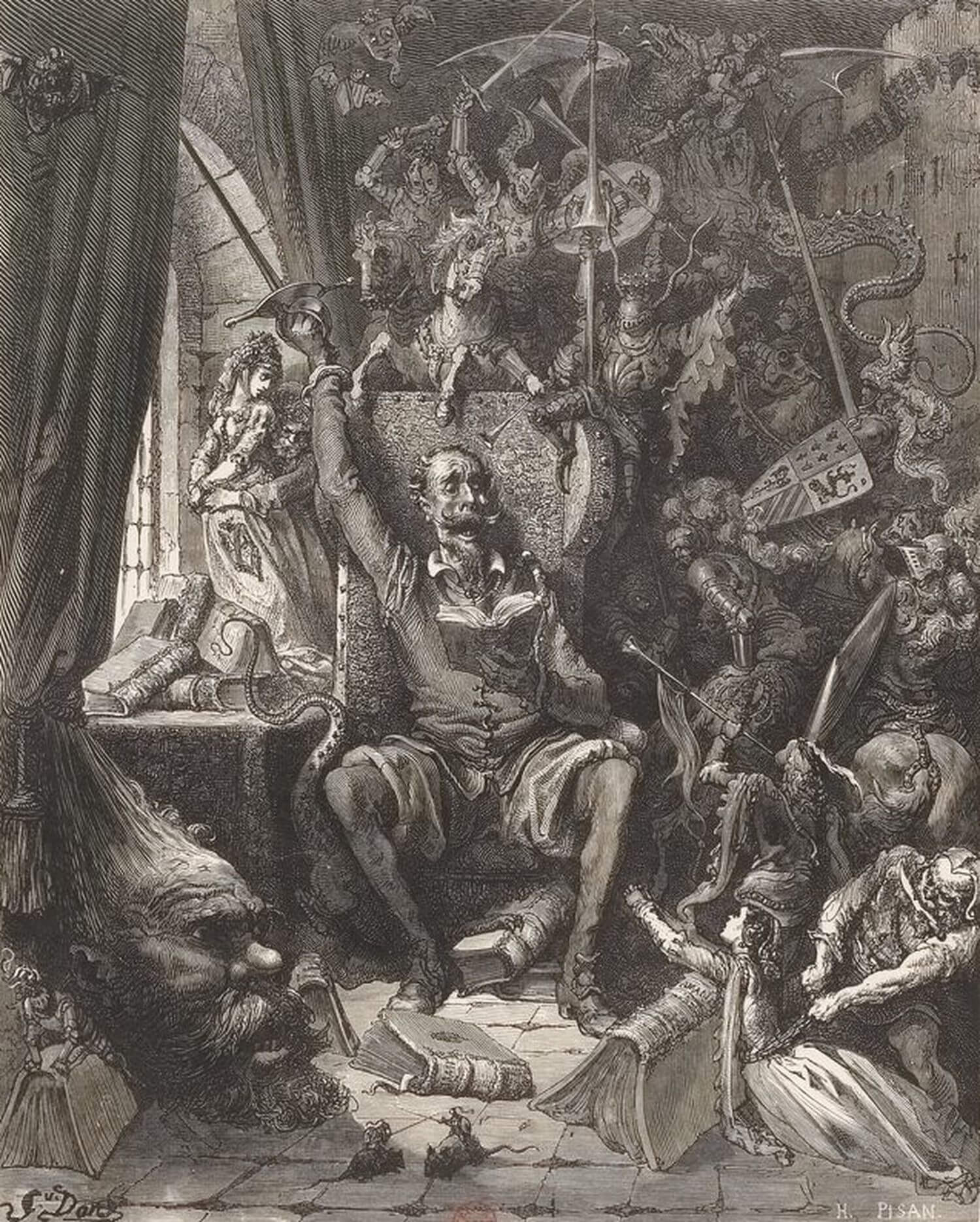
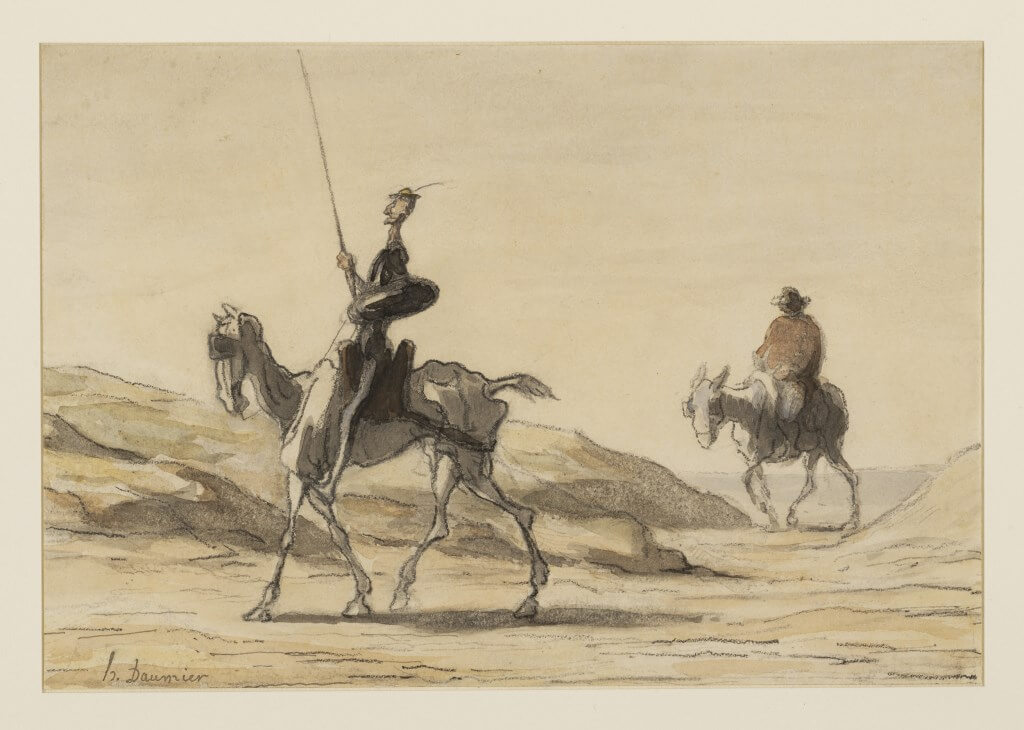
The fascination with Spain in the French art world led to famous characters such as Beaumarchais’ Barber of Seville in 1775 and Georges Bizet’s Carmen. During the Romantic period, Hispanicism focused particularly on the figure of Don Quixote: Honoré Daumier’s (1808-1879) lithographs and paintings depict Don Quixote as an emaciated, fragile but dignified character. Gustave Doré’s (1832-1883) illustrations, among the best known, have greatly contributed to the visual imagery of the character.
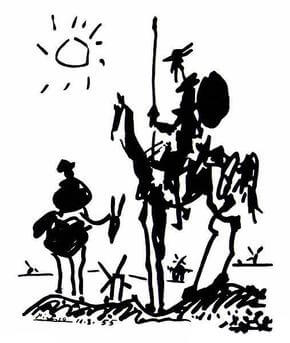
In 1955, Pablo Picasso drew Don Quixote and Sancho Panza in a simple style that has become a modern icon. Salvador Dalí illustrated an edition of Don Quixote with dreamlike and Surrealist images, in line with his artistic universe.
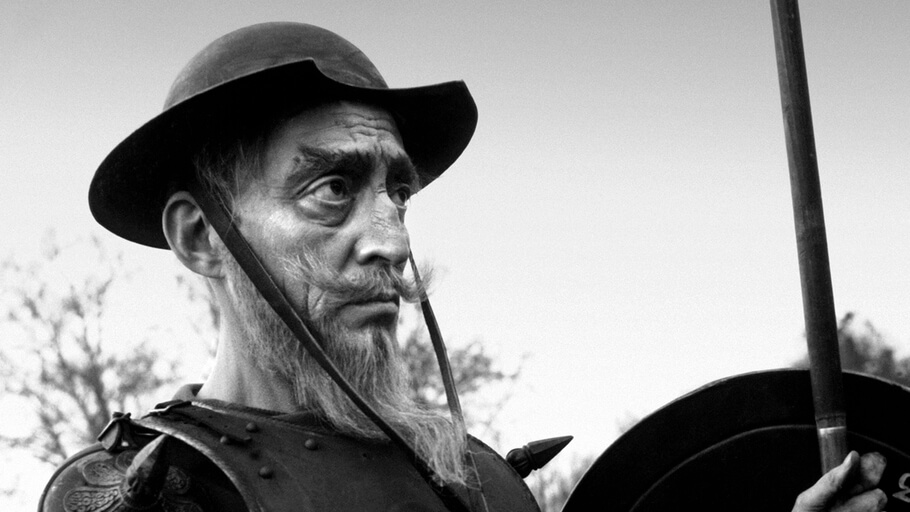
In movies, the difficulty of bringing the myth to life has made Don Quixote a doomed character, like Hamlet in theater. For many years, Orson Welles tried to make an adaptation that remains unfinished. Starting in 2000, Terry Gilliam made three attempts, first with actor Jean Rochefort, then with John Hurt. Finally, the film “The Man Who Killed Don Quixote” was released in 2018.
“I may be crazy, but all things considered, I’m less crazy than the society we live in.”
William Marx, “Un été avec Don Quichotte”, éditions des Équateurs
Don Quixote remains a modern-day hero who embodies the dream force facing reality. In a world without any sense, the knight-errant keeps believing in himself without giving up and acts like everything is still possible!

The editorial team
The thrill of artistic discoveries