Cécile Sabourdy Museum, an outsiderart’s Limousin fable
- Post category:Art activists / Meet the artists
- Reading time:5 mins read
The opening of the Cécile Sabourdy Museum in 2014 was the result of a happy chain of circumstances brought together by chance. It is a miniature fairy tale, featuring an unusual little girl surrounded by caring parents, a château owner, a gallery-owner godfather, and an abandoned presbytery.
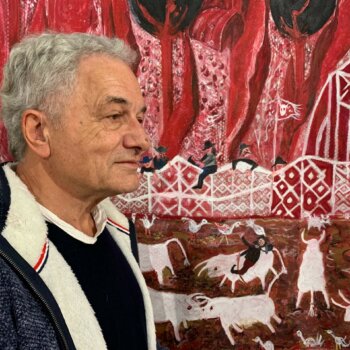
Within this setting, throughout 2026, a retrospective will be devoted to the singular artist Pierre Albasser, whom Artistes Actuels particularly appreciates. This retrospective is undoubtedly a landmark event for this local institution.
Cécile Sabourdy, an unconventional child of Limousin who became an nonconformist artist
Cécile Sabourdy (1893–1970), the daughter of a schoolteacher and an embroiderer, had a fragile personality. Frightened by social contact, she was protected by her parents, who chose to educate her at home. Her world was confined to the area around Janailhac and Saint-Priest-Ligoure, and she never left her native Limousin region.
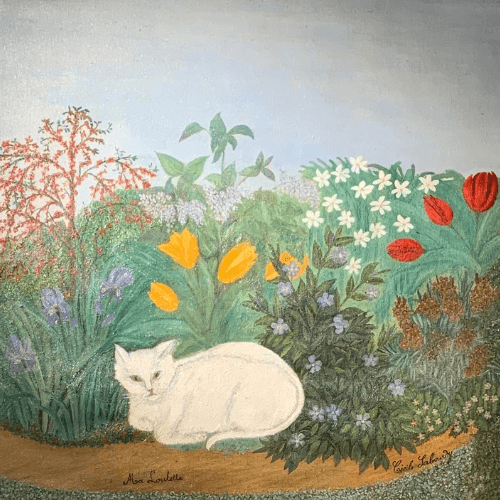
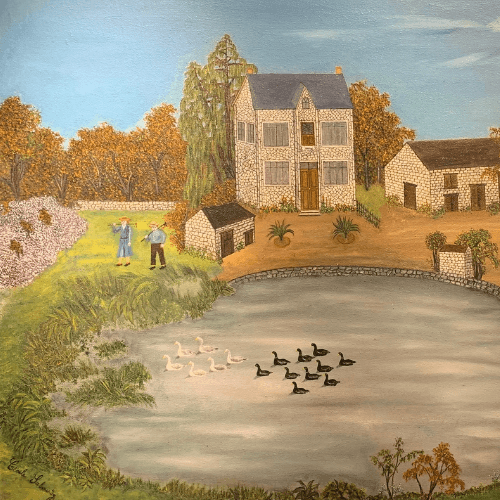
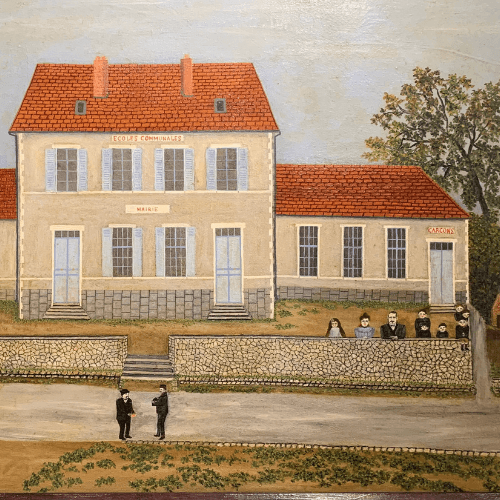
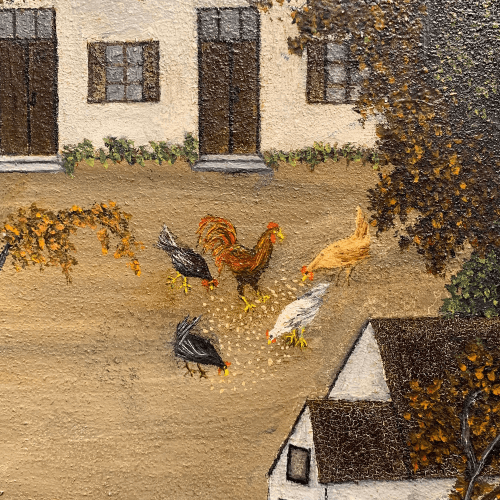
From the 1920s onwards, her earliest canvases depicted the peaceful surrounding countryside, with its châteaux, villages, and farms. Her fine, controlled brushwork carefully describes pastures, woods, and picturesque buildings, revealing every detail of stone and vegetation. People and animals appear frozen within these settings, where nothing seems to move.
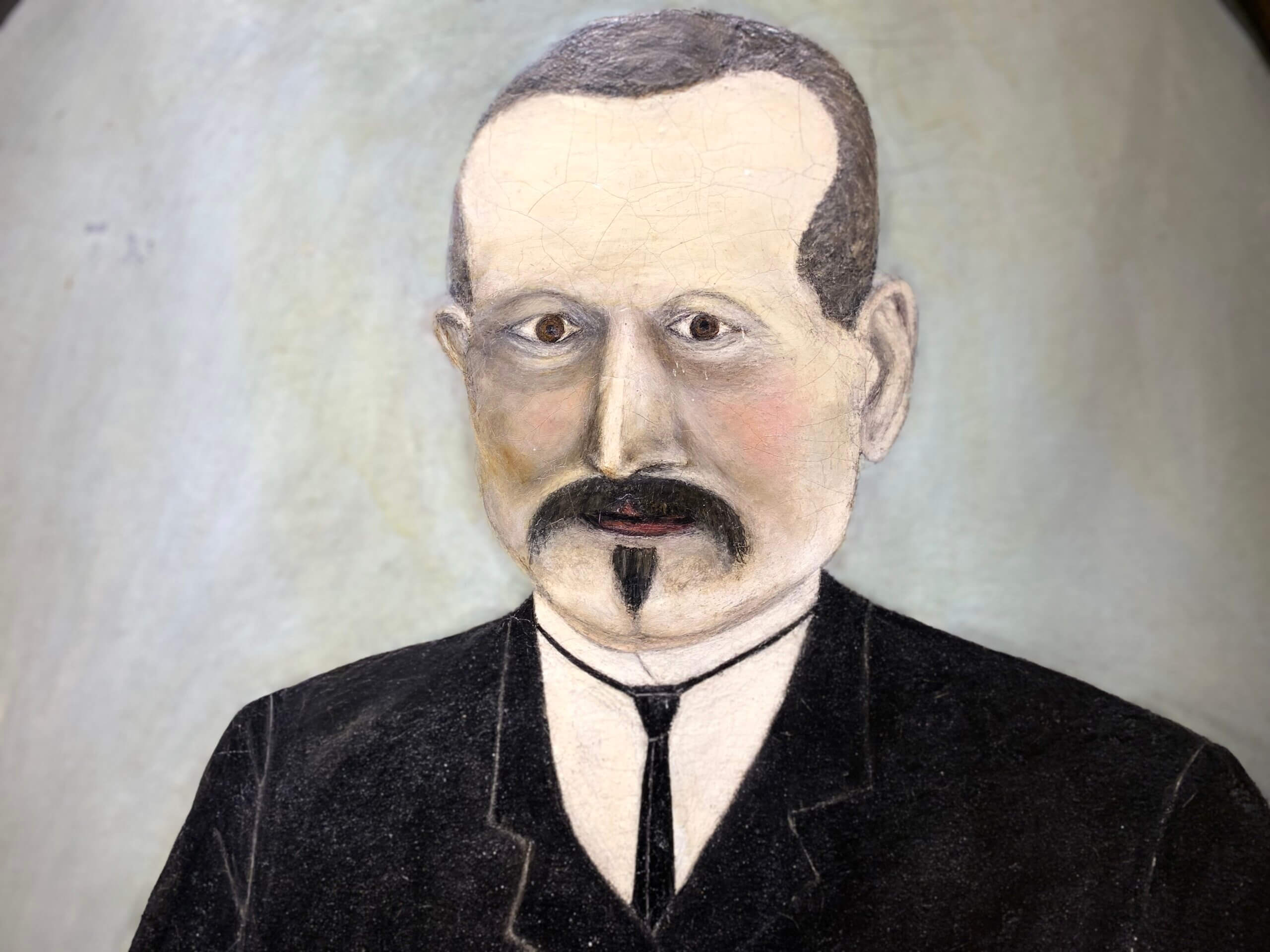
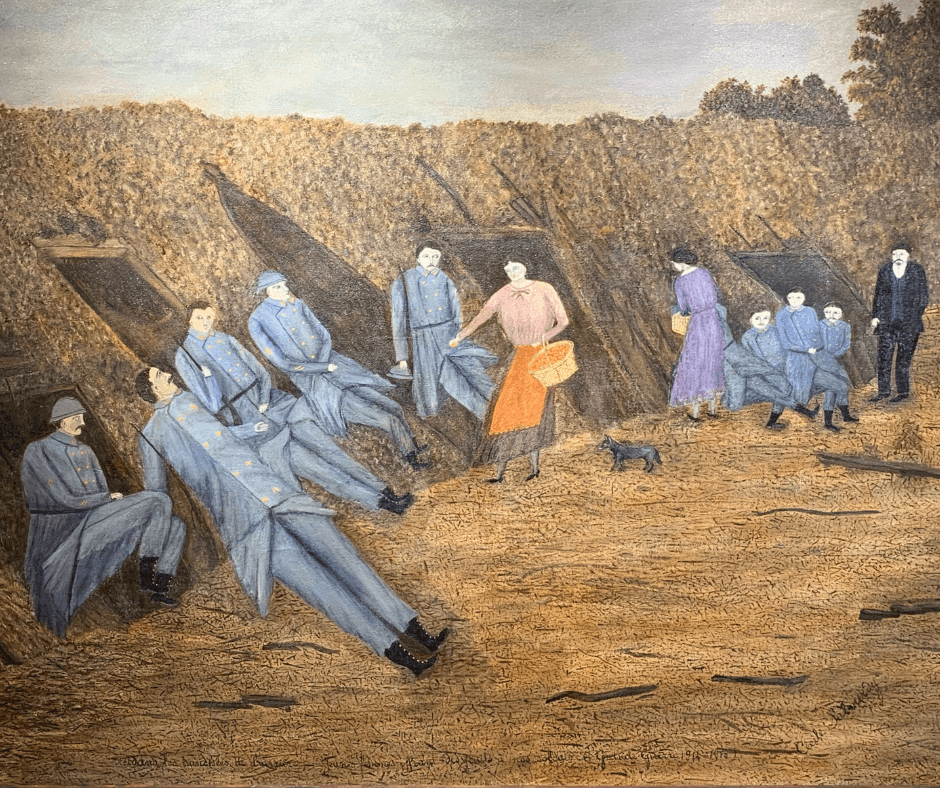
Her works recreate the landscapes and monuments near Janailhac and Saint-Priest-Ligoure. They reflect a quiet, sedentary life lived close to animals — cats, sheep, birds, and cows — in which water and trees play an important role. A portrait of her father stands apart, as does a large painting of a First World War trench scene, a conflict whose shockwaves reached every village. In it, Cécile conveys the full depth of her sensitivity.
A gentleman farmer with ties to the artistic avant-garde of his day
Henri de La Celle, a Limousin livestock farmer and art lover, lived at Château-Elyas in Saint-Priest-Ligoure. An aristocrat and aesthete, he welcomed there representatives of the French avant-garde, including Niki de Saint Phalle, Calder, Tinguely, Brassaï and Lalanne, as well as the director of the Museum of Modern Art in New York.
He met Cécile Sabourdy by chance, visited her whenever he passed through the village, and became her patron, believing he had discovered a talent comparable to Henri Rousseau or Séraphine de Senlis.
After the deaths of her parents — her father in 1934 and her mother in 1949 — he watched over her. His friend, the gallery owner Hubert de Blomac, discovered Cécile’s works at his home and sold some of them to his clients.
When Cécile died in 1970, her cousins, who were her heirs, did not want her paintings. Henri de La Celle then became the sole owner of more than 90 canvases out of the 107 identified works. When Henri de La Celle’s daughters considered donating Cécile’s works to the Anatole Jakovsky Museum of Naive Art in Nice, Hubert de Blomac opposed the idea and argued for the creation of a local museum.
Christine de Neuville, mayor of Vicq-sur-Breuilh, saw in this the opportunity to restore the town’s 17th-century presbytery, a fitting place in which to develop a cultural project. The process was set in motion: project design, applications, funding from public bodies and patronage… and the Cécile Sabourdy Museum and Garden opened its doors in 2014.
The Pierre Albasser Retrospective: the Cécile Sabourdy Museum’s flagship event of 2026
Pierre Albasser is a serious man with an imaginative, mischievous, and youthful alter ego. Once the serious man retired, that other self unleashed its creativity, making Pierre Albasser a major figure in singular art in France.
The exhibition reveals thirty years of creation, shaped by an immediately recognizable graphic universe. His black lines possess a hypnotic power, each one seeming to extend the last. Lines and colors together form his personal mythology, populated by hybrid figures, birds, faces, and interwoven bodies.
His compositions are by turns humorous, unsettling, and tender, inviting the eye to move endlessly between details, motifs, and figures.
With a freedom of visual expression that is both raw and sophisticated, Pierre Albasser turns his drawings into territories of imagination and poetry. There is no doubt that this retrospective is the highlight of the museum’s 2026 season.
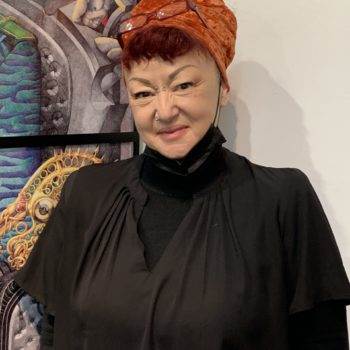
GEHA is the guest artist invited by Pierre for this retrospective exhibition. In life as in their creative work, they share a joyful creativity. Sometimes through works created as a duo, but more often through works that resonate with one another in perfect harmony, they are animated by the same music.
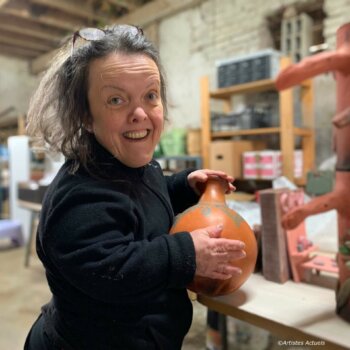
The rural outdoor setting is sure to delight visitors, who, as they stroll through the grounds, will have the pleasure of discovering several sculptures by Roland Vincent, who exhibited here several years ago. We hope that the labels and display will give these dormant works the attention they deserve.
Read also : Pierre Albasser, from scribbles to outsiderart
Read also : 40 years of mail art with GEHA
Read also : Emotion in the line with Pierre Albasser
© artistesactuels.fr – l’émotion des découvertes artistiques