Claude Lieber, a paintor of memories
- Post category:Artist Profiles / Painting
- Reading time:4 mins read
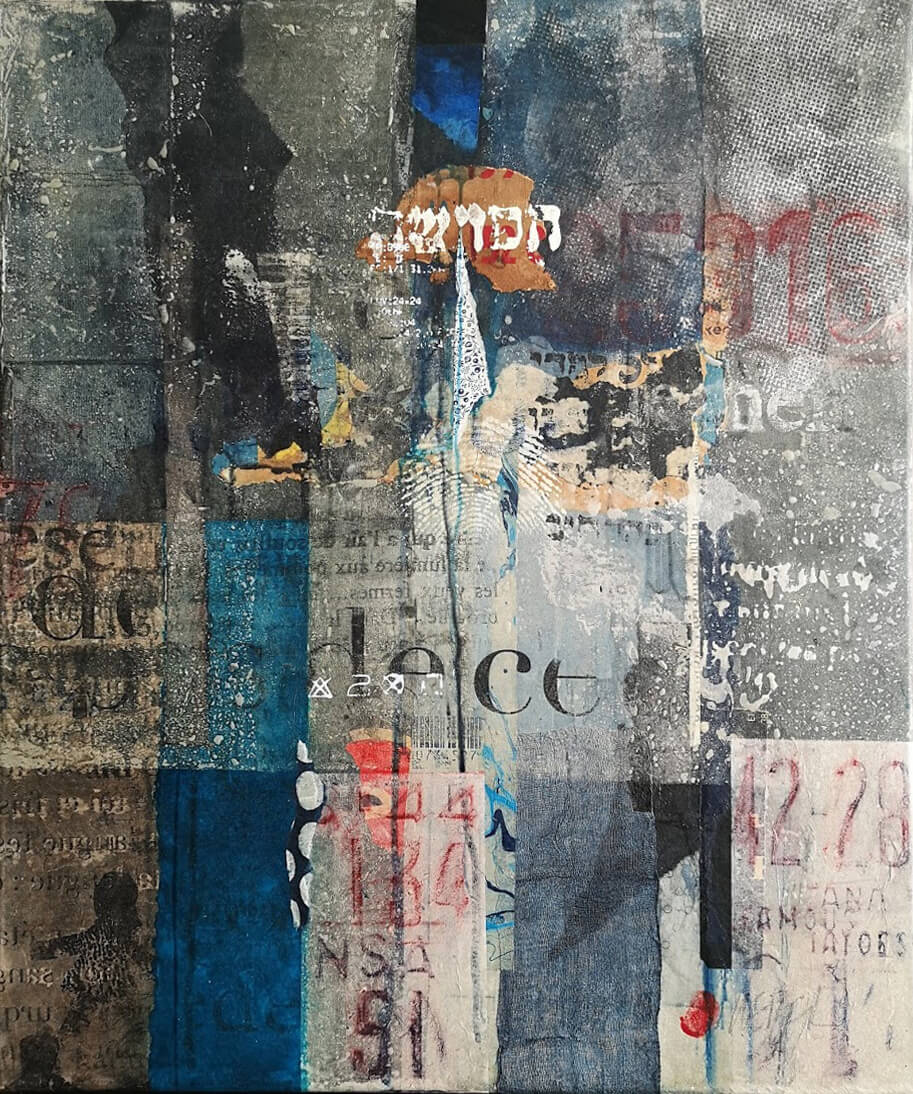
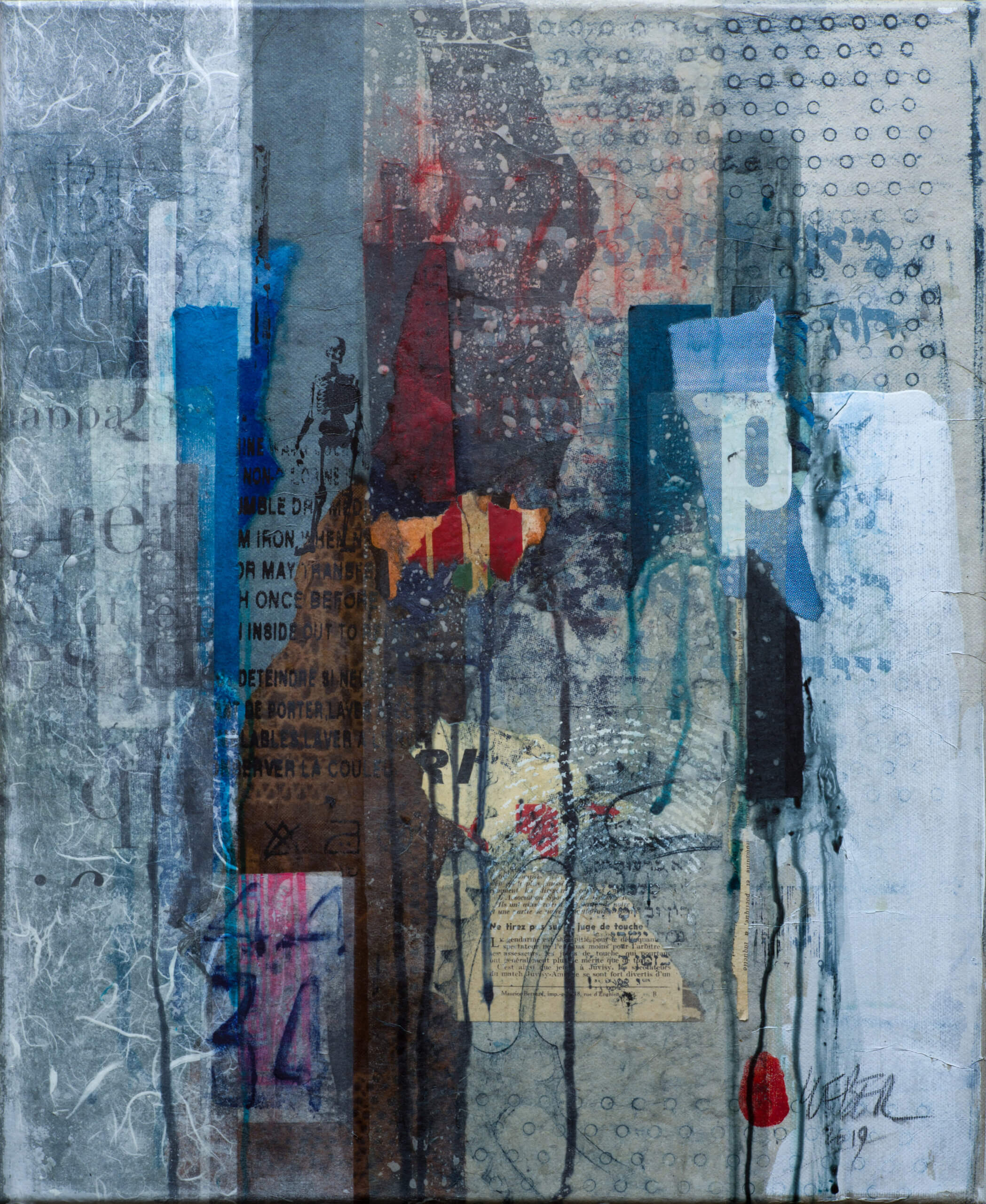
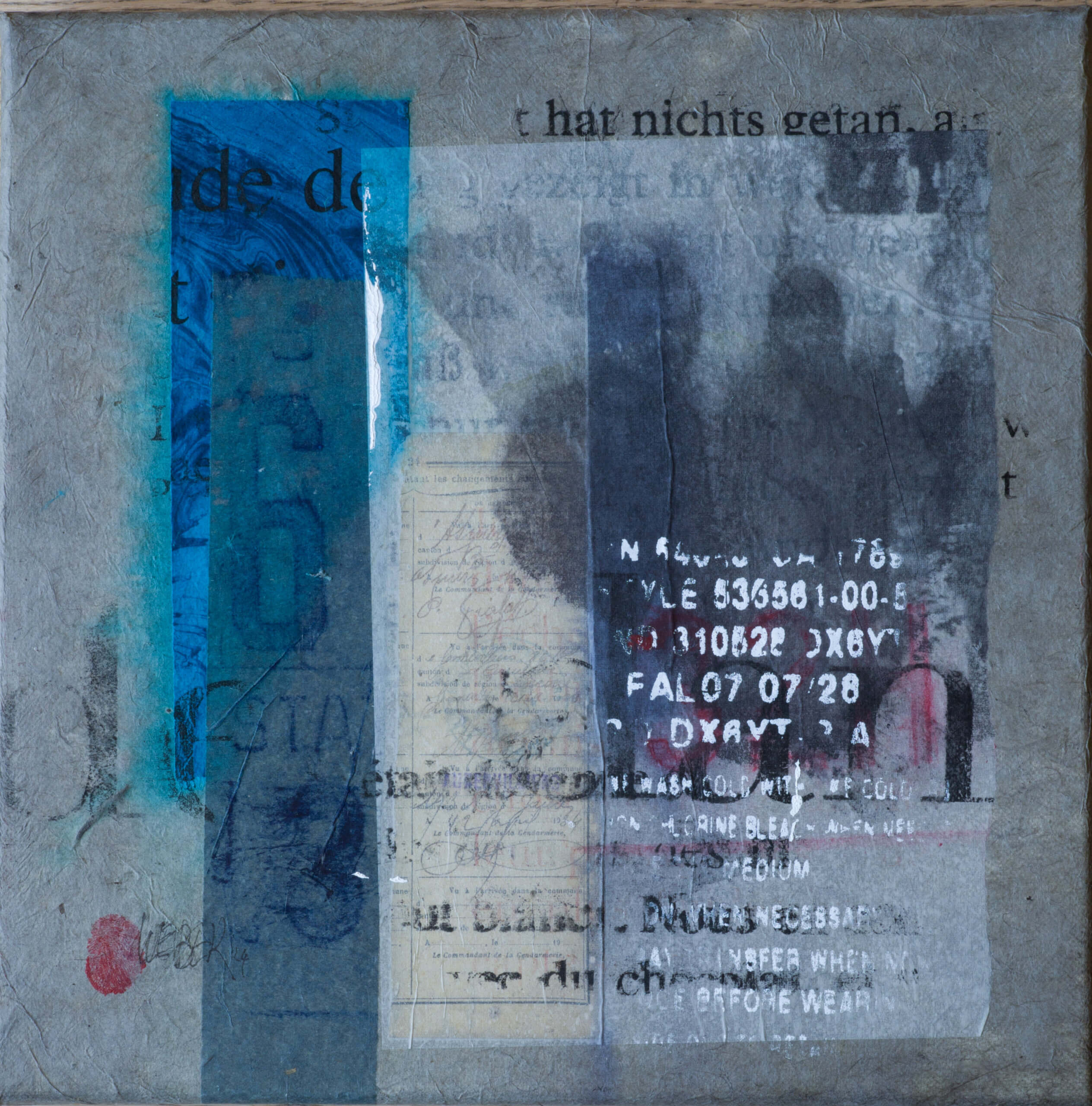
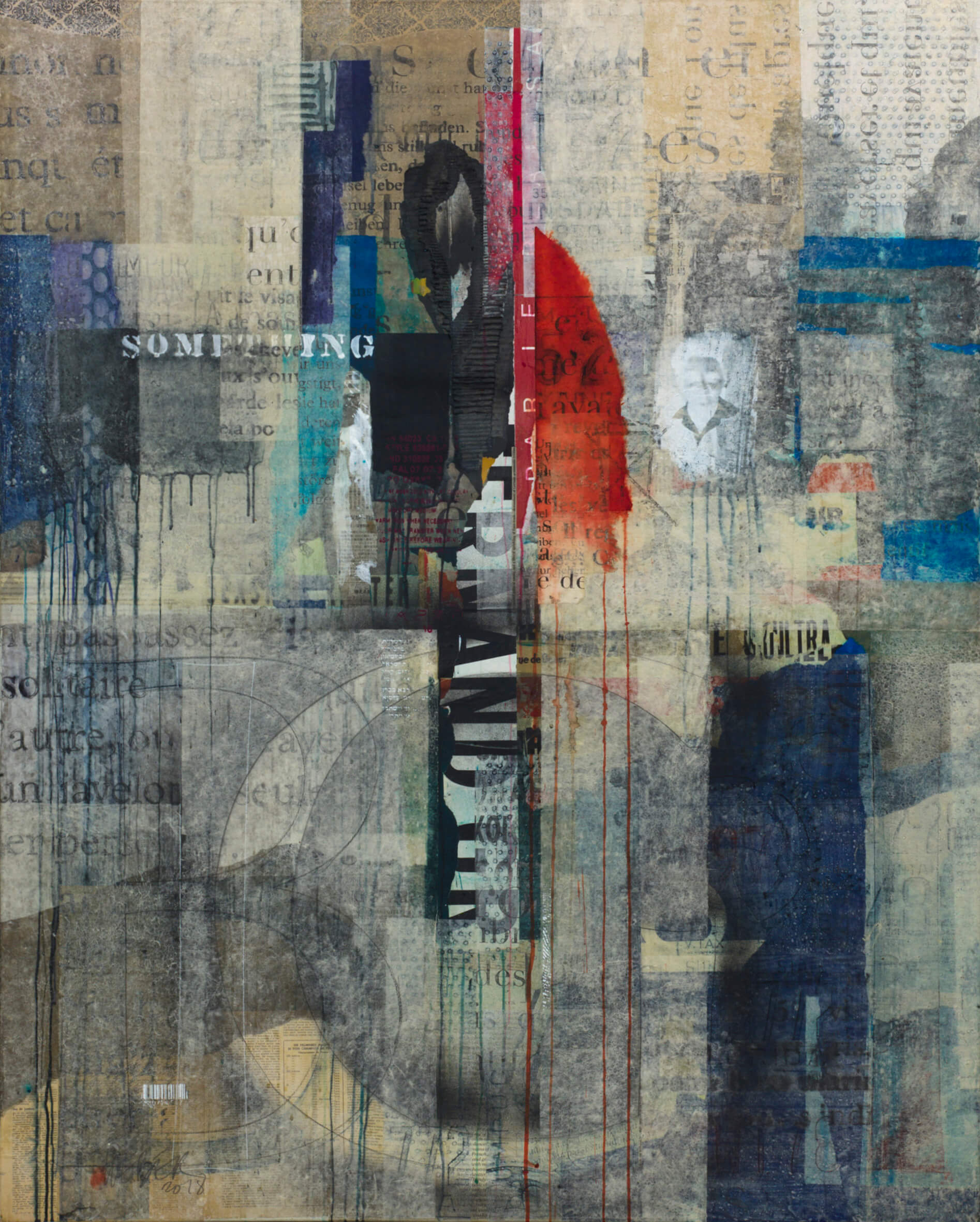
In Claude Lieber’s work, everything seems to have been deposited by time. His painting is read through fragments and transparencies. A word emerges, a silhouette fades, a color moves across the canvas like a reminiscence. His compositions become archives—urban, intimate, and collective.
From graphic design to painting
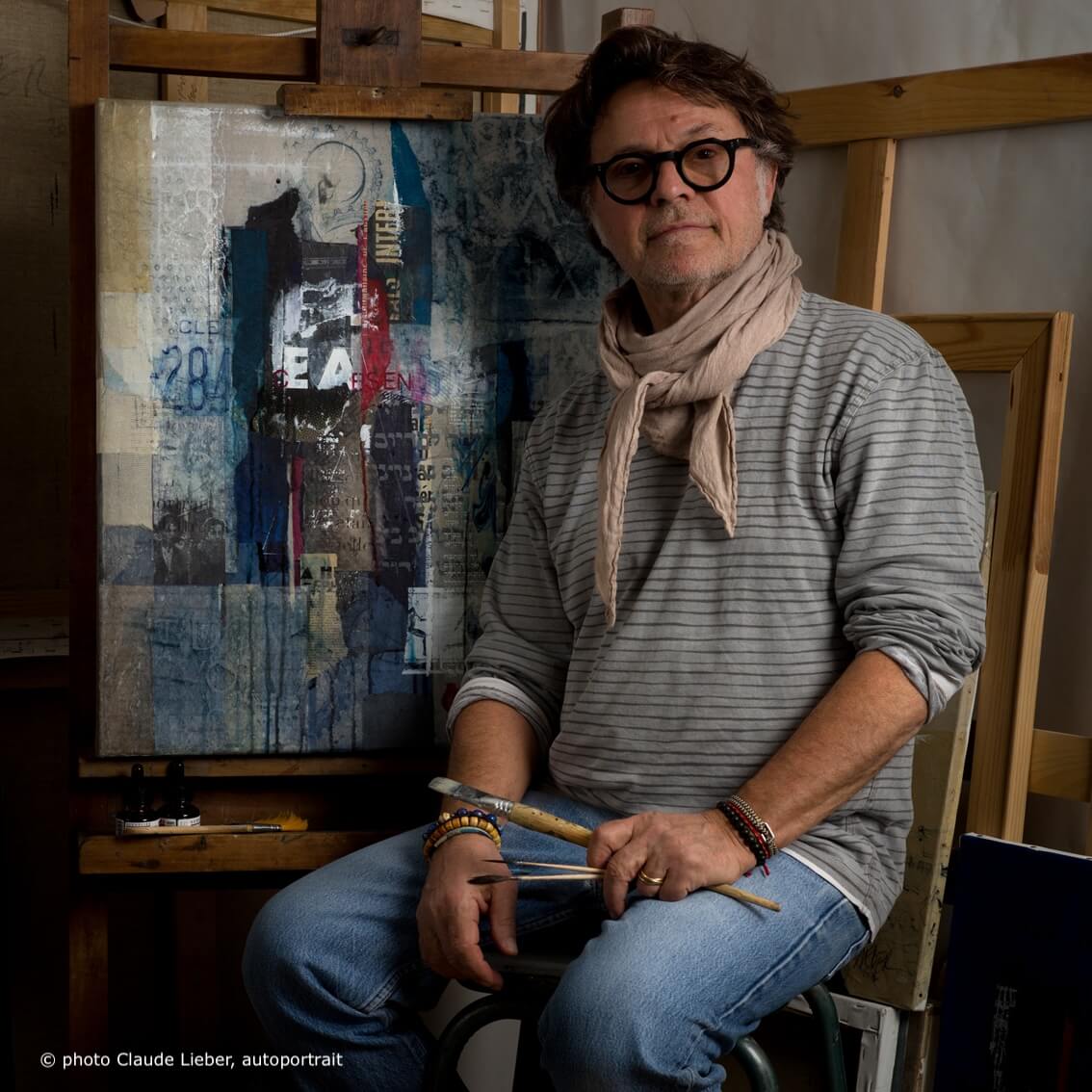
A French-Swiss artist born in Grenoble in 1954, Claude Lieber graduated from the Union Centrale des Arts Décoratifs in 1979. Before fully dedicating himself to his visual art practice, he worked as a graphic designer, roughman, and art director, and later as co-founder and creative director of a graphic design studio. He has been active as a painter and photographer since 1986, and has served as president of the Salon Figuration Critique since 2022.
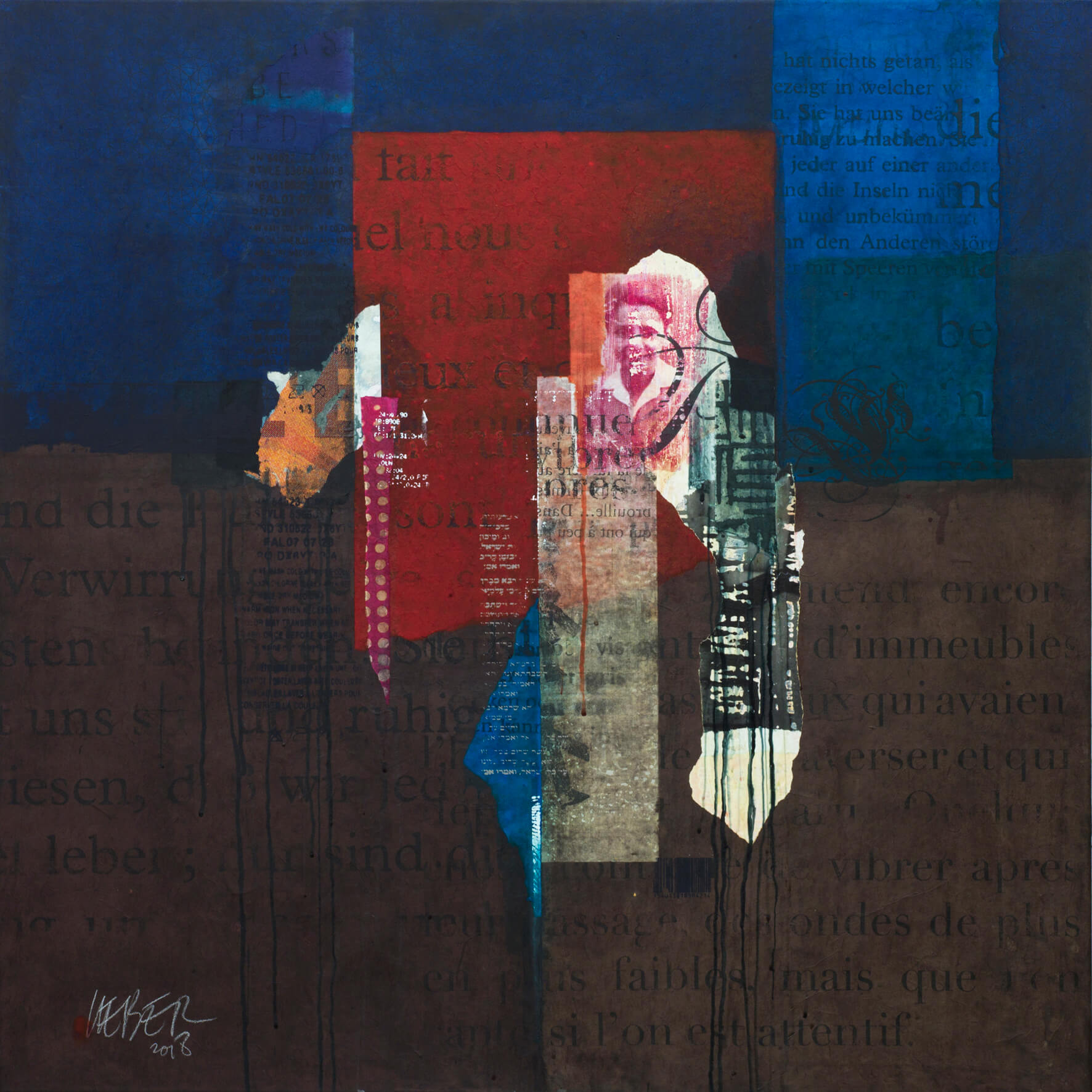
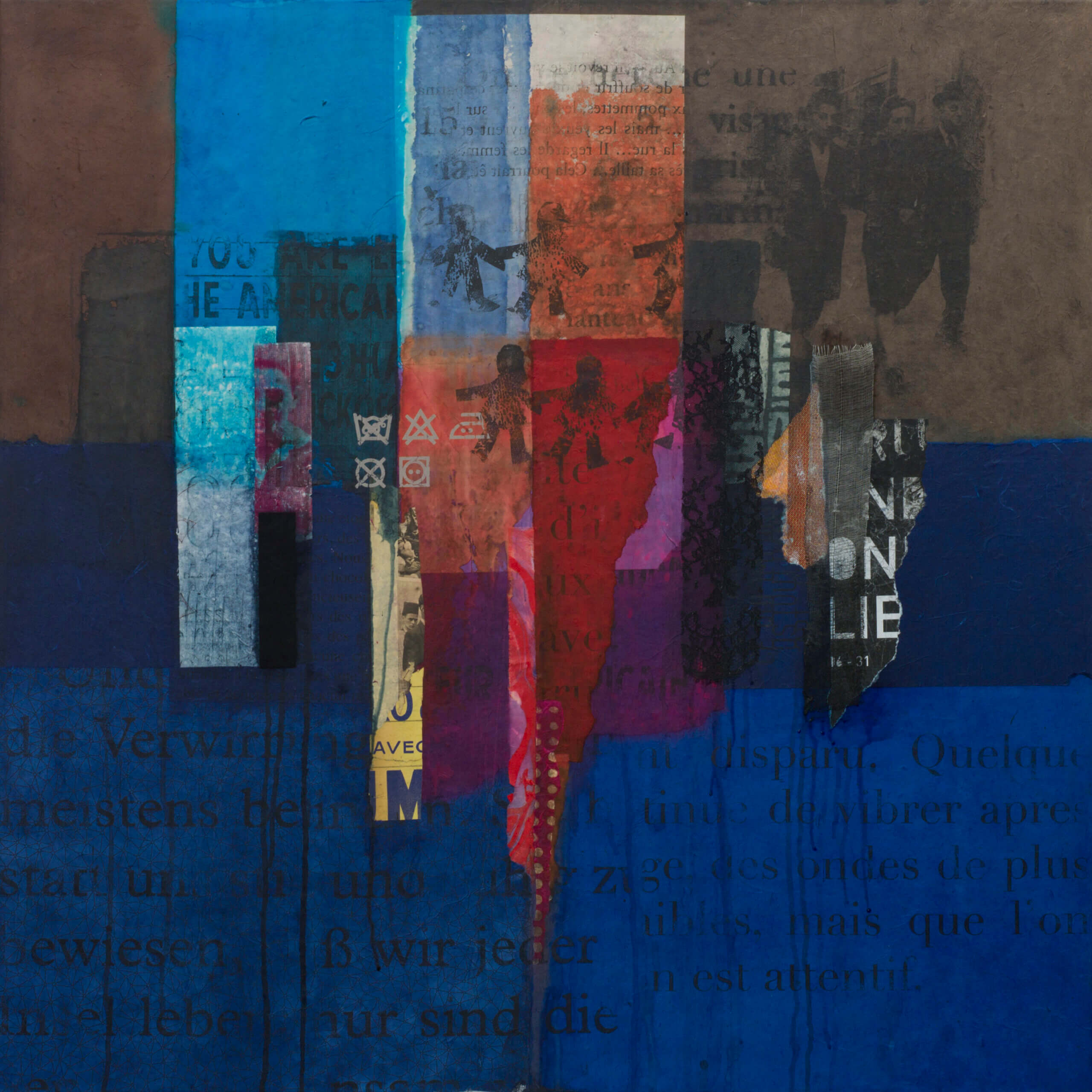
Claude Lieber’s background in graphic design deeply informs his strong relationship with letters, signs, and composition. In his paintings, he incorporates words, numbers, barcodes, labels, and fragments of text in a variety of typefaces. For Claude Lieber, writing—whether legible or not—becomes a visual material. Touches of color, memory, and lived experience are inscribed across his canvases.
He creates oil-stick rubbings on paper to gather traces of the past, taking impressions from stone inscriptions, street signs, manhole covers, license plates, and other urban markings.
For him, these imprints of engraved texts are remnants of the past, left behind by all the lives that passed before us. Wherever he goes, paper and oil sticks accompany him, ready to collect these echoes of time.
An affinity with Patrick Modiano’s world: the city, memory, childhood, and disappearance.
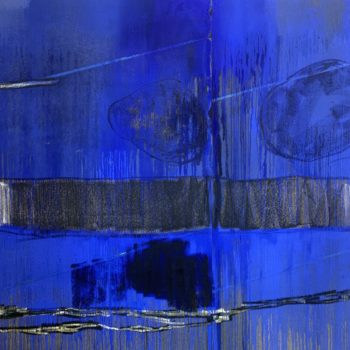
On Claude Lieber’s canvases, layers accumulate without ever fully erasing one another, like palimpsests. Signs, urban typography, imprints, marks, and scars come together to form a visual memory.
Between figuration and abstraction, his works combine collage, fragments of posters, printed matter, photographs, excerpts of French and German texts, Hebrew script, and painting.
A figure, a human silhouette, or an old photograph emerges among layers and flat areas of blue, grey, brown, or red. Claude Lieber almost always structures his pictorial space vertically. He favors formats that allow for vertical linearity, as well as polyptychs, which offer the possibility of diffracting a message or an image. In art history, polyptychs are closely associated with altarpieces. By bringing our pasts — and/or his own personal past — to light within these compositions, is Lieber creating modern-day retables?
These human presences, more or less visible, open up possible narratives. They invite the viewer to search for the traces of a story buried beneath layers of paint, or beneath the nocturnal city, as in the novels of Patrick Modiano, whose work Claude Lieber particularly admires. Reading Dora Bruder inspired his painting Dora B., and he also created a diptych entitled Modiano 1 and Modiano 2.
Collage, mixed media, and graphic writing come together in a visual poetry of traces.
Although collage plays an important role in Claude Lieber’s work, his art is unmistakably painting: each element becomes a touch of color, patiently worked and reworked.
His influences include Raymond Hains [1926–2005], known for blending wordplay, photography, free association, and distorted typography, as well as Kurt Schwitters [1887–1948], a pioneer of combine paintings and collage.
Claude Lieber paints what remains after the passage of time: memories left on walls that have not yet been stripped clean by the renovating zeal of modern urban planners. With the rise of digital technology, our society leaves behind fewer and fewer posters, newspapers, and photographic prints. As a result, the twenty-first century seems to be leaving ever fewer traces and marks, both in urban space and in our domestic environments. Lieber notes that this phenomenon is particularly striking in the Paris Métro.
This is where Claude Lieber’s work takes on its full archaeological dimension. Fixed onto the canvas, ephemeral remnants become indelible, saved from disappearance and oblivion. Each of his paintings is a poem, evoking memories and sensations in which traces of childhood and family history gradually come to light.
Through his work with imprints, Claude Lieber speaks to us of our lives, of the movements of the city, and of History itself.
©artistes actuels.fr