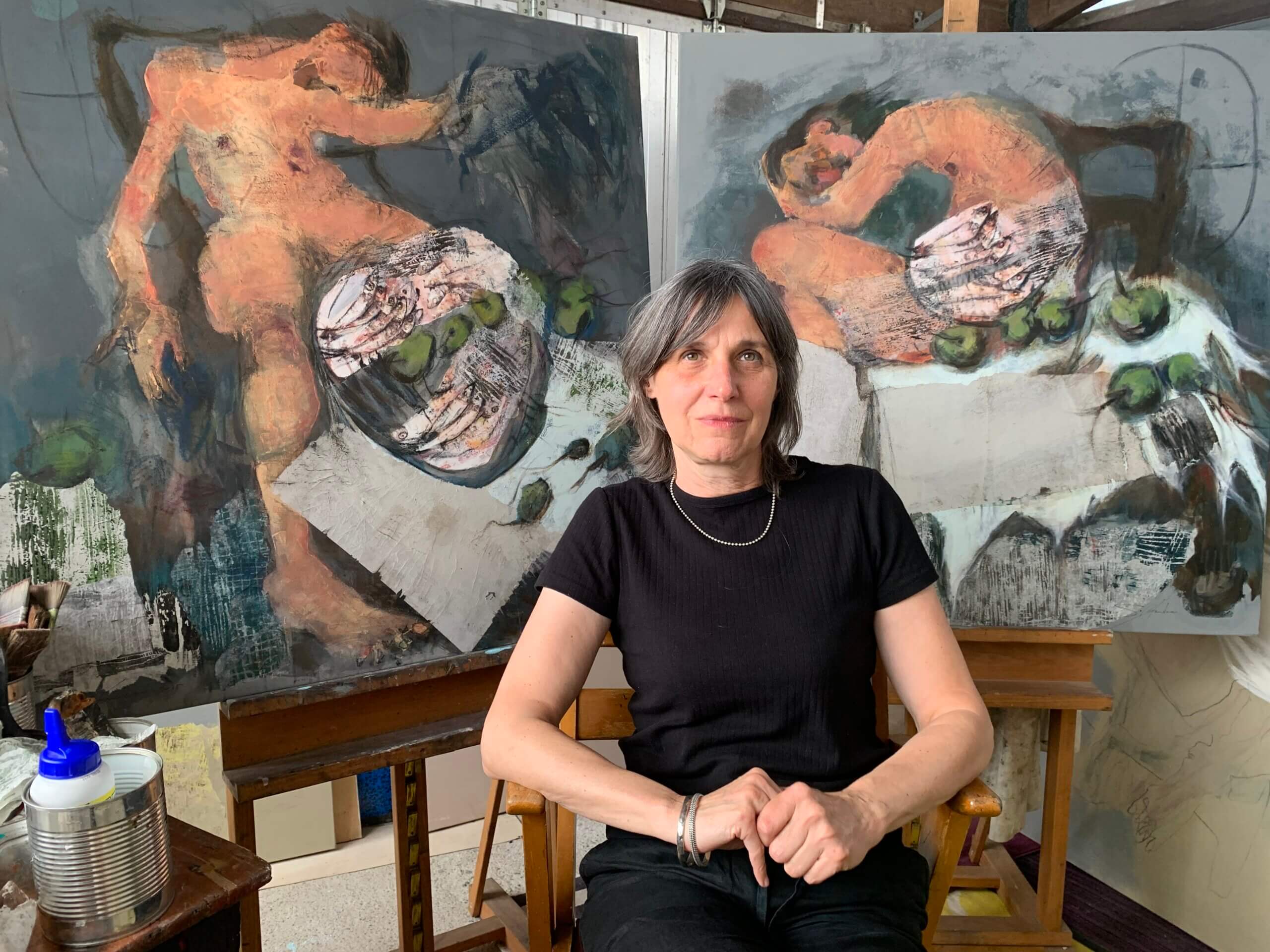
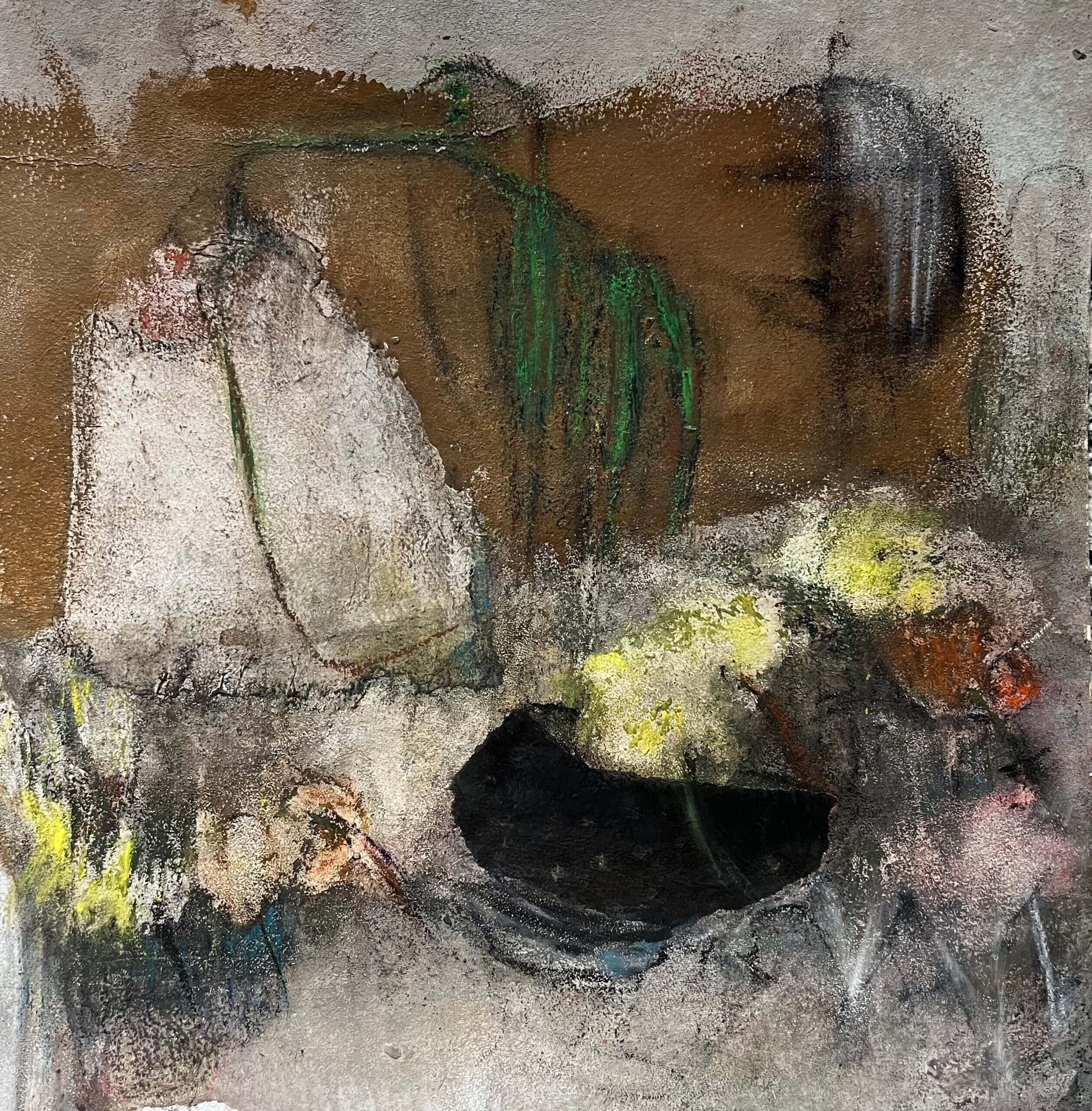
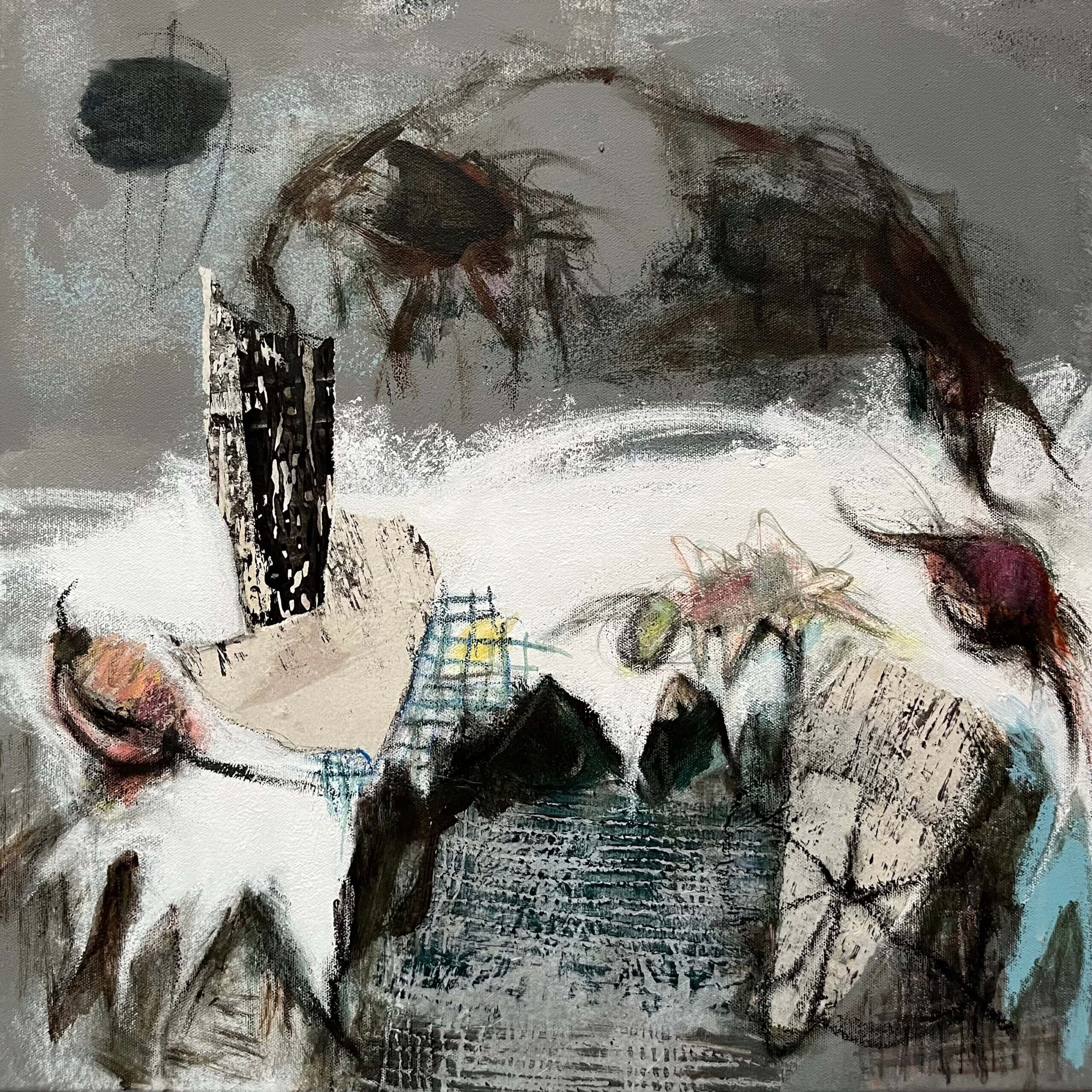
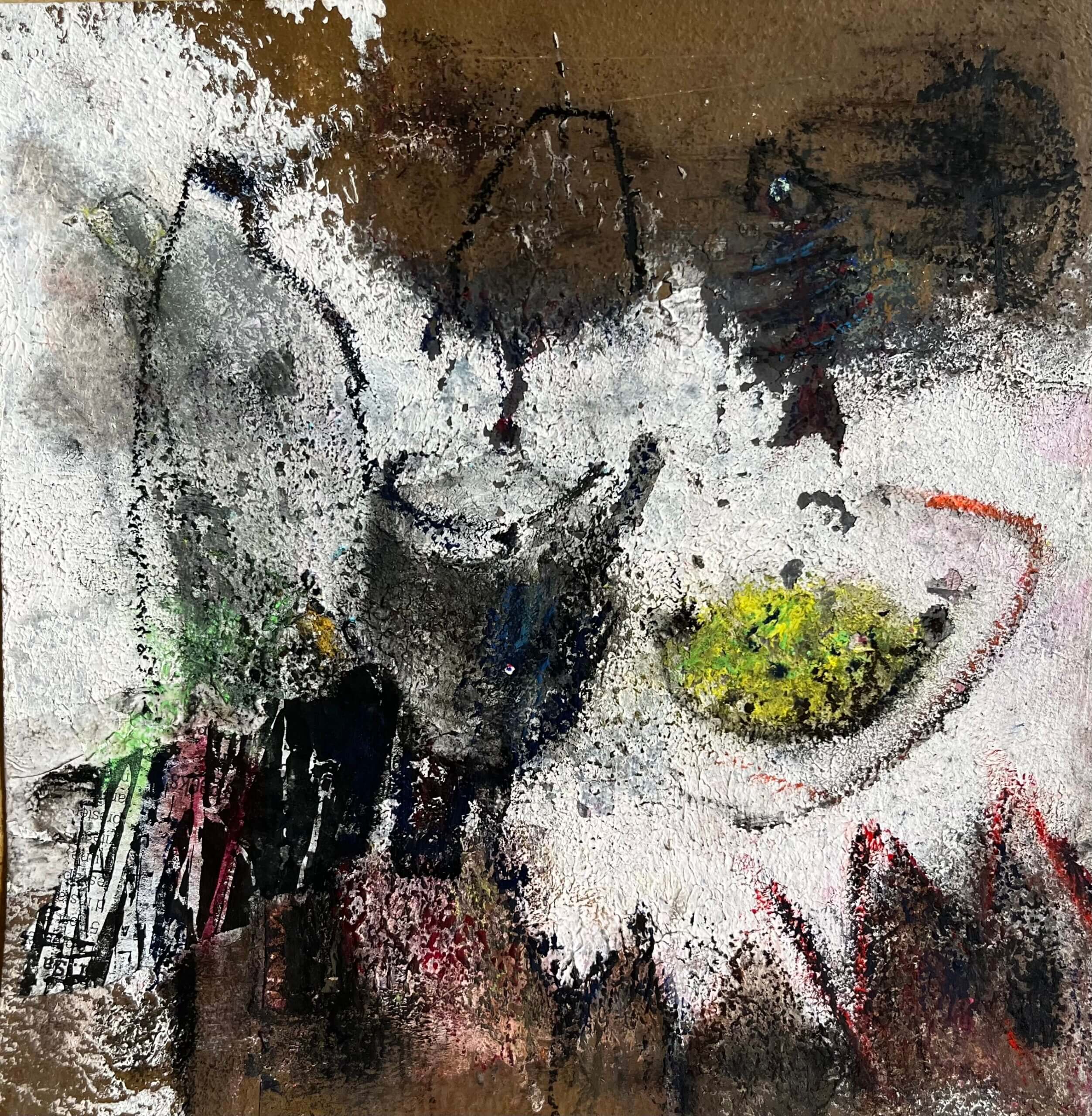
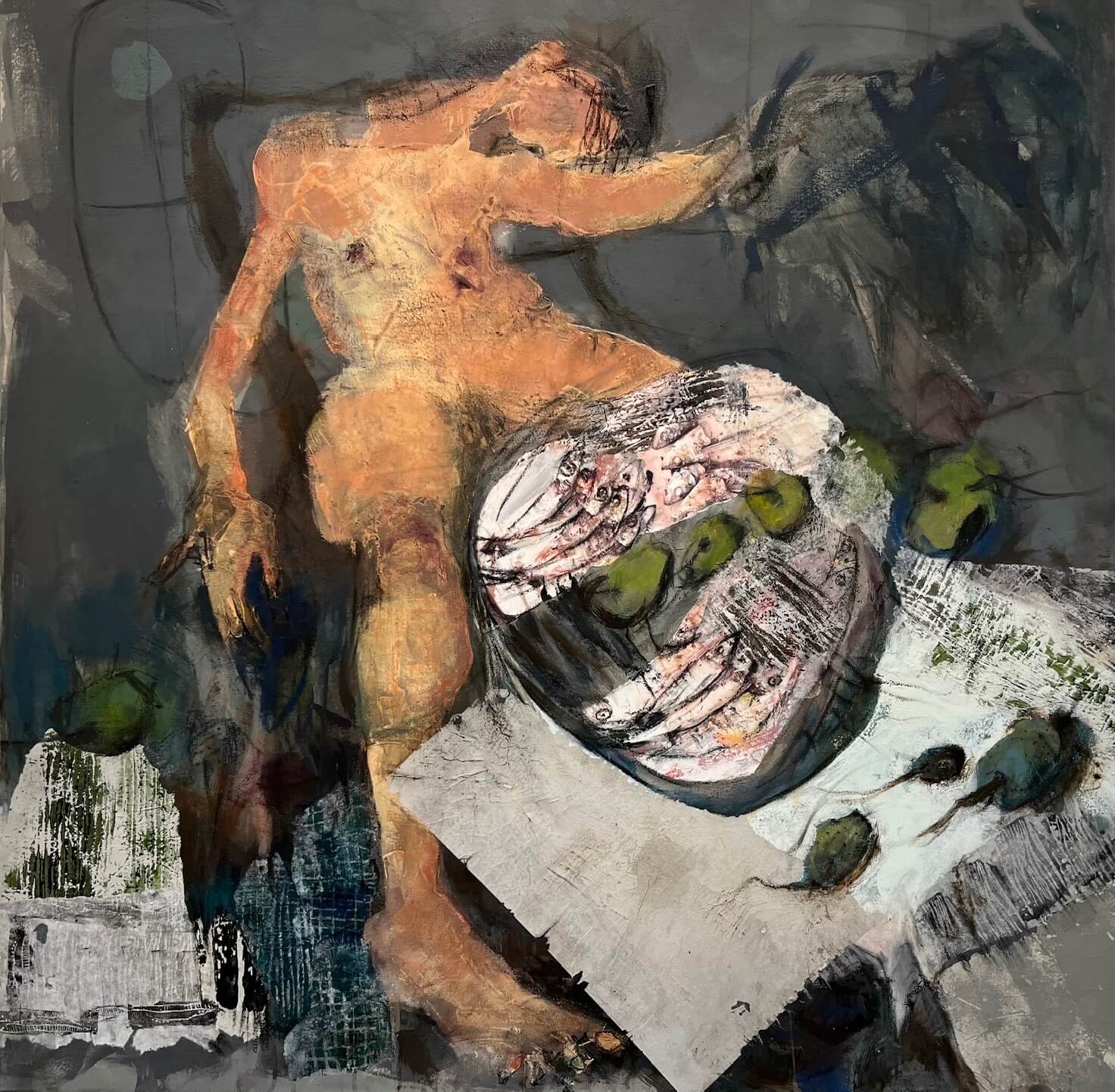
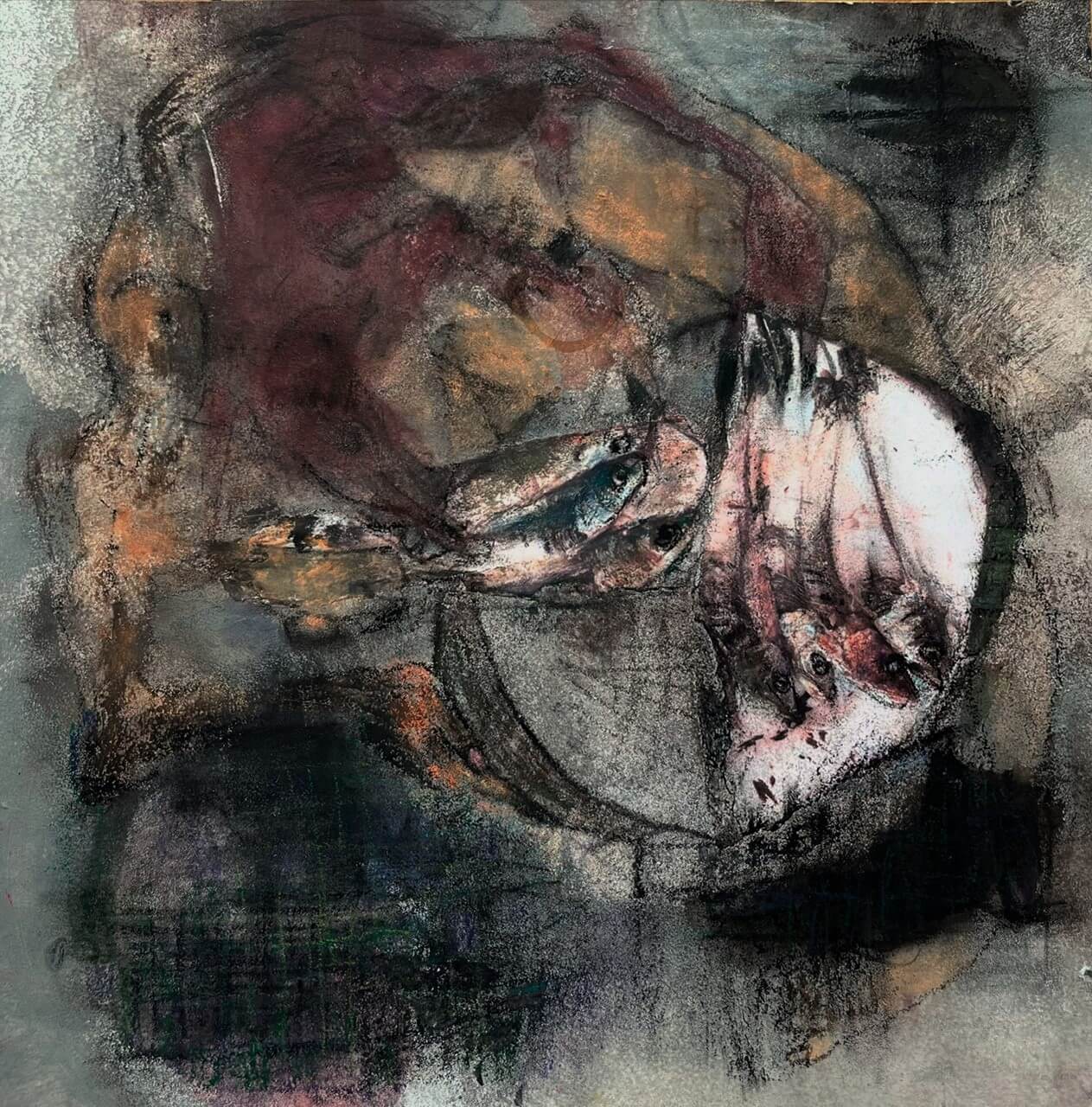
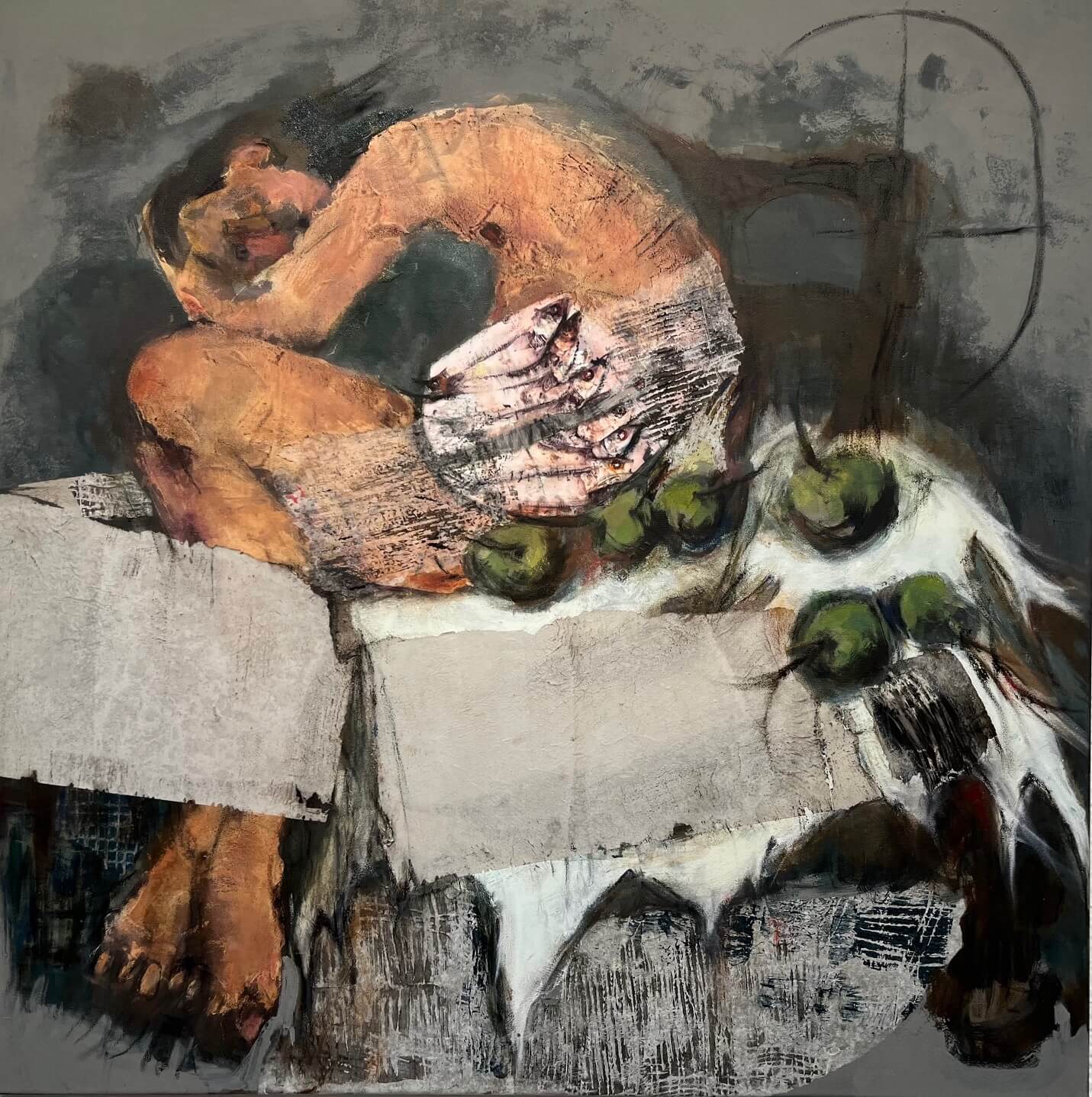
Between figuration and abstraction, between a matter-rich period marked by relief canvases and a later phase of great fluidity, Sylviane Blondeau’s painting has always brought the living world and still life into symbiosis.
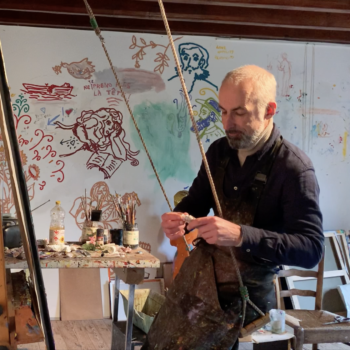
Through the chance encounters life brings, we sometimes meet artists whose memory stays with us through the works that hang on our walls. Then, one day, we cross paths with the artist again at an art fair and become aware of the time that has passed for each of us, as well as the evolution of their work on canvas. Sylviane Blondeau, a painter, is one of those artists whose journey I have been able to follow, from Picardy to Charente-Maritime, where she now lives and works, with a stop along the way at the Figuration Critique art fair in Paris.
Painting swiftly and with energy, as a way of expressing oneself and being in the world.
No doubt deeply aware of the fragility and brevity of existence, Sylviane Blondeau led an intense student life, pursuing a double course of study in Modern Literature and Art History while also working as a school supervisor.
She then spent several years teaching French at secondary school level before devoting herself fully to painting.
Exceptionally active, she also completed a three-year training course in art therapy at the Atelier Les Pinceaux in Paris. In this context, she worked alongside and supported people with congenital disabilities or severe accident-related injuries. The fragility of life is not merely a concept or a literary idea: the artist has experienced it at close hand.
An ongoing dialogue between the living and the non-living
As a child, Sylviane studied classical ballet for ten years, then modern jazz for two. From this, she developed a taste for movement and went on to draw and paint dancers’ bodies extensively.
In her canvases, bodies are not the only elements caught in motion and balance: her still lifes, too, seem to come alive, to take on movement, or to teeter on the verge of falling under the force of the wind.
Her artistic practice explores the ephemeral, the fragility of earthly things and the inexorable passage of time through series with evocative titles such as Last Petals, The Disarray of Remains, and landscapes described as Vulnerable in the Wind.
Most often, she brings together still life — whether food or flowers — and the human figure. The painted “objects” gather, join together and accompany one another.
During a breath of silence, thick as mist, I have just heard the petals of a rose fall onto the neighbouring table — a rose that, it too, had been waiting only to be alone before shedding its bloom. The Vesper Star, Colette (1946)
« Pendant une bouffée de silence, épaisse comme une brume, je viens d’entendre choir sur la table voisine les pétales d’une rose qui n’attendait, elle aussi, que d’être seule pour défleurir. » L’étoile Vesper, Colette (1946)
Painting has not drawn her away from literature. The wind that blows through her canvases, the muted and subdued colours, the silence or hostility of the surrounding world all resonate with the writing of the Norwegian novelist Sigrid Undset, winner of the Nobel Prize in Literature in 1928. Sylviane is drawn to these epics of strong women struggling against their social or geographical environment, marked by greys and by colours softened into pastels under a pale northern light.
For a long time, she painted exclusively in oils, with a lively gesture and a strongly textural approach. Her current work has become more meditative, and for this she now turns to a wider range of materials: oil, acrylic, imprinting and collage are subtly combined. The result is a light, fluid texture.
Despite the superimposed layers, the canvas never feels heavy; instead, it reveals areas of transparency. Sylviane Blondeau shows us what remains after a meal, after the passage of time, or what may be left of nature if we fail to take care.
Nous utilisons des cookies pour vous garantir la meilleure expérience sur notre site web. Si vous continuez à utiliser ce site, nous supposerons que vous en êtes satisfait.